


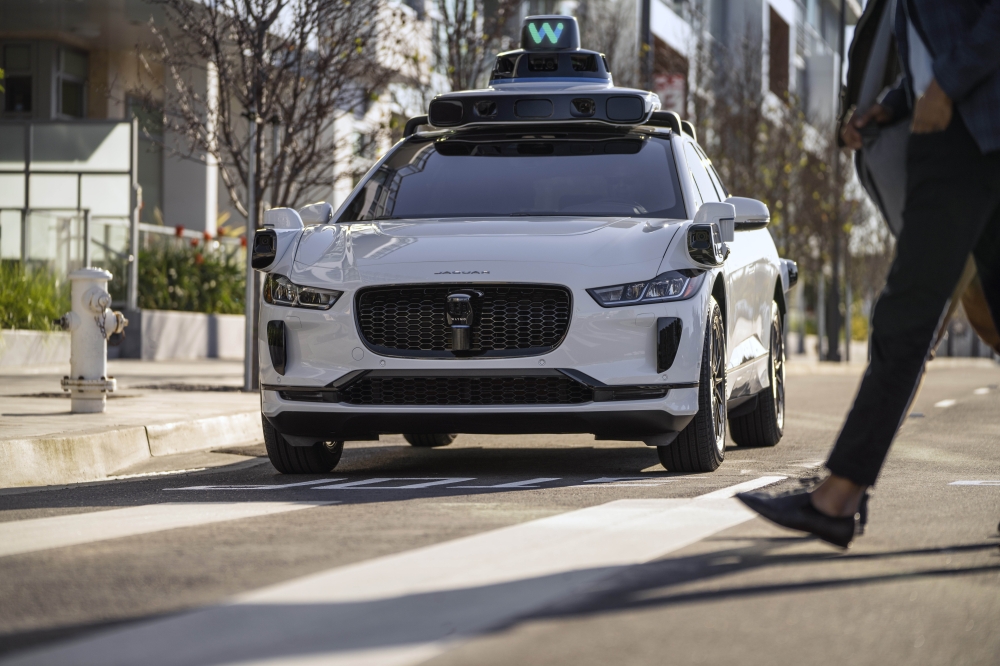
The move by Waymo comes amid an ongoing investigation by the National Highway Traffic Safety Administration into reports of Waymo vehicles failing to stop for Austin ISD school buses. This school year, the district has recorded 20 incidents in which a Waymo vehicle illegally passed a stopped school bus, according to an AISD spokesperson.
“The main concern is that these autonomous vehicles have difficulty navigating around school buses when students are loading and unloading,” an AISD spokesperson said in a statement to Community Impact.
What happened
On Nov. 20, AISD asked Waymo to immediately cease operating its self-driving vehicles between the hours of 5:20 a.m.-9:30 a.m. and 3-7 p.m. At the time, the district had recorded 19 incidents of Waymo cars illegally passing AISD buses through its school bus stop arms, averaging 1.5 violations a week, according to a letter from AISD to Waymo.
Texas state law mandates that drivers stop on both sides of the road for a school bus with a stop sign or flashing red lights, unless the bus is stopped on the opposite side of a divided highway, according to the Texas Department of Transportation.
Five of the 19 violations by Waymo in AISD followed a Nov. 5 letter from Waymo reassuring the district that software updates were implemented to resolve the issue. In one of these violations, the district recorded footage of a Waymo vehicle passing a stopped school bus immediately after a student cleared the vehicle, but while the student was still crossing the road.
“Put simply, Waymo’s software updates are clearly not working as intended nor as quickly as required,” the letter states. “We cannot allow Waymo to continue endangering our students while it attempts to implement a fix.”
Waymo received its 20th citation of the school year on Dec. 1 after AISD received notification from Waymo Nov. 17 it had fixed the issue through software updates, an AISD spokesperson said. On Dec. 4, AISD officials presented the most recent violation to Waymo and again asked the company to cease its operations during the hours in which students are transported to and from school.
“The company disagreed with our risk assessment and refused to cease operations,” an AISD spokesperson said.
The update
Waymo issued a voluntary recall of its software with the NHTSA earlier this week, a Waymo spokesperson confirmed to Community Impact. The company identified software issues that contributed to Waymo vehicles initially slowing to stop, but then proceeding past a stopped school bus.
A Waymo spokesperson said the company believes the software updates made on Nov. 17 “have meaningfully improved performance to a level better than human drivers in this important area.” The company is continuing to investigate, record and make additional updates as needed, according to Waymo information.
In their own words
"While we are incredibly proud of our strong safety record showing Waymo experiences twelve times fewer injury crashes involving pedestrians than human drivers, holding the highest safety standards means recognizing when our behavior should be better,” Chief Safety Officer Mauricio Peña said in a statement. “As a result, we have made the decision to file a voluntary software recall with NHTSA related to appropriately slowing and stopping in these scenarios. We will continue analyzing our vehicles’ performance and making necessary fixes as part of our commitment to continuous improvement."
The background
The NHTSA opened a preliminary investigation into Waymo’s 5th Generation Automated Driving System on Oct. 17. The investigation was prompted by a media report of a Waymo vehicle initially slowing and then proceeding to drive past a stopped school bus in Atlanta.
On Dec. 3, the NHTSA sent a letter to Waymo asking the company to report by Jan. 20 its approach to safety around stopped school buses; information for all Waymo vehicles operating in the United States; and all complaints, crashes and lawsuits received over the last three years.
“[The Office of Defects Investigation] is concerned that ADS-equipped vehicles exhibiting such unexpected driving behaviors or not complying with traffic safety laws concerning school buses may increase the risk of crash, injury, and property damage,” the letter states. “This incident occurred in the proximity of other road users, including pedestrians.”
Something to note
In late November, Waymo announced plans to launch its autonomous vehicles in Dallas, Houston, San Antonio, Miami and Orlando over the coming weeks.
The company currently operates more than 2,500 vehicles across Austin, Atlanta, Los Angeles, San Francisco and Phoenix and plans to fully launch its ride services in Washington D.C. in 2026, according to Waymo information.