Each school year, Austin-area school districts are tasked with meeting federal and state nutrition guidelines while serving meals that are appetizing to students.

These regulations—ranging from limits on sodium, sugar and fat—are intended to help prevent disease in the United States but can present challenges for districts who must attract students to generate funding, said Susan Damico, president of the Texas Association for School Nutrition.

“We want Texas kids to be healthier. We want the next generation to be nourished. We want them to be ready to learn,” Damico said. “We don't get money for a meal unless a child takes it ... so we have to make the food appealing to students also.”

Nationwide, Austin ISD has set a gold-standard for school nutrition through its scratch cooking and sourcing products from local farmers, said Stacie Sanchez Hare, director of No Kid Hungry Texas, a national nonprofit that advocates to end childhood hunger.
Although federal and state funding covers the cost of meals for some students, No Kid Hungry and local nonprofits like Hungry Souls are partnering with school districts to address food insecurity experienced by families in Central Texas.


Explained

Texas school districts are required to adhere to an expansive list of nutrition requirements for milk, fruits, vegetables, whole grains and meat that has grown over the years based on U.S. dietary guidelines, Damico said. Students are often served milk or yogurt that is lower in sugar, cereals that are whole grain and meats that are not deep fried and lower in sodium compared to similar products served outside of school walls, Damico said.

“Sometimes people will ask me, 'Why do you have low-sodium menus for children when they're going outside and sweating?'” Damico said. “We are doing low-sodium diets similar to what you would have in a hospital for a sick patient with high blood pressure or heart disease. It's because the U.S. dietary guidelines are based on how to prevent disease.”

This spring, Texas lawmakers passed SB 314 to ban 14 food additives, including red dyes, from free and reduced-price meals beginning in the 2026-27 school year. Damico said she believes the law will encourage industry food partners to stop producing products with these dyes and ingredients.


AISD has fully eliminated the additives prohibited by SB 314 as it began prioritizing using ingredients with cleaner labels nearly a decade ago, an AISD spokesperson said. San Marcos CISD has begun making the necessary changes to its menu, which the district is confident it can fully implement, despite potentially facing challenges in training staff and finding acceptable alternatives, a SMCISD spokesperson said.

The local impact

AISD serves over 10 million school meals annually with a staff of more than 550 kitchen employees. The district’s executive chef develops recipes featuring scratch-prepared dishes, global flavors and healthy versions of students favorite dishes, an AISD spokesperson said.

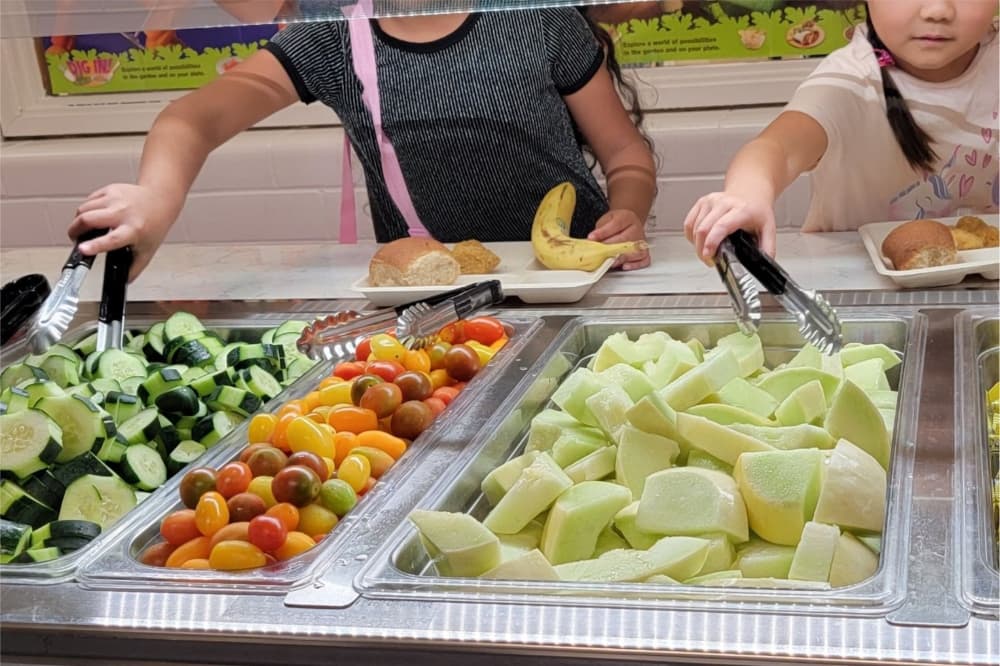
The district's modernized service lines allow students to select their own fruits, vegetables and condiments. AISD has used funding from its 2022 bond to install 31 new serving lines last school year and has 27 new serving lines planned for this school year, according to AISD information.


“While our menus are rooted in the nutrition guidelines, we also focus on incorporating national and local food trends, finding inspiration from industry food shows and modifying dishes we see at local restaurants,” an AISD spokesperson said in a statement to Community Impact.

New recipes include fusion and street-style tacos, elevated sandwiches like a Philly cheesesteak and a jambalaya created by student interns. This spring, the district will unveil a menu collaboration with Kerbey Lane Cafe.

SMCISD is aiming to further improve its meals through adding varied and healthy menu options, using more fresh ingredients, and receiving student feedback through taste tests and surveys.

Georgetown ISD staff aim to incorporate the latest trends into menu items, offer nutrition education and involve students, teachers and parents in the menu planning process, a GISD spokesperson said. Southwest Foodservice Excellence samples new dishes and allows GISD students to provide feedback at its Flavor Fest events.


Dig deeper

The National School Lunch Program and the School Breakfast Program provides free or reduced-price lunches for students based on their family’s income level. During the recent legislative session, state lawmakers approved $19.8 million to cover the cost of reduced-price meals for the 2025-26 and 2026-27 school years through the $338 billion state budget, according to previous Community Impact reporting.

For GISD, the additional state funding has increased student participation and reduced negative balances for school lunches, a GISD spokesperson said.

Additionally, some Austin-area campuses provide free meals to all of their students through the Community Eligibility Provision, which is available to low-income schools in high-poverty areas. All Bastrop ISD campuses have received free meals through the program this school year, according to BISD information.


AISD serves free meals to all students at 76 campuses while some SMCISD campuses participate in the program. AISD district serves breakfast to students in the classroom at over 40 schools and provides free after-school meals to around 60 campuses.

Austin nonprofit Hungry Souls has partnered with AISD and local charter schools to provide supplementary meals for families on the weekends and holiday breaks. The organization currently serves food to over 500 families across 32 campuses and has a waitlist of more families and schools who would like to join the program, Hungry Souls Development Director Claire Hutson said.

“The more people that are part of the solution, the better,” Hutson said. "There's so many gaps that the districts are just not able to fill and so we exist to fill some of those gaps.”

Going forward

No Kid Hungry will continue advocating for Texas to join the Summer Electronic Benefit Transfer, or Summer EBT, program. The federal program would provide eligible low-income families with money to pay for groceries.

State lawmakers included $60 million for the program in the current budget, but Gov. Greg Abbott vetoed the funding in June, according to previous Community Impact reporting.

“School meals are the most consistent, nutritious meal offered to children across this country every single day throughout the school year,” Hare said. “There's a real gap in what we are doing and what we have the potential to do in terms of feeding kids.”

TASN plans to advocate for Texas students to have more time to eat lunch during the school day. The organization would like districts to receive additional meal reimbursements if they used a certain percentage of products from the local economy, Damico said.

AISD sources its food items from producers across Texas, including vendors in Austin, Kyle and Spicewood. SMCISD is working to build relationships with local farmers and vendors to "offer fresher, healthy meals for students, support our community and make meals more tasty and appealing," a SMCISD spokesperson said in a statement to Community Impact.