

At a glance
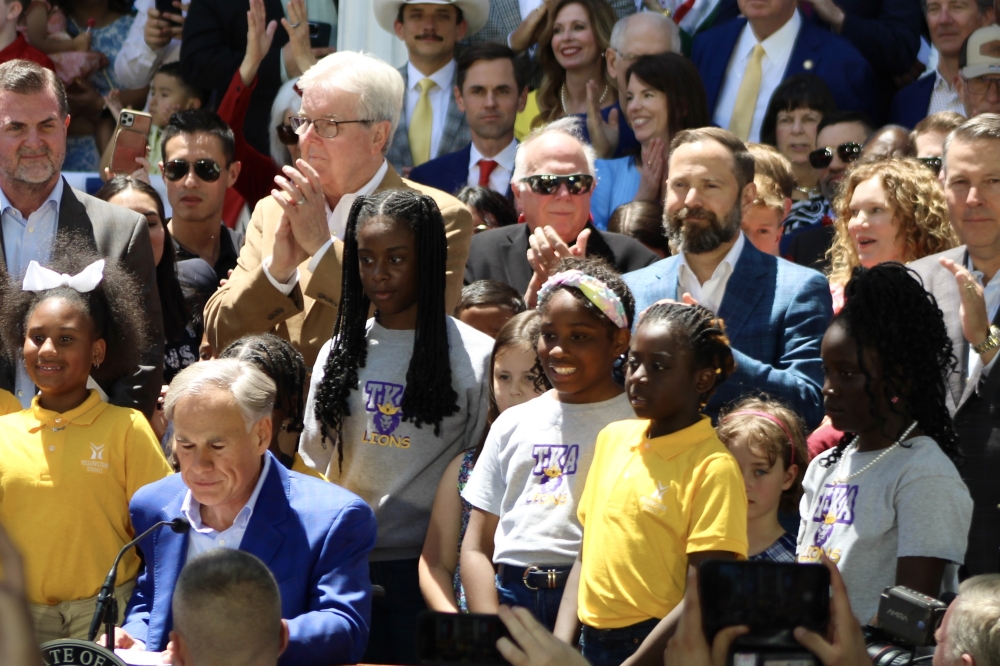
The program, known as “Texas Education Freedom Accounts,” was approved by state lawmakers this spring and will officially launch ahead of the 2026-27 school year.
Accredited private schools and education vendors that currently participate in an existing special education initiative known as the Parent-Directed Special Education Services program can apply to become an ESA provider Dec. 9, according to the comptroller’s office. Applications for other vendors are scheduled to open shortly after.
Families can then apply for the program Feb. 4, which the comptroller’s office said was “well in advance of the 2026-27 school year.” Odyssey, a New York-based tech company that operates similar programs in five other states, is creating an online platform for applications and other program services, Community Impact previously reported.
Most families accepted into the program will receive about $10,300 per student, which can be spent on tuition at accredited private prekindergarten or K-12 schools, as well as expenses such as textbooks, transportation, tutoring and therapy services. During the 2023-24 school year, the average cost of Texas private school tuition was $10,965 for kindergarten-eighth-grade students and $14,986 for high school students, according to the Texas Private Schools Association.
Homeschooled students will receive up to $2,000 per year under state law. Students with disabilities will be eligible for up to $30,000 annually, depending on a student’s individual needs.
Once students are accepted into the program, they will not need to reapply annually as long as they remain in good standing, per the comptroller’s office. Students who are placed on the waitlist and remain interested in the program may “update or supplement their existing application” instead of starting a new application the following year, the rules state.
Zooming in
Depending on a family’s income, students with disabilities may receive priority acceptance into the ESA program. To be first in line for the program, families may submit a letter from a licensed physician or documentation stating that the child qualifies for federal disability benefits from the U.S. Social Security Administration.
To receive up to $30,000 in special education funding, however, the comptroller’s office said a student must undergo a special education evaluation and receive an individualized education program, or IEP. According to the Texas Education Agency, an IEP is a written plan that details a student’s educational needs and the resources or services required to help meet those needs. IEPs are typically completed by public school districts.
If applications for the program outpace available funding, state law requires that Odyssey and the comptroller’s office prioritize students in the following order:
- Students with disabilities whose annual household incomes are at or below 500% of the federal poverty line, or about $160,000 for a family of four
- Families with incomes at or below 200% of the FPL, which is about $64,000 for a family of four
- Families earning between 200%-500% of the FPL
- Families above 500% of the FPL—limited to 20% of total program funding
Private schools must be nationally accredited and have operated for at least two years, although the rules approved by the comptroller’s office clarify that this includes schools operating in other states. This means a school with a newly opened Texas campus would be eligible to join the ESA program, as long as it is accredited and administers a nationally norm-referenced exam to students. Schools must have a Texas location at the time of application, the rules state.
More details
The rules also specify that children attending private preschools will be eligible for the same funding as other private school students—about $10,300. The pre-K amount was previously capped at $2,000, which some early childhood advocates said would put families seeking pre-K options outside their local public schools at a disadvantage, according to documents from a September public hearing.
To qualify for ESA funding to cover private preschool costs, students must be between 3-5 years old and meet Texas’ requirements for free pre-K, which include students with limited English proficiency, students who qualify for free or reduced-price school meals, children whose parents serve in the military and children of public school teachers.