

Archer said it’s a significant milestone for the BCRUA. He gave updates on the project to the Leander City Council at its Dec. 18 meeting.
The background
The BCRUA’s Raw Water Intake project will pump water from deep below the surface of Lake Travis to supply the BCRUA, a partnership between Leander, Cedar Park and Round Rock, with a stable source of water year-round.
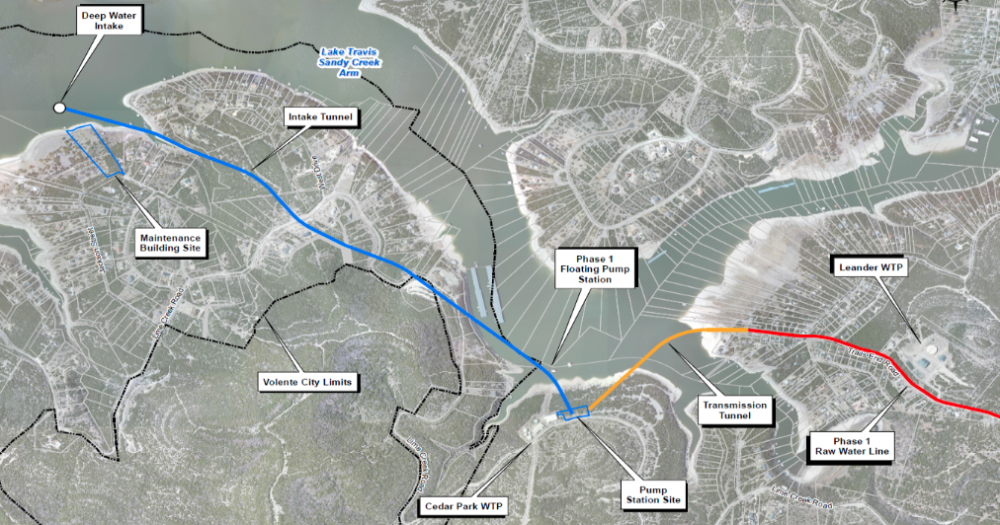
The Raw Water Intake is part of Phase 2 of the BCRUA’s plan for the regional water system. Community Impact previously reported that Phase 1 of the project involved constructing a floating barge on Lake Travis that pumped approximately 32 million gallons of water per day.
Archer says the barge system is vulnerable to droughts, and once the deep-water project becomes operational, the barge system will be discontinued.
The Raw Water Intake system will pump the water through a series of deep underground tunnels to a pump station, which will bring it to the surface.
That water will then be pumped through pipelines to the existing Leander, Cedar Park and BCRUA water treatment plants.
The details
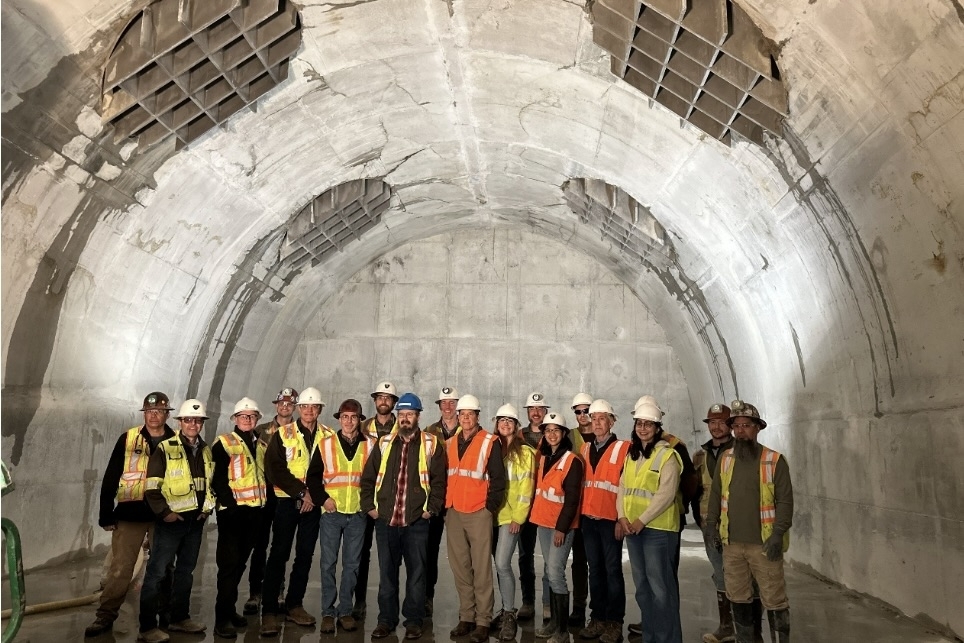
Archer said that the mining and concrete lining of the tunnels, shaft and suction chamber are complete.
He also said that construction of the pump station building, where water will be brought up from the underground tunnels, has begun.
The intake maintenance building is also under construction.
Once completed, the BCRUA’s Raw Water Intake project will be able to pump 145 million gallons of water from the lake per day.
Archer said that Phase 1D of the BCRUA project, which consists of expansions to the BCRUA water treatment plant, was substantially completed in November and will be officially completed in January.
What’s next
Further expansions of the BCRUA water treatment plant, dubbed Phase 2A, began Dec. 15 and are expected to be completed in June 2028. That phase of the project will cost about $98 million. The contract was awarded to Webber Waterworks, a construction firm specializing in water infrastructure.
The Raw Water Intake is scheduled to be completed in February 2027, but Archer is skeptical of the timeline.
“When we evaluate the status of the contractor, we believe that they’re still tracking about four to six months behind schedule,” Archer said.