


The background
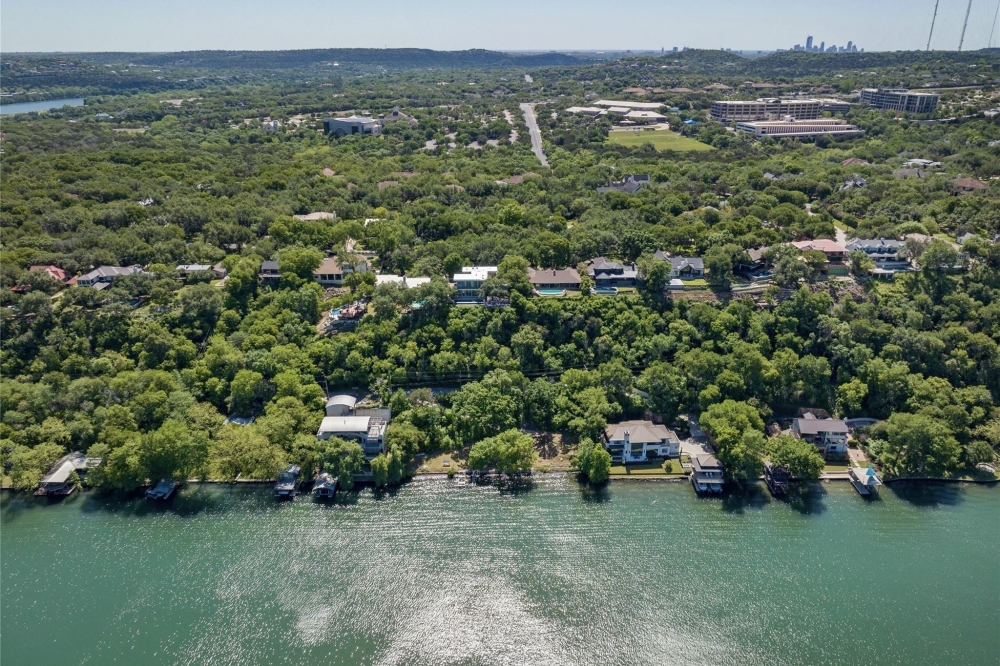
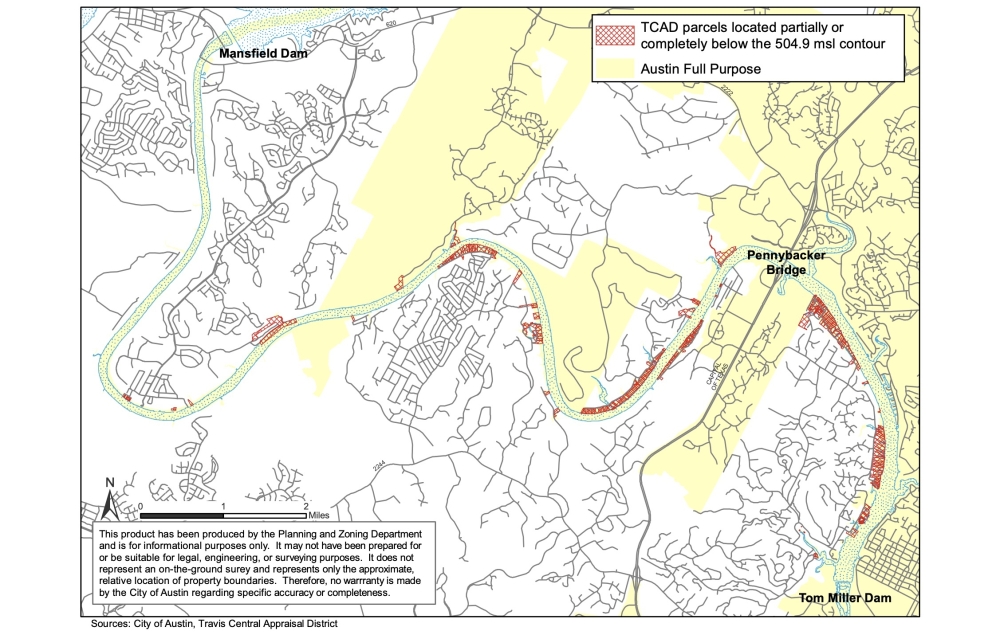
The Lake Austin properties have been at the center of jurisdictional questions stretching back to the late 1800s when some land along the shoreline was first added into city limits. Residents in those areas later experienced public safety and infrastructure service issues while facing "substantial confusion" over their local government representation, according to city documents.
Some of the property was added to Austin's tax rolls in 1985, but city officials reversed course the next year by declaring the outcome was made in error and that tax collections wouldn't resume without offering full public services. That decision was again reversed in 2019, when City Council unanimously voted to resume taxing hundreds of tracts despite property owners' opposition and persisting concerns over the services they received.
“Not only was the 1986 ordinance unconstitutional, but we’ve been in an unconstitutional situation for decades," he said in 2019.
Area residents went on to sue the city over the taxing update, litigation that remains in progress as of this year. Past state legislation meant to address the issue stalled out, but lawmakers this spring passed Senate Bill 1844 allowing property owners to disannex from a city if they aren't fully connected to its infrastructure systems.
What's happening
Dozens of property owners pursued removal from Austin under SB 1844 this year. After a handful of petitions were approved in late November, around 150 are scheduled for council consideration Dec. 11, and many more expected to follow next year.
Properties up for disannexation approval this fall average just over 1 acre and $1.87 million in taxable value to the city. Combined, they cover more than 155 acres and will remove an estimated $288.5 million of total taxable value from Austin as of 2025, according to Travis Central Appraisal District records.
Chris Johns, a property disputes attorney representing many of the petitioning Lake Austin residents, said the outcome follows years of frustrations with the city over service issues and the disputed annexation process.
"When you’re dealing with coming into a city, is if you pay taxes for something it’s supposed to be for services," Johns said of his clients. "It’s not right for the city to just be able to cherry-pick higher value properties and say, ‘Hey, we’d like your taxes, but we’re not going to fulfill our part of the deal that the state Legislature has put out about what it means to annex somebody or what it means for somebody to be in the city limits.'"
Johns said working with city staff on the petitions this year has been a relatively smooth process, although a few tracts seeking to disannex were contested by Austin. He said those, and many more properties, could be handled in future petitions.
"If there’s an issue there that we need to take up with the city later, we’ll take it up with the city later. But we’re just trying to get the bulk of the first wave of people through the process and see how it goes," he said. “This is probably less than half of the property owners."
What they're saying
Local residents testifying at a March legislative hearing reported public safety problems ranging from lengthy 911 response times to confusion over which agencies should be involved. They also said they've been forced to install their own infrastructure systems after the city declined to extend wastewater service to the far West Austin lots, citing high costs.
Resident John Porter, whose petition for disannexation will be considered by City Council on Dec. 11, said he's spent hundreds of thousands of dollars on water treatment, septic, propane and fire suppressant projects that now cost as much to maintain as he's also paying in Austin property taxes.
"Those water treatment systems are quite expensive and don’t do that great a job compared to what the city of Austin would do. We would be absolutely thrilled to pay taxes if we could just get the services," he told lawmakers in the spring.
State Sen. Angela Paxton, R-McKinney, SB 1844's author, called the Lake Austin-area service issues "exactly what this bill is designed to address." State Sen. Paul Bettencourt, R-Houston, also faulted the city for declining service extensions while adding properties to its tax rolls.
“It doesn’t sound like a great decision," he told Austin's government relations officer at the hearing.
A city spokesperson didn't respond to a question about whether Austin has evaluated or addressed residents' reports of long response times and infrastructure issues, but said some city services may remain for disannexed residents. For example, most will continue to receive power through Austin Energy, and a portion may have Austin Water service. They'll also have continued access to the Austin Public Library system.
Residents previously served by Austin Resource Recovery for trash pickup, street sweeping and litter management will be transferred to a private provider after disannexation. Law enforcement will shift from Austin police to Travis County sheriffs, while other emergency response will continue to be shared between the city and county.
Johns said the SB 1844 petitions are ending a "long fight" over what he called a flawed decision motivated by tax revenue.
"In the end, this is going to be a worse problem for the city than if the city had just looked at the history, talked to the people, tried to understand the situation," he said.
One more thing
The new state law doesn't end residents' lawsuit against the city over the 2019 taxing vote, which Johns said has yet to be decided on the merits. Further review may also still be needed to address the millions of dollars in property taxes paid under Austin's "illegitimate" jurisdiction claims along the western waterway, he said.
Although residents such as Shawn Breedlove raised complaints about being "double-taxed," they may not be eligible for reimbursement from the past several years when service issues were raised. A provision in SB 1844 bars repayments after disannexation, including for this tax year.
"Property taxes for 2025 have already been issued; these disannexations from 11/20 and 12/11 will be reflected on the 2026 property tax bills," the city spokesperson said. "According to SB 1844, the landowners are not eligible for a refund of taxes or fees for the disannexed area."