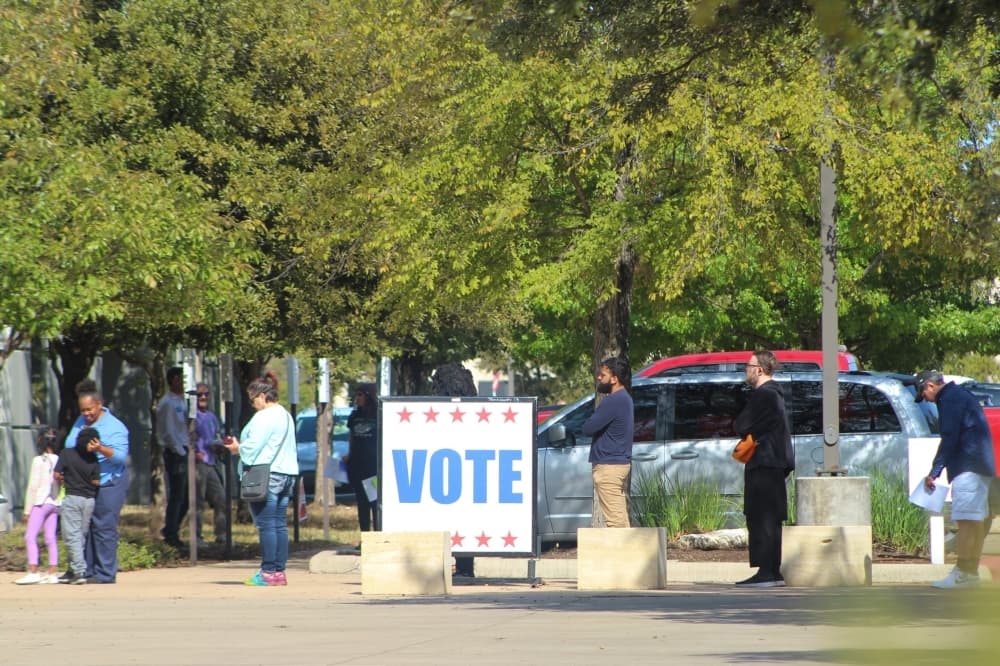
Austin is launching dedicated teams to close more public encampments citywide, and connect people living their with shelter and other services. (Ben Thompson/Community Impact)
Austin officials are increasing the scope and frequency of public homeless encampment clearings this spring.
What's happening
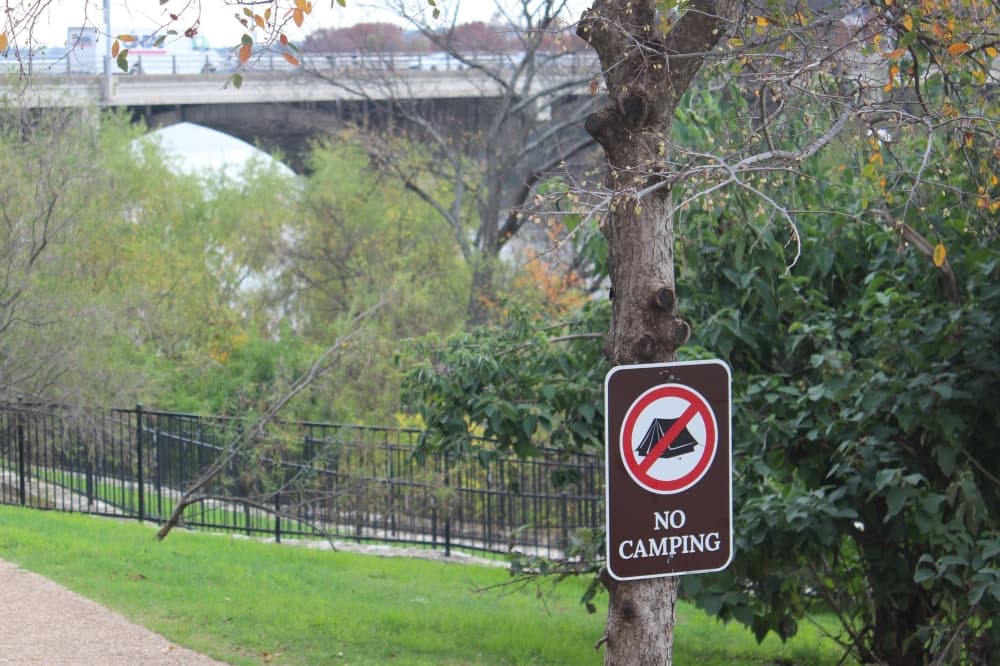
Public camping is illegal in Austin under both Proposition B, a local ban reinstated by city voters in 2021, and a Texas law passed the same year.
City enforcement was ramped up after Proposition B's passage and has continued since then, including a three-week initiative by Austin Homeless Strategies and Operations last October alongside unrelated state cleanups. But widespread encampments and high public demand to address them is outstripping available resources, according to AHSO, leading to this year's recalibration.
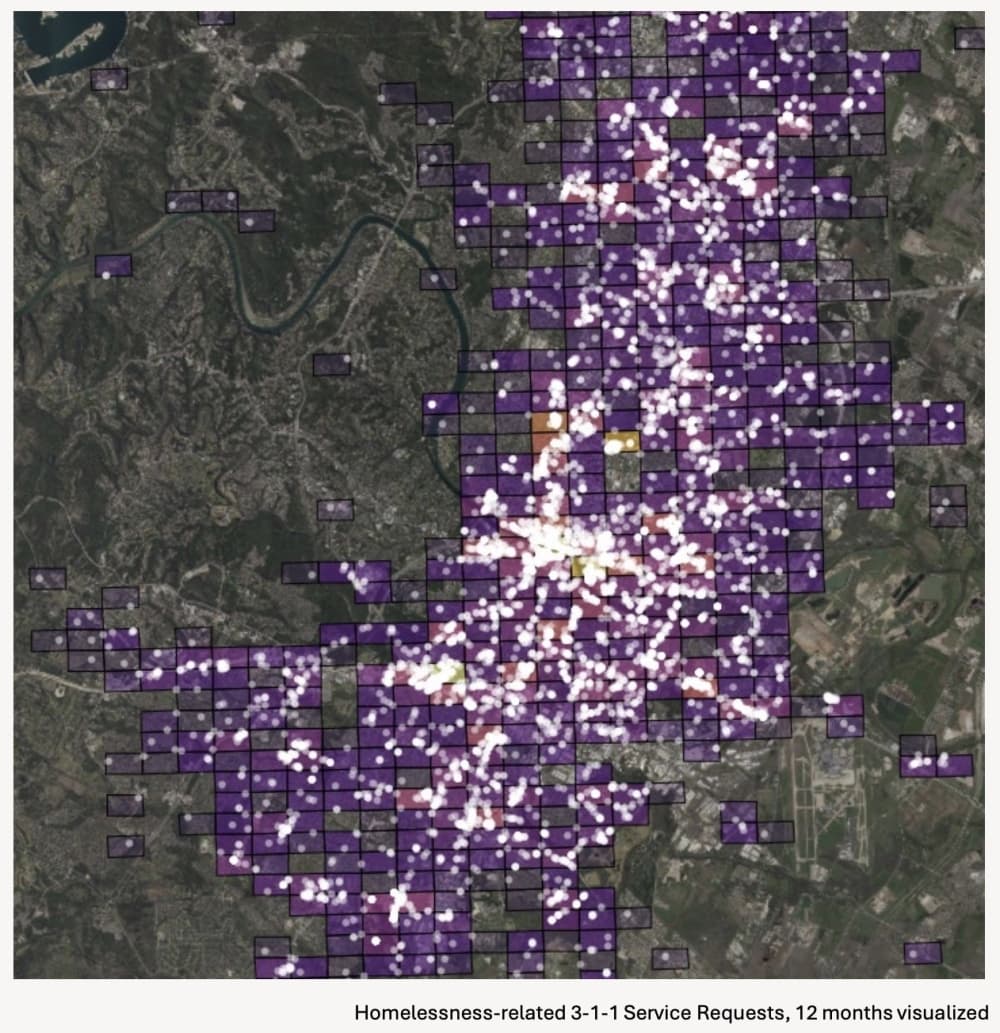
Austin currently fields more than 700 resident 3-1-1 requests related to encampments every month, while the city's management program is only active three days per week. That structure results in "periodic" responses that don't address all identified areas or allow for follow-ups at cleared sites, often resulting in repeat camping, AHSO Director David Gray said.
“We do not have sustainable progress when it comes to reducing risks, and we also are seeing the erosion of public confidence and trust in the process, and staff feel like they are unable to deliver their best work in a truly sustainable manner," he told City Council May 5.
Starting May 11, several dedicated encampment management teams will begin working citywide five days a week. Most will involve Austin Police Department officers and other city department staff, and one Austin Parks and Recreation-led team will focus on litter removal.
The city released a preliminary list of dozens of encampments to close last month, and will continue to update the public about the status of those sites as well as new areas being addressed.
The approach
Encampment removal begins with the identification of sites through internal reporting or 3-1-1. Locations will be assessed for health or safety concerns and environmental conditions, then prioritized for closure.
Before camps are shut down, the city will reach out to anyone who may be living there to notify them and offer shelter or other services. That process could be extended if no shelter beds are immediately open, but the city will begin clearing areas within 72 hours after assistance is made available.
"Once we provide the opportunity, whether it’s the shelter opportunity or the service opportunity, it is up to the person in the encampment to say yes or no," Gray said. "If they say yes, we will facilitate the connection. If they say no, that is their choice but at that point the outreach [team] has completed their purpose and we need to proceed to [abatement]."
Multiple city departments are providing logistics and communications support for the new citywide encampment management, which includes:
Three teams working specifically in North, Central and South Austin
One along city roadways
One along city waterways
The parks department litter team
Austin receives hundreds of service requests related to homeless encampments every month. (Courtesy city of Austin)
AHSO will track the number of site visits and the city's timeliness to requests, people sheltered or connected to services, the amount of litter removed, and any citations or arrests during clearings. Teams will also monitor for repeat activity 30, 60 and 90 days after each cleanup.
APD is reassigning members of its neighborhood district representatives program to the sweeps to keep city employees safe rather than to cite or arrest those in encampments—although officials said they will act if illegal activity is encountered. Lt. Marcos Johnson said APD is still reviewing how district representatives will keep up their other community-focused work on top of the added encampment patrols, but said he remains optimistic about the shift.
What they're saying
Council members raised several questions about the new operations after Gray's May 5 briefing, and some were less supportive of increased enforcement on the streets.
“I’m not comfortable that our city is ramping up sweeps so rapidly without providing new support programs and services. I don’t see how in the aggregate this does improve public health, public safety. It seems to respond to one set of concerns and create new ones," council member Mike Siegel said.
Pointing to Austin's budget constraints and limited shelter capacity—a few dozen beds were available May 5 for an estimated citywide need of hundreds of people—council member Ryan Alter said he wants to ensure the new strategy is cost-effective. He asked for further information going forward about spending on an approach that could result in "circular enforcement" by pushing people from encampment to encampment without resolution.
"Spending money to move the problem instead of fix the problem is, just given the lack of resources, a really hard pill to swallow," he said.
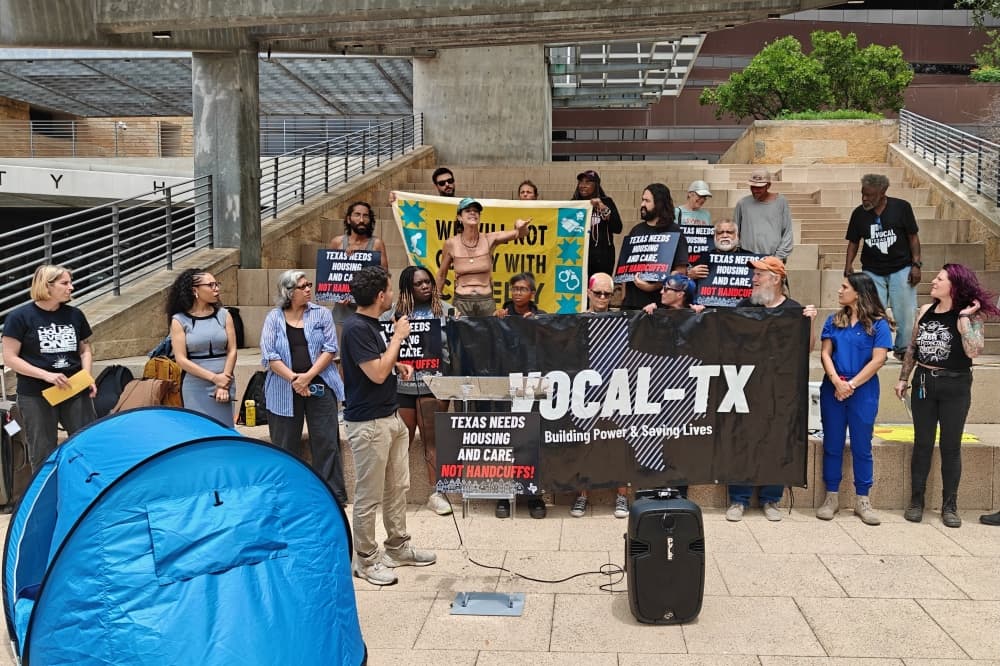
The change was also opposed by many people experiencing homelessness and a coalition of local groups organized by the criminal justice and homelessness-oriented activist organization VOCAL-TX.
Several residents testified to their negative experiences during past Austin-led encampment sweeps, saying they'd been mocked by police officers, had valuables or critical documents thrown away without warning, or weren't offered shelter or supportive services. Others said the strategy only harms those living on the streets, and that more resources like shelter and housing assistance are needed before encampment closures are effective.
“These initiatives just hide homelessness; it pushes you out of sight so you don’t have to feel it. But we’re still here and we’re still human, and you can’t just get a shop broom and brush us all into a dustpan," VOCAL member Joann Causey said.
Opponents of Austin's new encampment system rallied outside City Hall after a briefing on the program to City Council. (Ben Thompson/Community Impact)
Gray said he expects Austin can rebuild community trust through a consistent approach that reaches measurable results.
“My hope is that we’re able to really demonstrate something different through this process, minimize mistakes and maximize getting people into services," he said.
What else?
New options for residents to submit service requests and track the city's response are in the works.
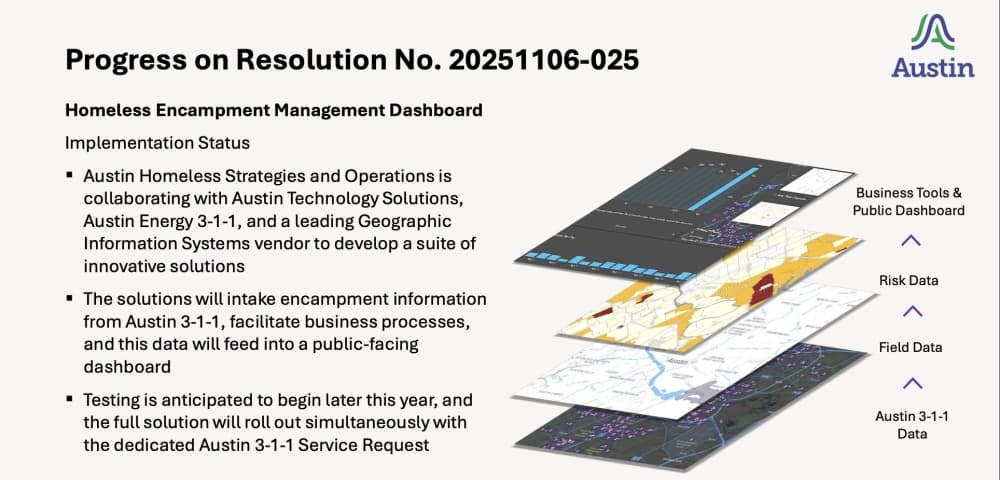
One change coming later this year is the addition of a dedicated 3-1-1 service option for public encampments. And at council's request, Austin is also launching an encampment management dashboard with mapping and other data available to the public.
Austin is creating a homeless encampment management dashboard. (Courtesy city of Austin)
Austin leaders eye water conservation measures for major projects as data center growth raises resource concerns