As Fort Bend ISD prepares for a new school year, district officials are waiting to see how the new Texas Education Freedom Accounts affect enrollment.
The big picture
State lawmakers created the TEFA program in 2025, and accepted students will receive some funding for education opportunities that include: private school tuition and fees; tutoring and therapy; homeschooling; and other services. Funding is capped at $1 billion for the first year of the program, and about 122,000 students of the over 274,000 who applied have been accepted, including 85,344 participants who have received funding.
Accepted students who are enrolling in private schools are set to receive $10,474 to spend on tuition and related expenses. Meanwhile, homeschool students are eligible for $2,000 each, and students with disabilities can receive up to $30,000 each, depending on their individual needs.
Students with disabilities who come from low- and middle-income households are given priority for funds, followed by children from low-income households.
Locally, Fort Bend ISD saw 8,429 students—the third highest in the state—apply for the TEFA program for the 2026-27 school year, with expected enrollment losses anywhere from 700 to 1,100, said Jaretha Jordan, deputy superintendent of teaching and learning.
“We won’t know the full impact of [the program] until the enrollment stabilizes after school starts, no-shows are dropped and after the post-Labor Day employment period,” said Executive Director of Finance Kelly Schlacks. “A more reliable enrollment number is expected mid- to late-September.”
Zooming in
Over 2,700 private schools—including more than 40 Sugar Land-area schools—have been approved to accept TEFA funding alongside hundreds of tutoring groups, therapy centers and other service providers, per a map on the program website.
Private schools, which require tuition payment, are not overseen by the Texas Education Agency and instead are governed by the Texas Private School Accreditation Commission, which ensures accreditation criteria are constantly evaluated and updated.
Unlike Texas public schools, private schools are allowed to reject students, and state law does not require schools participating in the program to accept all interested families.
In several states with similar programs, enrollment data shows that a majority of participants were already enrolled in private schools when they joined the program. As of June 10, Texas data shows that 43% of students selected for the program attended a public school in the 2024-25 school year and 57% were enrolled in a private school or homeschooled.
Why it matters
Public school districts receive funding based on attendance rather than total enrollment, according to the Texas Association of School Boards. Attendance is taken daily and a formula is used to determine how much funding each district receives.
TASB found that a district loses $45 per child for every day missed from school.
Former FBISD Chief Financial Officer Bryan Guinn, who left the district earlier this year, previously said each attendance percentage point equates to $6 million for the district. In 2026-27, FBISD predicts a $7.8 million to nearly $12 million loss to the TEFA program with expected student participation, Jordan said.
Toni Templeton, a research scientist at the University of Houston Education Research Center, said the TEFA program can put pressure on ISDs not only for funding they receive from the state, but in some rural areas, public schools are the largest employers in the region.
“When you put in policies like the [TEFA] program, that would pull public school dollars away from the public school system, you are not only reducing the educational opportunity that those dollars could fund for students, but also you could be creating unemployment issues for parents and families in those smaller regions,” Templeton said.
What they're doing
FBISD will launch seven new programs in the 2026-27 school year as a part of its Redesigned program aimed at retaining and recruiting students following five years of enrollment stagnation or decline. Additionally, the district is expected to see its smallest kindergarten class in 18 years.
The programs include specialized programs aimed at attracting students to specific campuses as well as an online school, which many districts across the state have begun to implement.
Programs include:
- High school virtual learning
- Middle school choice programs
- Dual-language program
- Mandarin immersion program
- Limited open enrollment
- Employee childcare
- Leadership pipelines
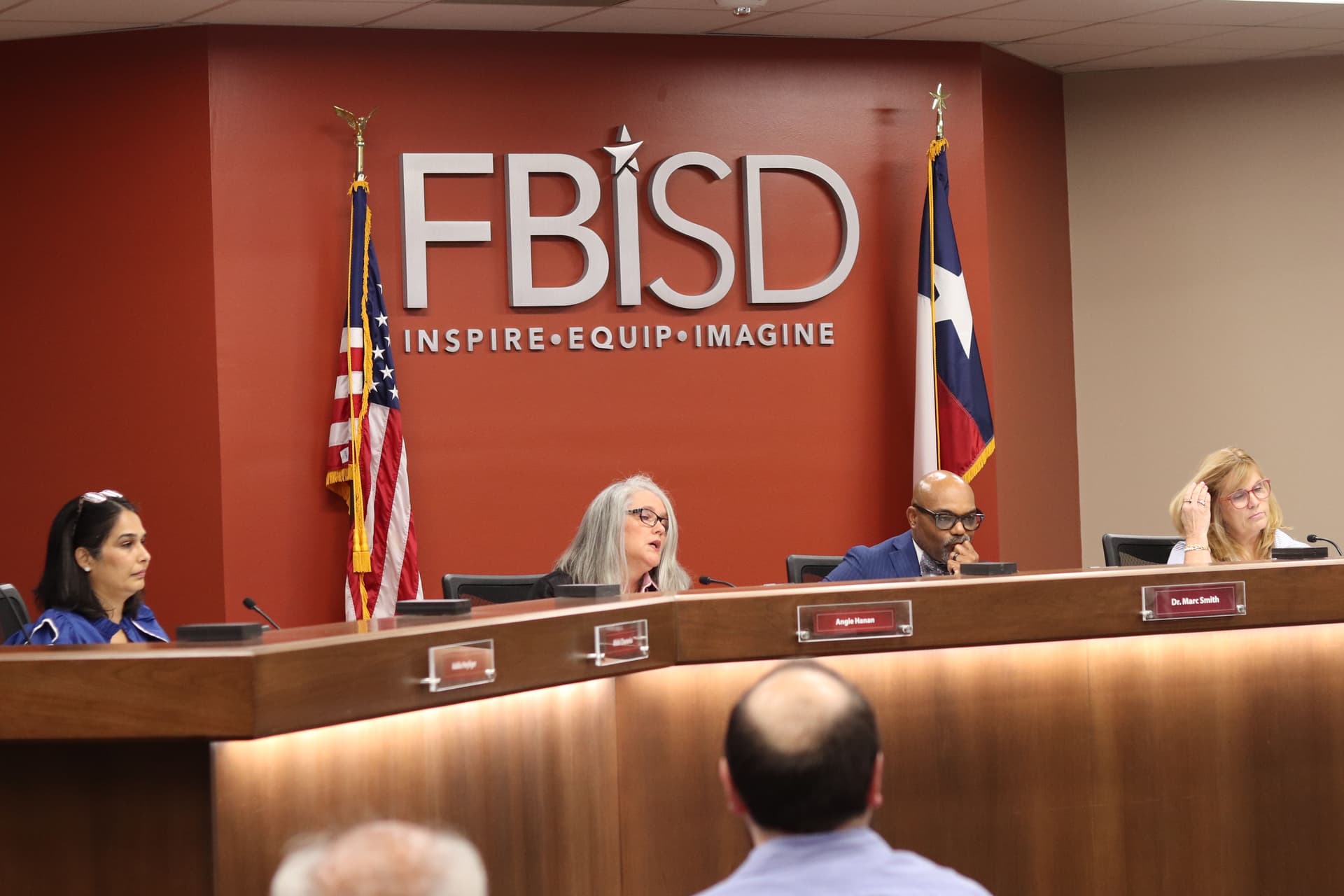
“While many districts are facing significant challenges, we as a district are responding in a very thoughtful manner, a very clear vision focused on our future and just being strategic with the work that we are engaged in,” FBISD Superintendent Marc Smith said at a July 20 agenda review meeting.
Officials said the seven programs are the first phase of a multiyear process directed toward “rethinking what education looks like in 2026” with plans to expand high school academics as well as expand opportunities to elementary.
Stay tuned
Texas has the largest program waitlist in the nation with more than 121,000 eligible students waiting to join the program, according to the comptroller’s office.
Some state lawmakers have indicated that they want to increase state funding for the TEFA program during the 2027 legislative session.
However, due to its infancy, Templeton said the long term effects are unknown.
Contributions by Hannah Norton