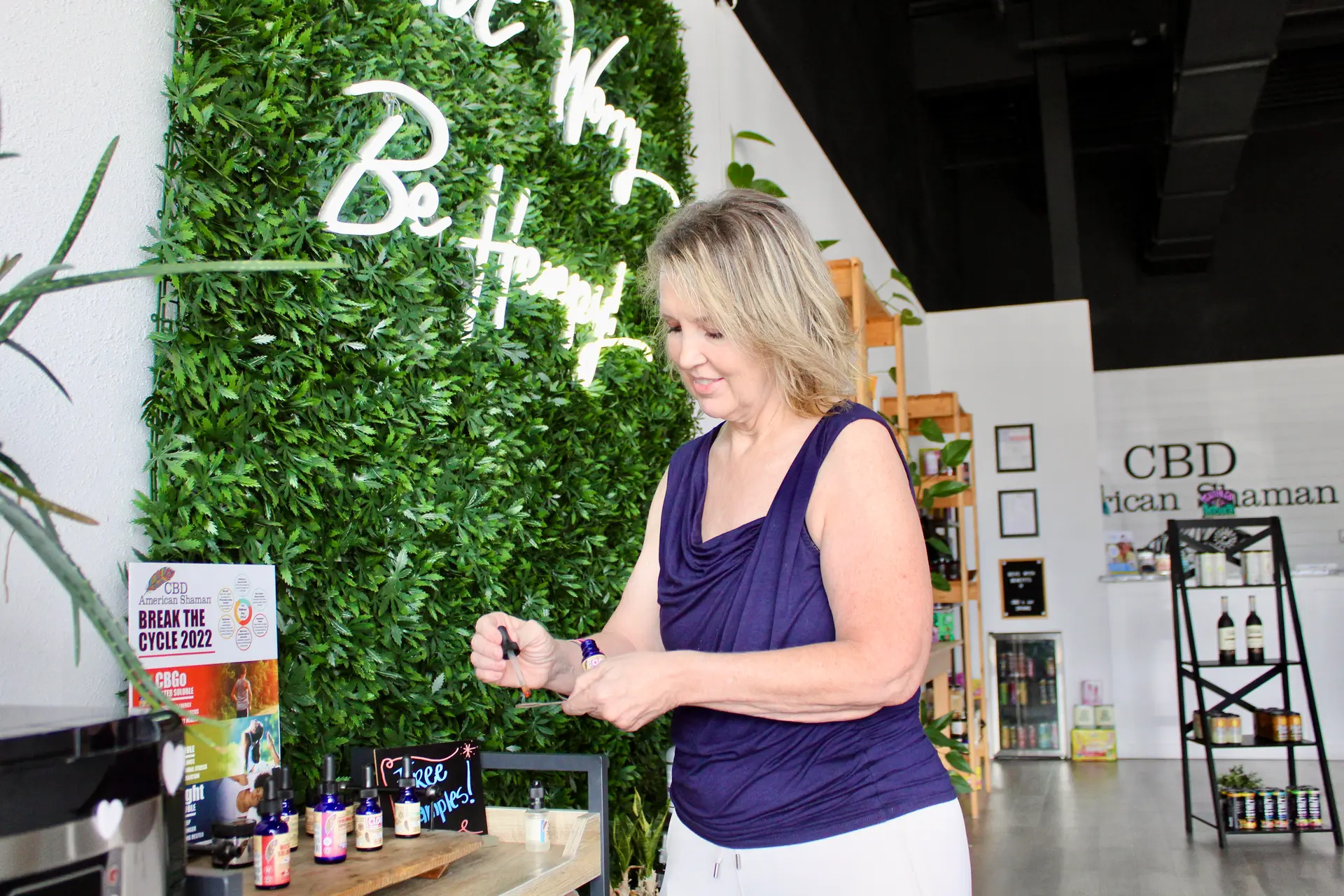
Owner Carole Baker said CBD American Shaman in Spring is amongst several retailers affected by recent hemp regulations in Texas. (Jovanna Aguilar/Community Impact)
Following the July 31 Texas ruling, which declared manufactured cannabis products such as Delta-8 unlawful, Joshua Belland, former owner of Green Flame Apothecary, said he shut down the “hemp side” of his business and rebranded as Vitality Lounge, shifting from selling legal THC products to wellness smoothies.
On May 1, 2026, The Texas Supreme Court ruled that the Texas Department of State Health Services (DSHS) had the legal authority to classify manufactured cannabis, such as Delta-8, as a controlled substance, reverting to its 2021 definition of Tetrahydrocannabinols (THC), officials with the DSHS officials said.
The law took effect on July 31, affecting thousands of businesses by prohibiting the sale of at least half of its products. Per DSHS records, as of press time, 2,391 retailers in Harris County have a current hemp license with 145 located in Spring-Klein.
Carole Baker, owner of CBD American Shaman in Spring, said 60% of her inventory was lost due to the new Texas THC regulations. As a small business owner, Baker said she does not see it as feasible to pay $5,000 to renew her license and does not know how she will move forward when the time comes.
Belland said that while he considered staying in business selling Delta-9 products, the cost of a hemp license made the business unsustainable.
“You can still get a pretty strong gummy under the current rule,” Belland said. “But when you consume THC, it breaks down into a different chemical that can affect people differently and, in some cases, cause panic attacks.”
What you need to know
DSHS officials said the Texas legislature first passed a law regulating retail consumable hemp products in 2018. The law allows the sale of consumable hemp products with up to 0.3% Delta-9 THC—which is still the case despite the latest regulations. However, at the time, retailers began selling other intoxicating hemp-derived compounds such as Delta-8, under that framework.
In 2021, in the case Sky Marketing Corp. v. Texas Department of State Health Services, Texas ordered the DSHS to undo its most recent changes to how it defines tetrahydrocannabinols (THC) and marijuana extract. In 2026, the court made its decision, officially marking Delta-8 products as unlawful controlled substances.
According to the U.S. Food & Drug Administration, Delta-8 THC is one of over 100 cannabinoids produced naturally by the cannabis plant but is not found in significant amounts in the cannabis plant. As a result, concentrated amounts of Delta-8 THC are typically manufactured from hemp-derived cannabidiol.
Per DSHS, the new regulations also raised the annual licensing fees hemp retailers must pay to the state. Retailers are now required to pay $5,000 per retail location each time they renew their operating license, up from the previous fee of $150.
According to the Texas Comptroller of Public Accounts, from Sept. 1, 2025-Feb. 28, 2026, Texas made $1.3 million in revenue from hemp products as opposed to $364,198 in 2020.
Sunne Walton, owner of Sound Revolution in Spring, said the new cannabis regulations make her want to steer away from renewing her business hemp license, which she previously used to sell edibles that were lower in THC.
Terms to know
CBD: Is a single compound in the cannabis plant and is different from Marijuana.
Delta-8: Is a psychoactive substance found in the Cannabis sativa plant manufactured in the lab. The ‘controlled substance’ is illegal as of July.
Delta-9: The component responsible for the “high” people may experience from using cannabis. In accordance with Texas Health and Safety Code 443, consumable hemp products may contain delta-9 tetrahydrocannabinol at a concentration of not more than 0.3 percent on a dry weight basis. This component remains legal in Texas.
The impact
With the majority of his sales previously originating from Delta-8 products, Belland said Delta-9 products with under 0.3% THC have no effect in flower form and are only effective when consumed orally.
“We built up a nice little community of people that would come in, enjoy our products. We had a lot of veterans and even first responders with [medical] cards who would choose to come here,” Belland said.
While Delta-8 has been used for wellness purposes, according to the U.S. Food & Drug Administration, there has been an uptick in reports to the FDA and the nation's poison control center as a result of Delta-8.
The FDA noted that national poison control centers received 2,362 exposure cases of Delta-8 THC products between Jan. 1, 2021—the date that Delta-8 THC was added to its database—and Feb. 28, 2022. The FDA also states the dangers of marketing Delta-8 products as therapeutic or for medical use.
At the same time, business owners such as Baker say CBD and Delta-8 are commonly used by people dealing with sleep issues and anxiety.
"A lot of [people] are trying to solve a problem [and] sleep is one of the biggest,” Baker said. “Some people like to smoke, some people like gummies … different formats work better for certain people and certain issues. Take your format away—that's a massive impact.”
Also noting that in the 1990’s doctors saw the medical benefit cannabis had, Baker said she believes a “false narrative” was created by industry insiders to “avoid competition.”
“I have a lot of older people that have aches and pains and diseases, and they just hurt, and they need a solution,” Baker said.
Timeline:
On June 25 the DSHS issued a notice reinstating clarifications to the definitions of Tetrahydrocannabinols and Marihuana Extract established in 2021. In the notice the decision unfolded as follows:
2018: Federal Farm Bill de-coupled definition of hemp from marijuana, allowing for more widespread production.
2019: House Bill 1325 legalized hemp containing no more than 0.3% Delta-9 THC by dry weight.
Nov. 8, 2021: A Texas court ordered the DSHS to undo its most recent changes to how it defines THC and marijuana extract in the state’s official list of controlled substances.
Jan. 21, 2022: DSHS published a notice of compliance with this order until further notice of the court allowing the sale of other forms of THC other than Delta-9 THC including Delta-8.
May 1, 2026: The Texas Supreme Court overturned the lower court’s decision and also canceled the temporary order that stopped the Texas agency from making the changes.
June 5, 2026: The court made its decision official and closed the case against the plaintiffs.
July 31, 2026: New regulations went into effect prohibiting the sale of Delta-8 tetrahydrocannabinol (THC) products.
CBD gummies contain a single compound in the cannabis plant and is different from Marijuana. CBD continues to be legal in Texas despite the recent regulations. (Jovanna Aguilar/Community Impact)
(Jovanna Aguilar/Community Impact)
Zooming in
While business owners were given about a month-long grace period to figure out how to best dispose of their products, Belland said he lost about $10,000 worth of inventory.
With no guidance provided as to how to best dispose of their products, Belland said resources such as DSHS listed the penalties businesses and individuals could face if caught with the banned products.
According to the DSHS website, anyone with “consumable hemp products labeled to contain Delta-8 THC or shown to contain more than trace amounts of tetrahydrocannabinols, including Delta-8 THC, may be detained and referred to law enforcement.”
What's next
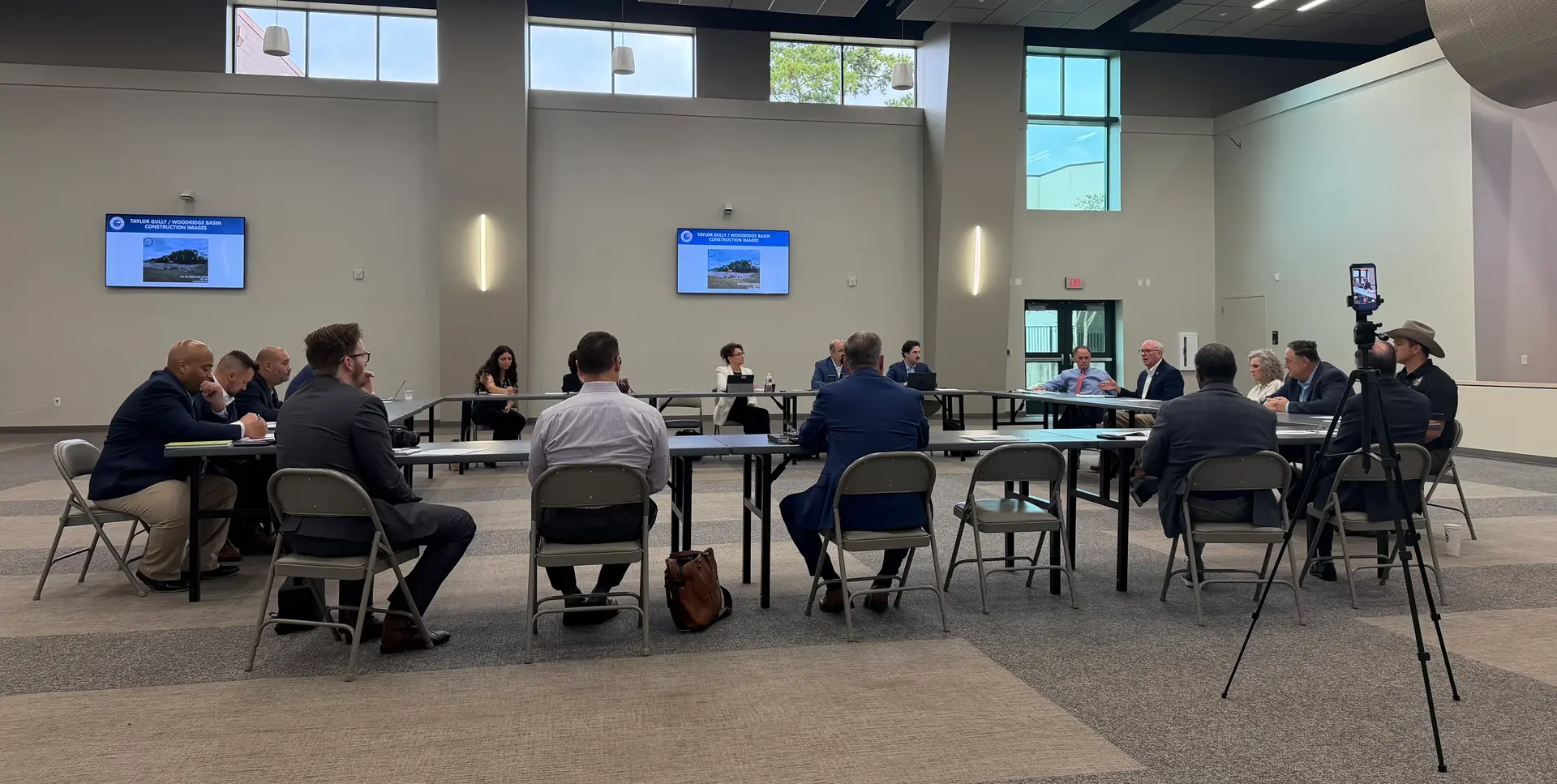
Sarah Todd, a representative for the Texas Cannabis Policy Center, said an increase in criminalization and safe access to THC products are the main concerns the organization has as a result of the new regulations. The Texas Cannabis Policy Center is a hub for Texas cannabis news, policy overviews, recommendations, and grassroots engagement with lawmakers.
As a result of the new hemp regulations, Todd said hemp-related arrests can affect employment, housing, federal student aid, professional licenses, driver’s licenses and mental health, even without conviction.
“We definitely feel like Texas is going backwards in terms of regulations. These new regulations are confusing and generally just against what Texans say they want,” Todd said.
Todd said the new regulation is also affecting thousands of local businesses. Texas has 12,601 registered hemp retailers and 661 registered manufacturers, per DSHS records.
To help the public understand hemp, Todd said there is a need for public health campaigns around cannabis consumption.
While Todd supports the need for regulations such as age verification, product testing and consumer-safety, she said when it comes to hemp regulation, Texas is moving in the “wrong direction” by confusing the public rather than informing them.
Looking ahead, Todd said the Texas Cannabis Policy Center expects lawmakers to revisit the issue, as a possible federal hemp restriction, tied to a Dec. 11 deadline, which creates additional uncertainty.
“I think it's important to let readers know that if they want change, they need to vote, and it's pretty clear who's against it, who's trying to take away access from it, and I think that it's important to also know why they're doing this, and it's not simply over ethics or morals or any type of moral standard," Belland said. "It has to do with money … because they have a monopoly on the industry and Hemp was taking away that monopoly … So if you want change, you got to vote.”