As a new project to expand a data center nears completion, officials say the development could be a unique opportunity for the region.
The big picture
Four data centers currently call the north Harris County area home, including TRG Datacenters, where officials are working on constructing a $6.6 million expansion to the facility in Spring in 2026.
“Data centers have been around for a long time. The difference now is that they are much bigger and the requests to build them are coming at us quickly in great abundance,” Bobby Lieb, president and CEO of the Houston Northwest Chamber of Commerce, said.
While centers such as Serverfarm along Hwy. 249 moved into existing facilities and spaces, the new development highlights the Spring area as an access hub to the Greater Houston area.
“As a data center, the importance of being able to transfer this information is of paramount,” TRG Datacenters CEO Chris Hinkle said in a news release. “That is why our close proximity to major fiber areas is of such benefit.”
TRG Datacenter officials noted the new facility, located on 2626 Spring Cypress Road, offers direct access to Houston, The Woodlands, Katy and the Energy Corridor through multiple freeways and airports.
“We needed to be as close as possible to all of them, because distance slightly affects the speed and quality of data,” Hinkle said. “We also wanted to be close enough to key customers so they could visit us if they wished.”
The Spring and Klein areas have also been selected due to reduced flooding risks, access to power infrastructure and access to a number of existing tech businesses in the area.
How it works
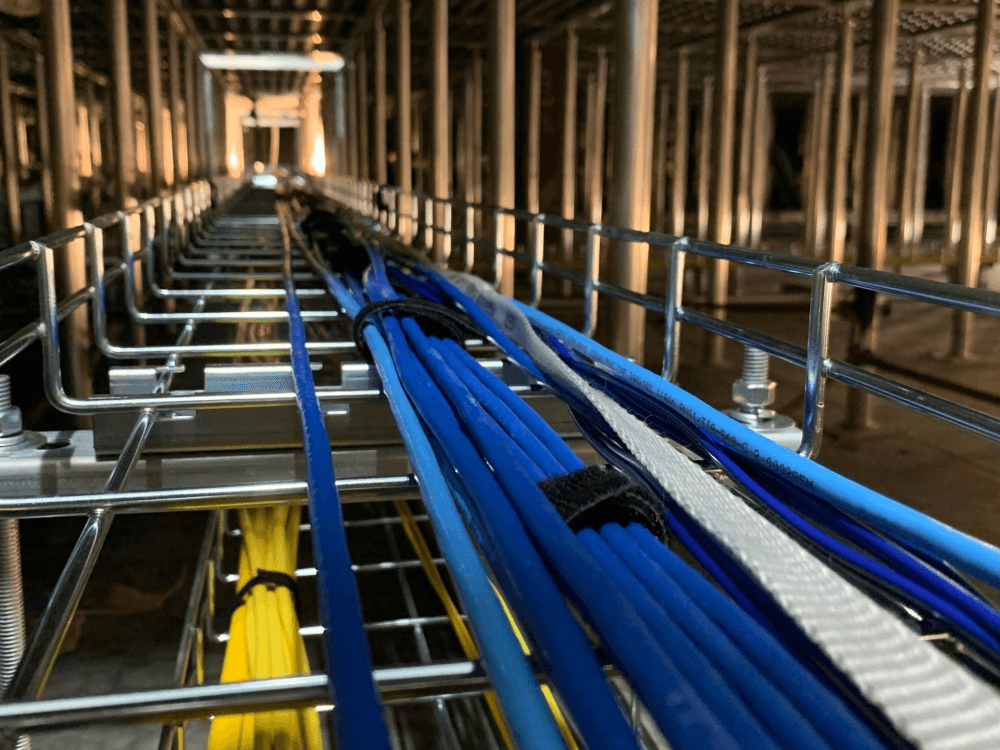
While data centers have become synonymous with artificial intelligence, the actual function of such facilities is directed at housing data and systems which process it.
“What’s going on now with the data centers reminds me of the broadband buildout in the 2000s,” Lieb said. “Every community was clamoring to try and get broadband so that they could have access to high-speed internet.”
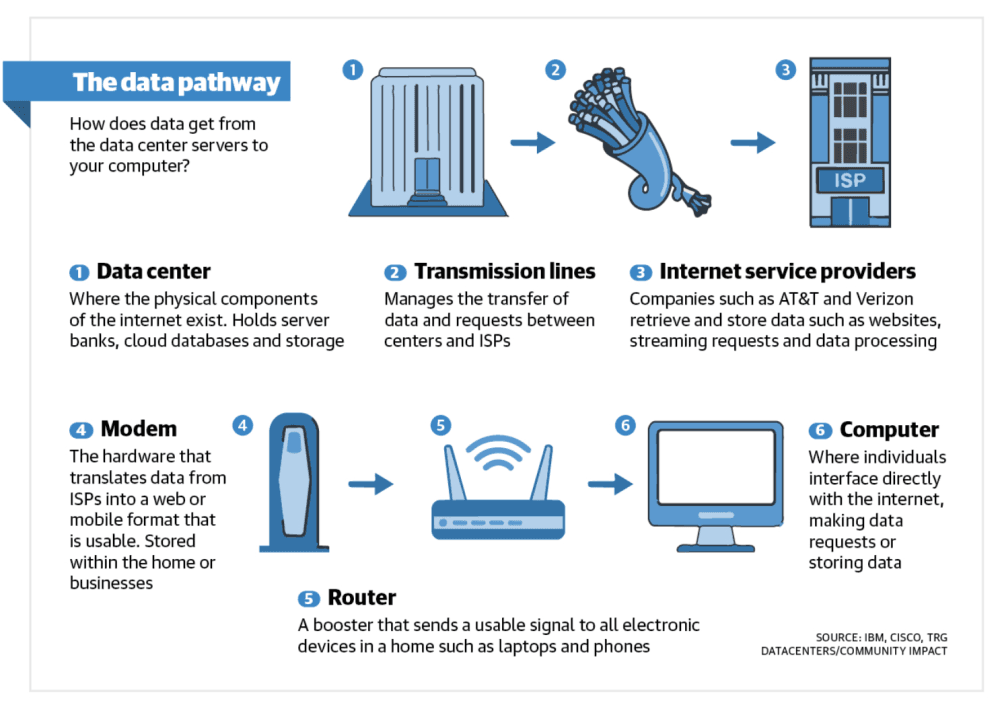
A data center is the physical structure behind the internet, according to technology companies such as Cisco and IBM. Data stored and processed in centers is then either used by internet service providers such as AT&T and Verizon to sell directly to customers or by large businesses to run internal systems.
Lieb said technology companies such as Hewlett-Packard and Foxconn created an IT hub in the greater Spring area that leads to a demand for data centers.
“There is an established tech community in northwest Harris County, which makes it attractive for these other tech companies to establish here,” Lieb said. “Those businesses are still here, very prominent and employ a great deal of our local workforce.”
The impact
Lieb said the development of data centers has generated concern regarding water usage, but multiple developers are now relying on closed-loop cooling systems to recycle water and reduce overall consumption.
“Facilities dependent on evaporative cooling face growing regulatory exposure as water-stressed regions tighten consumption permits and discharge requirements,” the Serverfarm website states. “Closed-loop systems prevent water evaporation entirely.”
Lieb said the community held some misconceptions regarding the use of water for cooling in data centers, citing the majority of the centers in Spring utilize a closed-loop water system.
“They recycle the water, not to say that everybody’s going to if someone is an operator and trying to cut corners if you will, so those things need to be checked,” Lieb said.
Zooming out
Electricity usage is another common concern shared when it comes to data centers, Lieb said. The 2026 Annual Energy Outlook from the U.S. Energy Information Administration highlighted data centers as a dominant driver of energy consumption.
“After 15 years of nearly flat U.S. electricity consumption, demand has increased by 2.1% per year, on average, over the last five years,” the report states. “We project electricity consumption will continue growing through 2050 at a rate of 0.9% to 1.6%, with data center server energy use a major factor.”
However, Lieb said centers such as Serverfarm are making internal power generation systems in place a priority to reduce the strain on the local energy grid.
“Texas, with regards to power, is in a good spot to accommodate these new data centers and other industrial operations,” Lieb said.
Looking ahead
Lieb said residents should become more aware of data centers and how they work to provide data processing and storage before turning away such developments.
He said many of the concerns expressed by residents are being addressed by data center developers, and emphasized the need for internet infrastructure to continue serving residents and businesses.
“Data centers are and will at some point just need to be considered necessary infrastructure," Lieb said. "The reality is that we're going to need these things, whether we like them or not, so let's figure out how to accommodate them.”