


For many students, high school is a cycle of rushing between classes, memorizing information for tests and moving on to the next assignment.
Waterloo School, a private Christian high school in Austin, was founded on a different idea. Students learn by doing and develop skills to answer life’s real questions after graduation.
Established in 2019 by a group of experienced educators who believed traditional school models often fall short of what teenagers truly need, Waterloo was designed from the ground up to help students in grades 9-12 become curious, capable and engaged young adults.
From its project-based learning approach to its daily schedule, the school’s model is centered on how adolescents learn best.
What is project-based learning at Waterloo School?
As a liberal arts high school, Waterloo provides a strong foundation in English, history, math and science. The difference lies in how students engage with those subjects and apply what they learn.
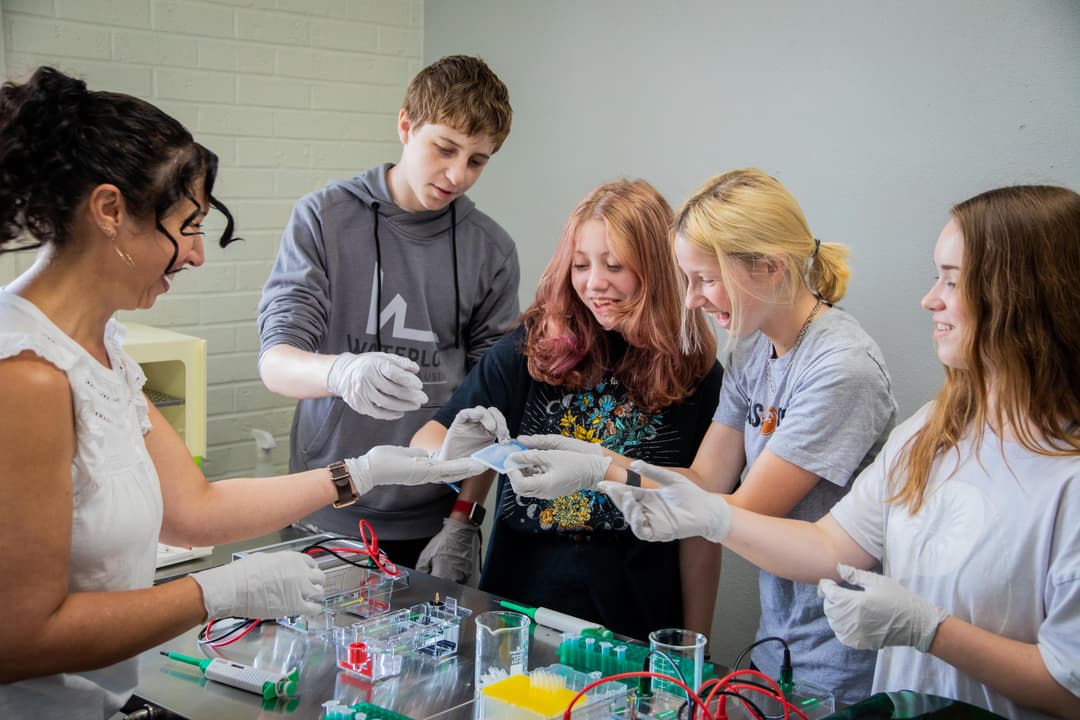
Learning begins with a “driving question” and comes with the responsibility to help others and create something meaningful for an audience beyond the classroom. Projects become more than classroom assignments, the school’s faculty said.
“When students are tasked with doing something for an audience that's outside of the classroom, that's not the teacher … the grade becomes secondary,” said Founder and Director Craig Doerksen.
Project-based learning at Waterloo could look like:
Students in Spanish class creating Spanish-language children's books for local elementary school students
Students in a literature course called Justice and Mercy traveling to El Paso on a border encounter trip and then developing digital resources for a nonprofit partner there
Government and economics students building a political party platform from the ground up, analyzing how populations are influenced through demographics, geography and economic research
A signature project-based experience comes during junior year, when every student completes an independent, year-long project centered on a question, need or audience they care about.
Past projects have included creating marketing materials for Austin nonprofits, helping animal rescue organizations increase pet adoptions and designing cover art.
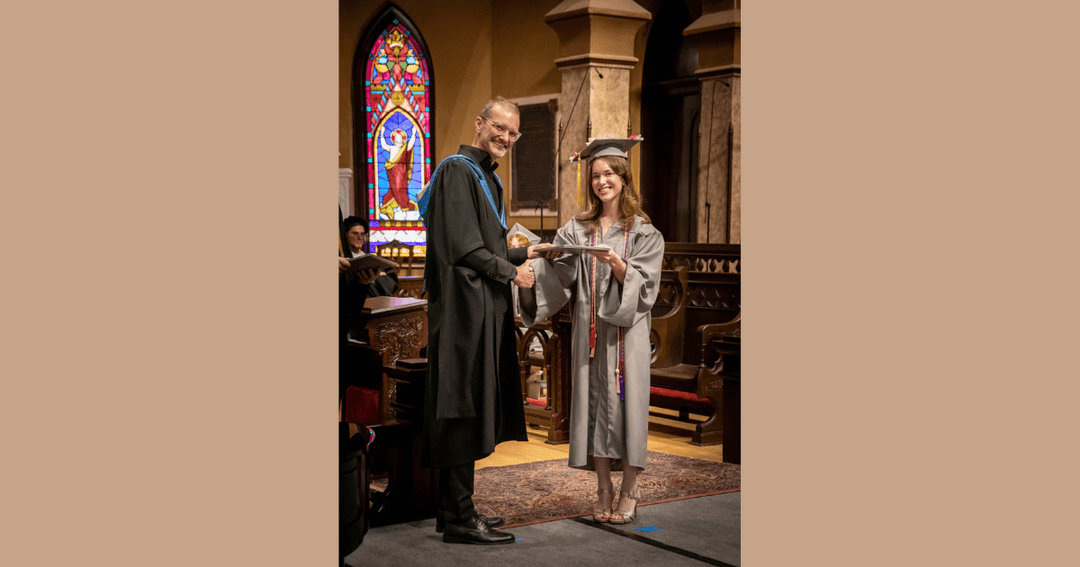
Geoff Sahs, director of faculty development and engineering and history instructor, said that along the way, students learn practical skills such as communication, time management, collaboration and professional networking, and most notably, confidence.
“All of them across the board are working on real-life skills that are going to translate,” Sahs, who leads the Junior Project program, said. “It's not just college prep; it's life prep.”
How does the academic schedule work at Waterloo School?
Day to day, Waterloo’s educational philosophy shows in its research-backed schedule that uses longer learning blocks to support both academic outcomes and student well-being.
Instead of six or seven short class periods each day, students focus on just two courses at a time over a 10- to 12-week term. Each class meets for an extended block of approximately 2.5 hours.
Doerksen said the schedule setup erodes the requirement to think ahead to the next subject. By concentrating on fewer subjects at once, students can spend more time exploring ideas and engage in meaningful discussions, labs and projects.
The extended class periods also create a natural context for building teacher-student trust. Teachers do not lecture students for an entire class period; instead, they have time to teach curiosity and give students space to take intellectual risks without fear of failure.
“In a few years we'll write college letters of recommendation for these kids, and we have some really great stories to share about their growth throughout just a 12-week period,” said Christina Swan, cofounder, admissions director and science instructor. “We’re seeing them understand the subject and the application of it and how important it is in the value that they're creating.”
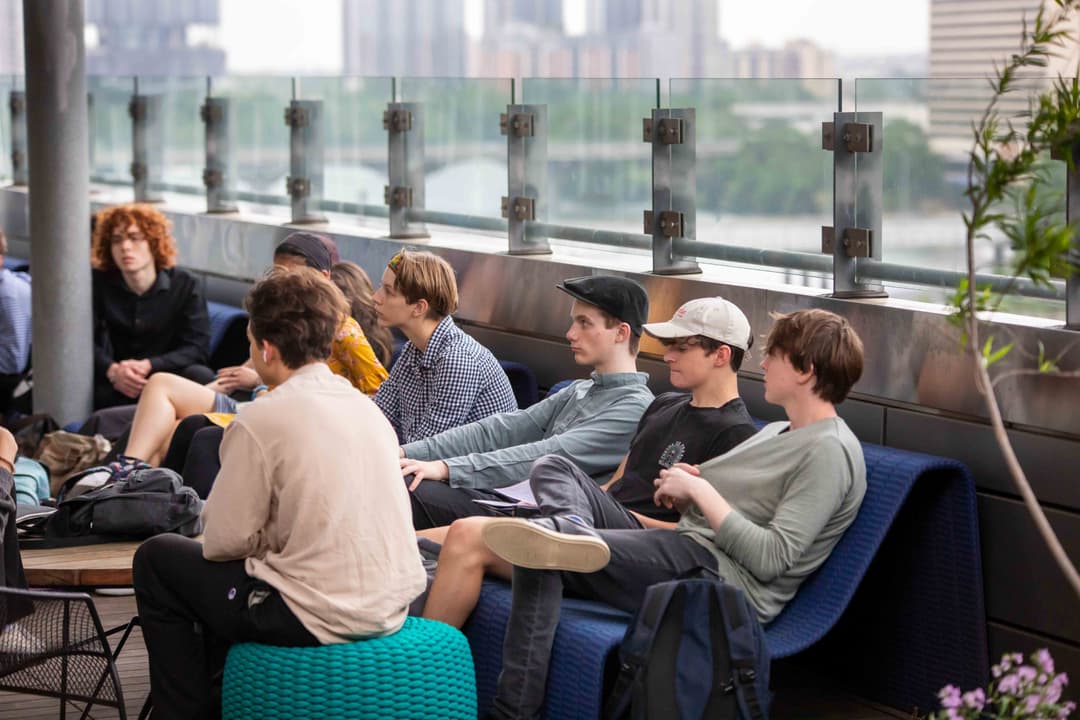
At Waterloo, Fridays are an extension of the school's project-based philosophy. Rather than following a traditional class schedule, students use the day for advisory, community life, internships, service projects and independent work connected to their academic goals.
How does Waterloo School prepare students for college and careers?
While Waterloo's project-based model looks different from a traditional college-preparatory program, college readiness was intentionally built into the school's design from the beginning.
Students’ academic performance, project work, internships and leadership experiences help create a compelling story for transcripts in college applications.
Juniors also take dual-enrollment courses through The University of Texas, giving them experience with college-level expectations and the opportunity to earn college credit before graduation.
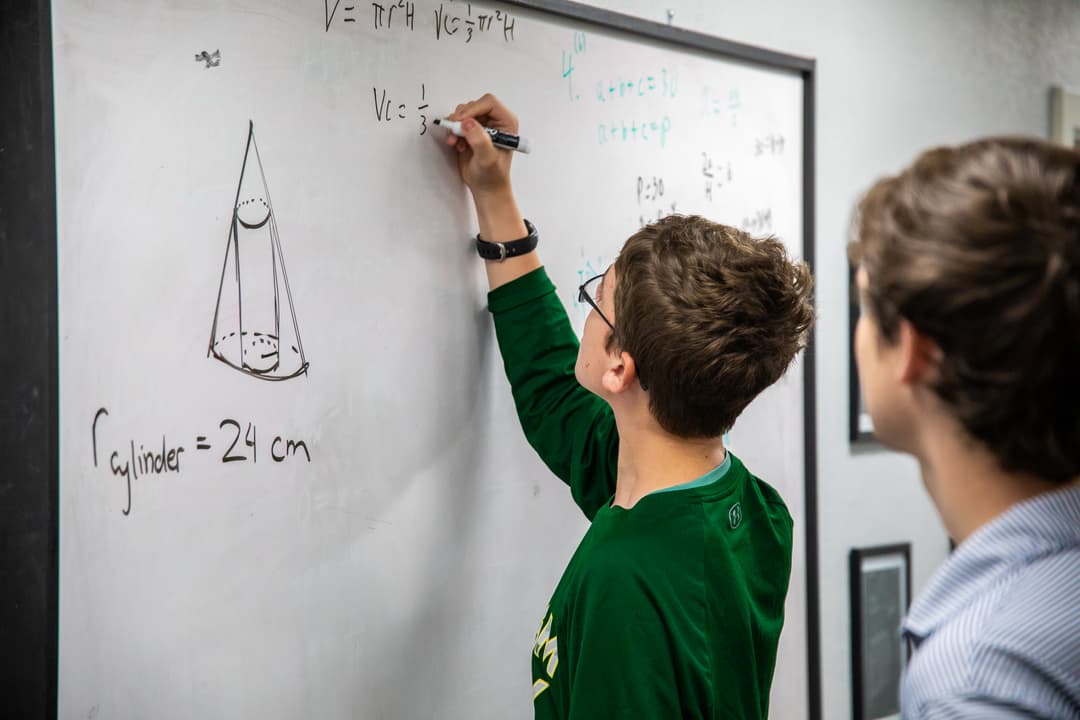
Ultimately, Waterloo's goal extends beyond college acceptance letters. Faculty members want graduates to leave with an ownership of their learning and confidence in their ability to contribute to the world around them.
“They go to college with not just a sense of ‘what do I want to study,’ or ‘where do I want to go,’ but ‘what do I want to get out of college while I’m there?’” Doerksen said. “... If we can prepare them to be as fully mature and human, and ready for life as possible at 18, college is the least of their concerns about being ready.”
What should parents know about Waterloo School?
The question “What do I need to know to get the A?” will go unanswered at Waterloo, Swan said. The students who thrive at Waterloo are those who are curious, motivated and engaged—qualities the school works to cultivate every day.
“Whatever it is in this community, whether they're on our leadership team or athletics, they’re figuring out ways to get engaged and become very interesting people because they are really interesting people; they just have the freedom now to do that even more,” Swan said.
In an educational landscape often focused on test scores and credentials, Waterloo offers an education for life—one that seeks to develop not only successful students, but thoughtful, capable people prepared for whatever comes next.
Waterloo School will host open house events at 9 a.m. and 7 p.m. Oct. 22 at 1511 S. Congress Ave., Austin. RSVP and learn more about the school here:
Website: www.waterlooaustin.org
Address: 1511 S. Congress Ave., Austin
Phone: 512-758-4445
Email: [email protected]
What makes Waterloo School different from a traditional high school?
Waterloo students focus on two classes at a time during 10- to 12-week terms rather than rotating through multiple subjects each day. The school's project-based model emphasizes deep learning, collaboration, real-world application and strong relationships between students and teachers.
What is project-based learning at Waterloo School?
Every course is built around meaningful questions and projects that connect classroom learning to real-world needs. Students regularly create work for audiences outside the school, including nonprofits, community organizations and local partners, helping them develop practical skills while making an impact beyond the classroom.
How does Waterloo School prepare students for college?
Waterloo combines a rigorous liberal arts curriculum with opportunities that help students develop independence, communication skills and a sense of purpose. Juniors take dual-enrollment courses through The University of Texas, while internships, independent projects and leadership experiences help students build strong college applications and prepare for life after graduation.
What type of student thrives at Waterloo School?
School leaders say students who are curious, motivated and engaged tend to thrive in Waterloo's environment. The model is designed for students who enjoy asking questions, collaborating with others, tackling complex challenges and taking an active role in their own learning.