

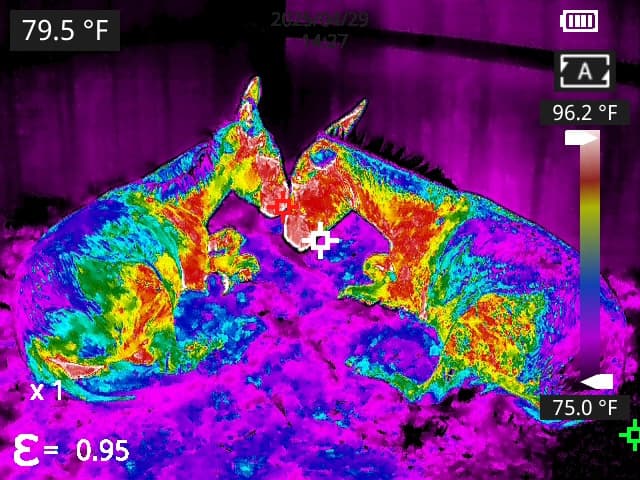
For many North Texas pet owners and barn managers, it can be difficult to know when an animal's limp, change in behavior or performance issue is minor or a sign of a more serious underlying problem.
That's where 4 Legged Thermal Imaging is stepping in. Founded by father-and-son team Murph and Dustin Dykes, the company uses infrared thermal imaging technology to help identify potential areas of inflammation, injury or circulation issues in horses and dogs before they become more serious—and more costly.
“We love animals … but we're also there to help people,” Murph Dykes said. “We help them, it'll help the animal. Or if we help the animal, it'll help the owners.”
What is 4 Legged Thermal Imaging?
While thermal imaging has become increasingly common in various industries, Murph Dykes has more than two decades of experience with the technology.
After years working in the flooring industry, he began using infrared cameras to identify hidden moisture issues beneath residential flooring, becoming one of the first professionals in the U.S. to use thermography for moisture intrusion investigations.
Over time, customers began asking whether he could check out entire rooms in their houses or examine their pets. Curiosity and the demand for that type of service on animals eventually led Murph and Dustin Dykes, the latter of whom had been working alongside his father in the flooring industry, to train under Dr. Donna Harper, a pioneer in veterinary infrared thermography.
They got certified in equine/canine thermal imaging and built what would become 4 Legged Thermal Imaging. Today, while the company maintains a clientele of homeowners, its mission is to help Dallas-Fort Worth-area horse owners, dog owners and other animal caretakers achieve clearer pictures of their animals’ health.
What is thermography?
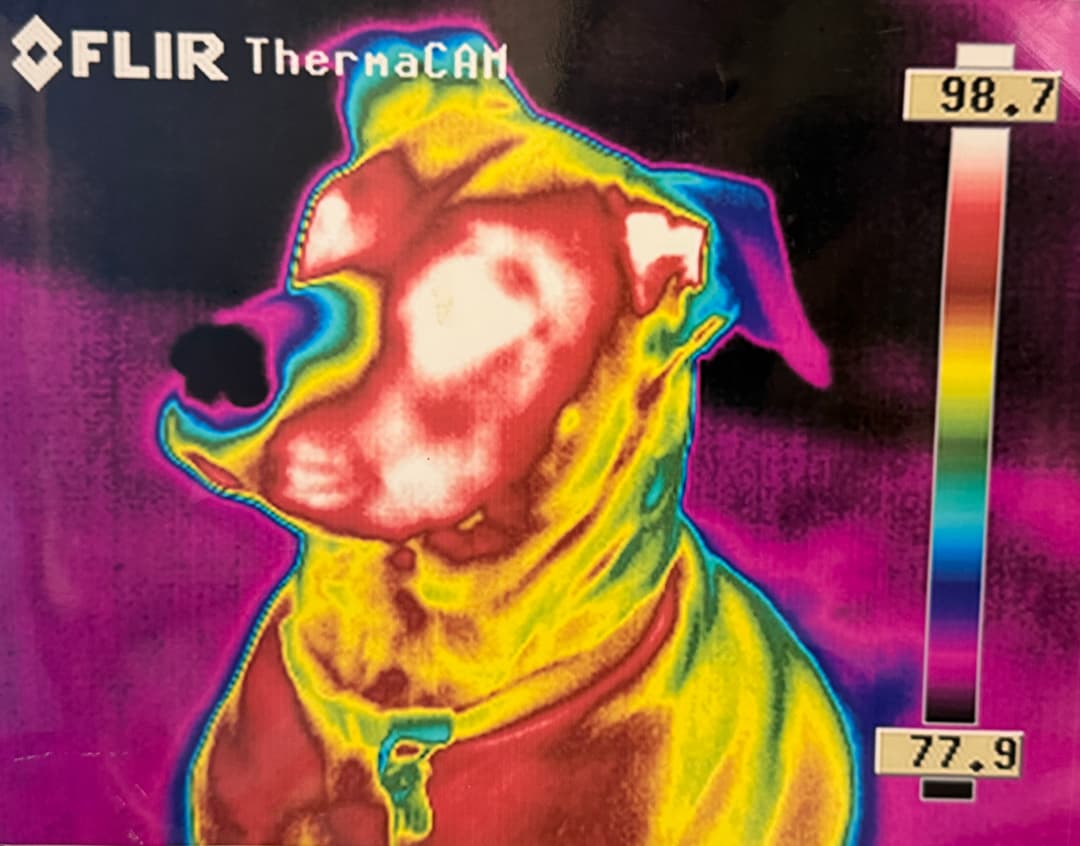
Unlike X-rays, MRIs or other diagnostic tools, thermal imaging does not diagnose injuries or medical conditions. Instead, it provides a visual map of heat patterns across an animal's body, helping identify abnormal areas that may warrant further investigation by a veterinarian.
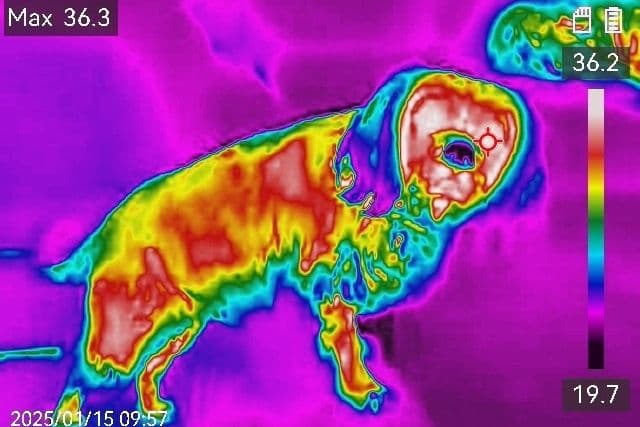
“With infrared, you're looking for—with horses and dogs—symmetry,” Dustin Dykes said.
Using medical-grade infrared cameras, the team captures a series of images that reveal temperature differences across the body. Healthy animals typically display symmetrical heat patterns. Areas showing unusually high or low temperatures may indicate issues like hoof inflammation, paw pad injuries, muscle strain and more.
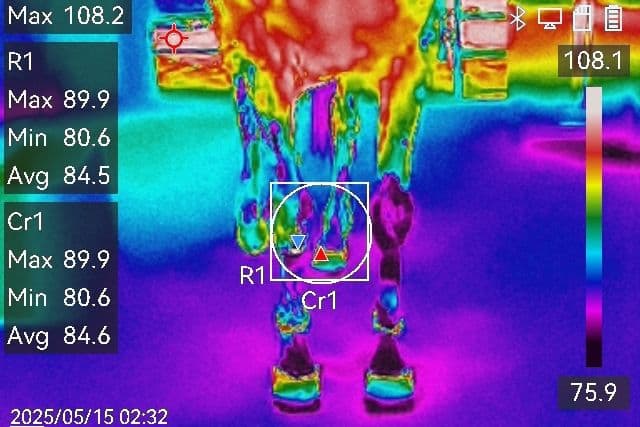
Dustin Dykes said the cutting-edge cameras are extremely sensitive, so even 2 degrees off from normal body temperature can help identify a potential problem area.
After each scan, 4 Legged Thermal Imaging generates a detailed report that pairs standard photographs with infrared images. Veterinarians or trainers can then use the report to assist with further evaluation.
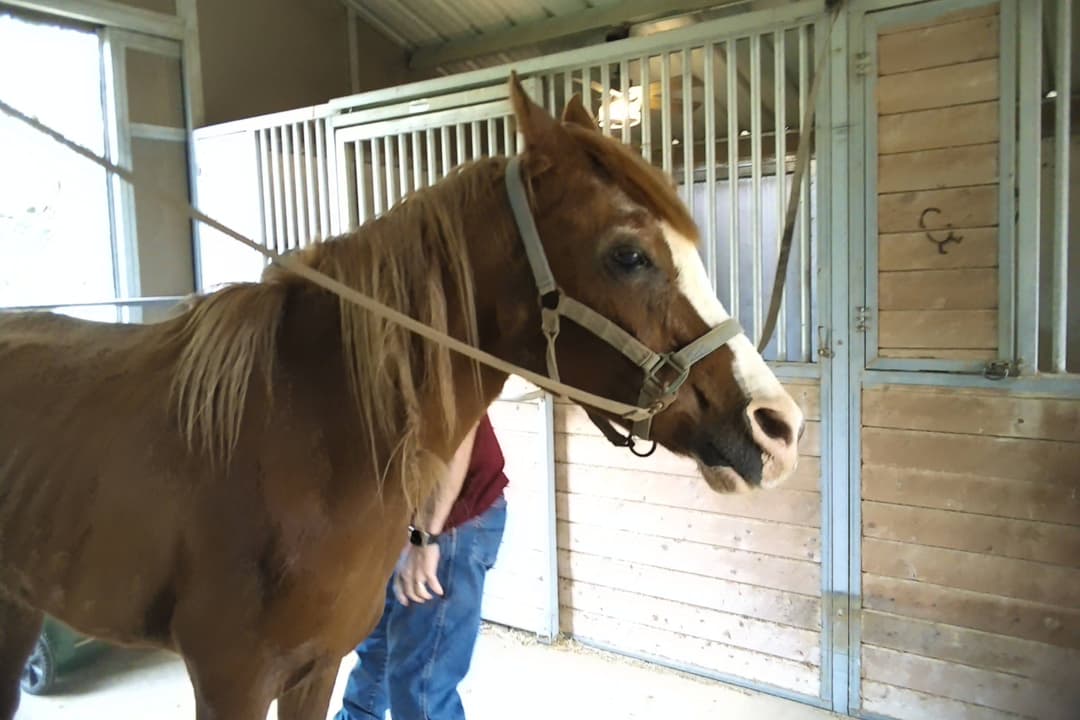
The process is noninvasive, requires no radiation and can often be performed at a horse's barn or a pet owner's home, helping reduce stress on the animal.
“Thermography is the first step,” Murph Dykes said. “It can let the veterinarian know that there is a possible problem in a specific area … it gives them a starting point on what to do with this patient.”
How can thermography help animal owners make informed decisions?
Over the years, the Dykes family has seen thermal imaging help in a variety of ways.
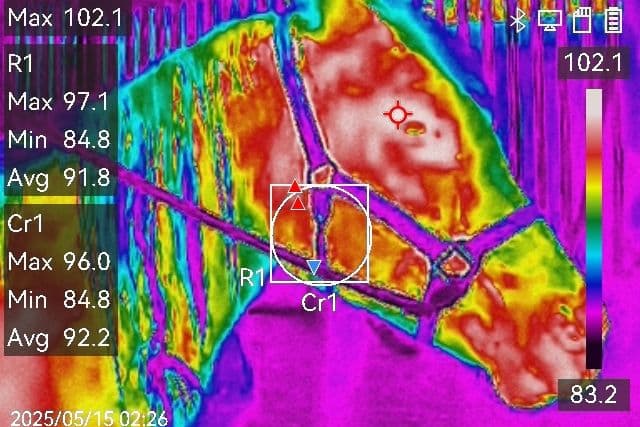
Murph Dykes recalls one of his earliest horse cases, where thermal imaging revealed a significant temperature difference around a horse's eye. A veterinarian later discovered an infection that could have resulted in the animal losing its eye if left untreated.
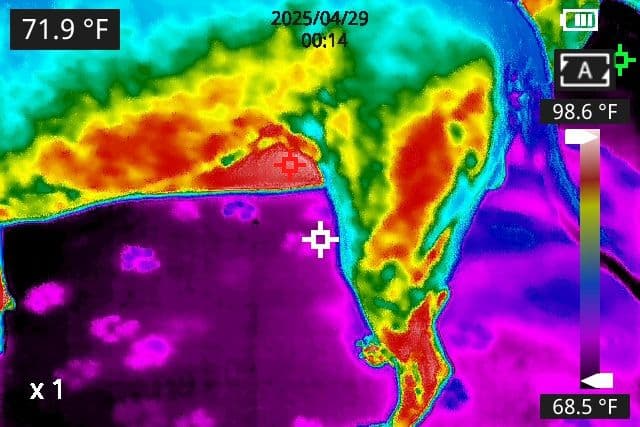
In another case, a limping basset hound had previously been treated for arthritis. After conducting a thermal scan, Murph Dykes identified a hot area in one paw. A closer inspection revealed a metal fragment lodged between the dog's paw pads that had caused a severe infection. Following treatment, the owner said the dog was back to running around the house with no limp.
Not every scan uncovers a serious problem, Dustin Dykes said. In many cases, the results provide peace of mind that an animal appears healthy and symmetrical. Other times, the information helps owners and veterinarians make difficult but informed decisions about treatment or quality of life.
A proactive approach to animal health
4 Legged Thermal Imaging’s goal is to educate people about what thermography is—and what it isn't.
The technology doesn't replace veterinary care. Instead, it serves as a proactive tool that may help identify potential issues earlier and guide next steps.
Whether it's a performance horse returning to competition, a ranch horse getting back to work or a family dog eager for its next walk or game of fetch, early identification of potential health concerns can make a meaningful difference and help animals and their caretakers live healthier lives.
Learn more about 4 Legged Thermal Imaging and book a scan here:
Website: www.4lthermalimaging.com
Phone: 214-704-2994; 214-552-4113
Address: 208 Oak Hill Loop, Whitney
Email: [email protected]
What is thermal imaging for animals?
Thermal imaging, or infrared thermography, is a noninvasive technology that captures heat patterns on an animal's body. Areas showing unusual heat or cooling may indicate inflammation, injury, circulation issues or other abnormalities that can be evaluated further by a veterinarian.
Does thermal imaging diagnose injuries or medical conditions?
No. Thermal imaging is not a diagnostic tool and does not replace veterinary care. Instead, it serves as a screening tool that helps identify areas of concern, providing veterinarians with additional information to guide diagnosis and treatment decisions.
Will the scan hurt or stress my horse or dog?
No. Thermal imaging is completely contact-free and does not use radiation, injections or sedation. Scans are typically performed at a barn, stable or home, allowing animals to remain in a familiar, low-stress environment.
What types of issues can thermal imaging help detect?
Thermal imaging may reveal signs of inflammation, soft-tissue injuries, tendon or ligament problems, circulation issues, infections and other abnormalities. It can also be used proactively to establish a baseline and monitor an animal's health and performance over time.