

If you've asked for a quote on a whole-home generator, you've probably seen a number in the thousands before anyone mentions maintenance. Generac's own estimate puts the typical installed cost between $8,000 and $16,000, and after the February 2021 freeze, plenty of Austin homeowners paid it.
Community Impact reported later that year that one Texas generator company's business had quadrupled and that homeowners could wait weeks or months for a unit.
That's no longer the only way to back up a whole home. Base Power Company, an Austin company you may not have heard of yet, offers a whole-home battery that switches on by itself when the power goes out and it costs up to 95% less upfront than a typical generator. Before getting into how, it's worth looking at what a generator quote actually buys.
What the generator quote covers, and what it doesn't
A whole-home generator sits on a pad beside the house and runs on the home's natural gas line or a propane tank. When the power goes out, it starts on its own and runs the house until the grid comes back. A typical quote includes the unit, the switch that connects it to your home's wiring, the fuel line and the installation labor, but not what it costs to keep the generator running afterward.
Under the housing, a generator is an engine, so it needs the same kind of upkeep as a car: oil changes, new filters and spark plugs, along with whatever you spend on natural gas or propane. It also starts itself on a regular schedule for a short test run, whether or not the power is out, and fire code requires it to sit at least 5 feet from operable windows, doors and vents, which can make it hard to place on some homes.
Why batteries used to cover only part of the house
Home batteries avoid a lot of that, since they have no engine and need no fuel or oil changes.
A typical home battery, though, stores about 13.5 kilowatt-hours and costs about $15,000 to $30,000 installed, so a homeowner who wanted the whole house covered usually ended up back at the generator quote.
What Base built instead
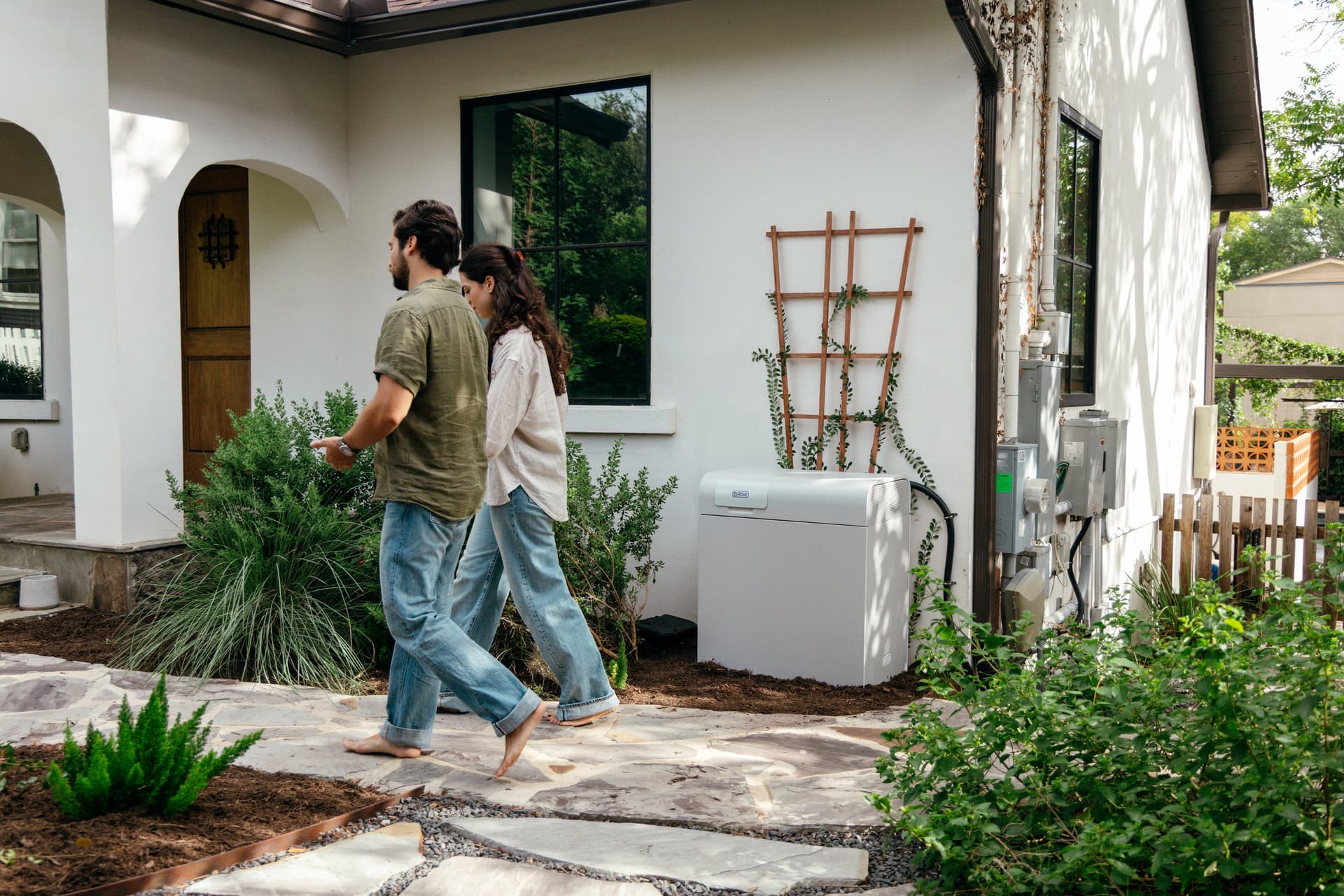
Base designed its battery, Base Core, to cover the whole house from the start.
It's built in Austin and stores 39.2 kilowatt-hours, about three times more than a typical home battery, and it mounts outside the home and switches on by itself when the power goes out, so there's nothing to start, fuel or schedule.
It's IP67 rated, meaning it's sealed against dust and can stay submerged in up to a meter of water for 30 minutes, and it has a generator port, so homeowners who already own a generator can keep using it.
Why it costs $695
Homeowners don't buy Base Core. Base owns and maintains the battery, so there's no upkeep on the homeowner's end, and homeowners pay $695 for installation and $19 a month.
So instead of a generator quote of $8,000 to $16,000, it costs $695 to get started.
To see if your home qualifies, start here.
Frequently asked questions
Will Base change my electric bill?
No. Your electricity provider stays the same, and you're billed only for the energy your home uses, the same way you were before Base Core was installed.
How long will it run my house in an outage?
Up to 36 hours of whole-home backup if you cut back on energy use. If you own a generator, the generator port can recharge the battery to keep it going longer.
How do I know if my home qualifies?
Enter your address at See if your home qualifies, then send Base a few photos of your home. Its engineers decide which setup fits, and Base handles the permits and installation.
Why is there a monthly fee if I'm not buying the battery?
Base owns the battery, so there's nothing to buy. The $19 monthly membership covers Base's monitoring and maintaining the battery for its lifetime.
Who is Base Power Company?
Base is an Austin company headquartered on East Riverside Drive, and it builds its batteries in Austin. More than 30,000 homes are powered by Base, and its batteries are certified to UL 9540 and related safety standards.
Does Base use my battery to support the grid?
The battery can add capacity to the grid during high-demand hours, which helps reduce outage risk. During an outage, the battery powers only your home and never sends energy back to the grid.


