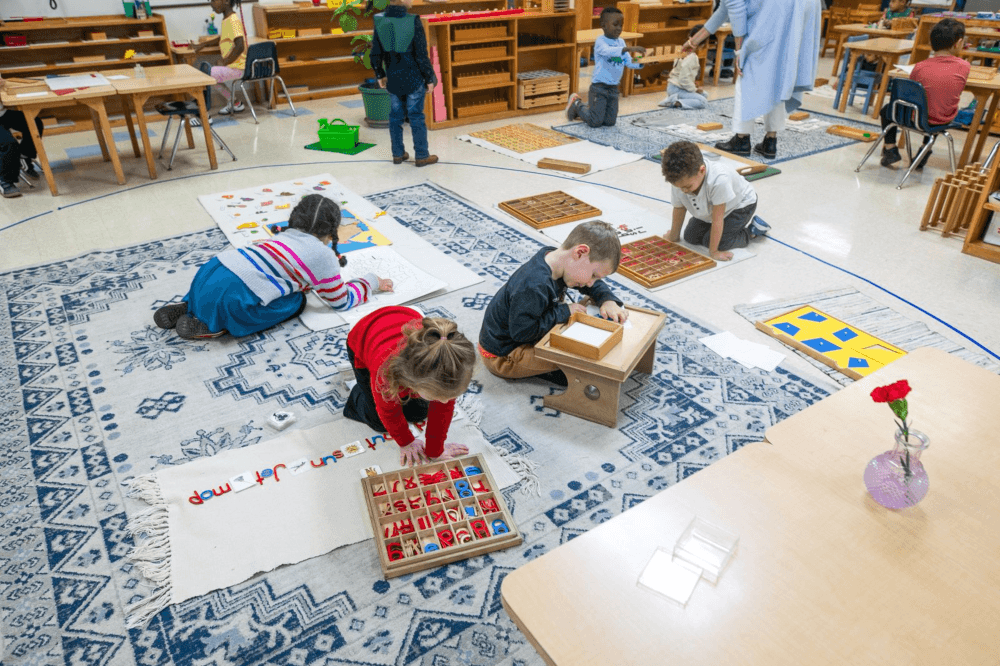

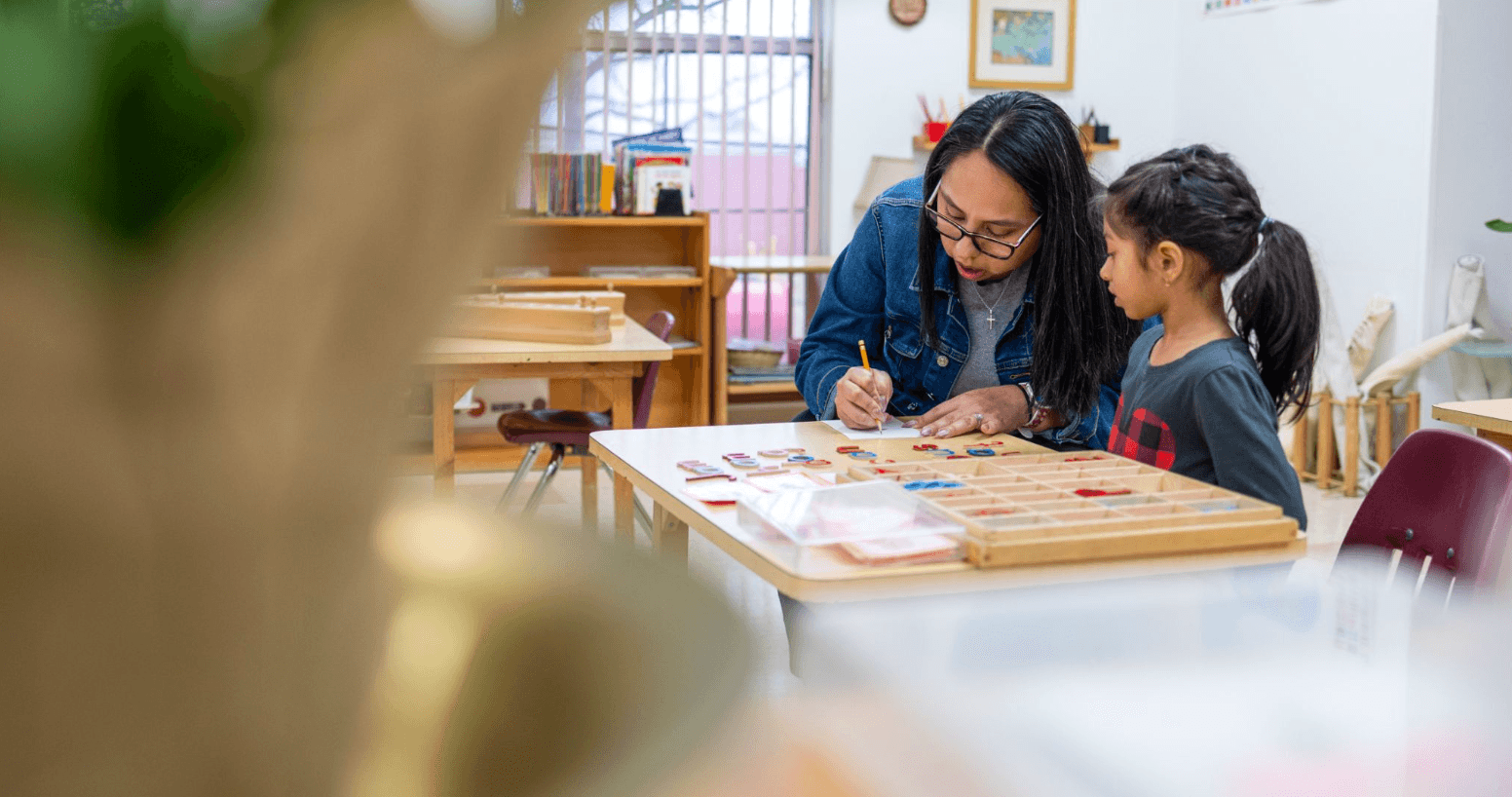
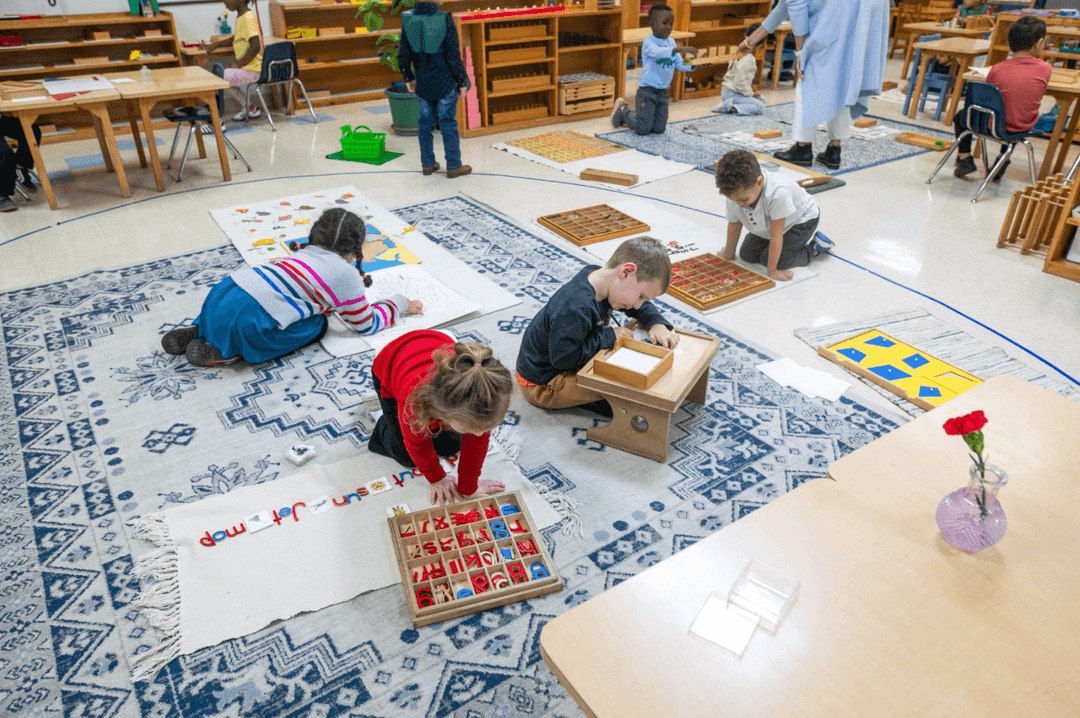
At Pflugerville Montessori School, children move purposefully through their day.
One student picks up a geometric shape and walks it over to a distant mat, carefully checking to see if it matches the one waiting there. Nearby, another lines up color tablets, sorting shades of blue from darkest to lightest by noticing the differences of 10%.
The room hums with joyous learners who are so engaged with their work that they often tell their parents they aren't ready to go home yet.
This is Montessori education in practice, and it has been unfolding at Pflugerville Montessori School for nearly four decades.
What began in 1987 with a single student in a converted home has grown into a multi-classroom campus. It now enrolls students through third grade, and expands with them through sixth grade.
The school was founded by Piyaseeli Sarathkumara, who served as a principal teacher, training colleges and an all girls high school, in Sri Lanka before completing her Montessori training and relocating to Central Texas. After working as a lead teacher in Austin, she opened her own school in Pflugerville at a time when the city’s population was less than 4,000.
Today, her legacy is carried on by her daughter, Director Devani Sarathkumara, and granddaughter, Assistant Director and elementary teacher Pavani Pathirana, along with her second daughter, Kalika Sarathkumara. Kalika Sarathkumara directs the Cedar Park and Sapientia Montessori schools, which are all Association Montessori Internationale (AMI) accredited/recognized schools.
Programs at a glance
Pflugerville Montessori School offers three programs:
Toddler (18 months to three years): Builds a foundation of independence through practical life activities, such as putting on shoes, pouring activities, table manners and more
Primary & Kindergarten (three to six years): Students learn multiple subjects, such as language, math, science, geography, music, art, social studies, culture, botany and more
Elementary (first through sixth grade): Students explore a curriculum spanning core academics, sciences and the arts, complemented by hands-on enrichment activities like culinary and research projects going further into the reasoning mind
What is Montessori education?
Montessori education is child-paced. Montessori trained teachers introduce students to specific lessons, and every child must master a concept before moving forward.
The classroom materials are not randomly selected toys. Abstract ideas are put into concrete form in wood or metal and are made into beautiful attractive materials. Ideas such as color, size, shape and even advanced notions like Theorem of Pythagoras or cube root.
Classroom materials are not randomly selected toys; they are concepts, like color, size, and shape, transformed into beautiful, concrete forms of wood and metal. They even represent ideas like the Theorem of Pythagoras or cube root.
With such beautiful materials kept within reach, the children are naturally drawn to their lessons, and seeing what lies ahead fills them with excitement and motivation.
This hands-on foundation leads to academic outcomes that outpace traditional grade levels. Because the program doesn't hold students back based on age, a five or six-year-old in the Primary classroom is often already mastering single-digit multiplication and division.
“As elementary students, they’re [working with] double digits and triple digits, doing long multiplication and long division,learning advanced concepts” Pavani said.
The importance of AMI recognition/accreditation
The school’s gold standard is its recognition/accreditation through the Association Montessori Internationale (AMI), which was founded by Dr. Maria Montessori.
To become a recognized/accredited school, a consultant must visit and observe the school every three years to ensure it is following the authentic Montessori standards, such as having the required materials, the AMI trained teacher in class and the students receiving the lessons the correct way.
This rigorous process ensures the program remains authentic, with teachers who have completed a multi-year international Montessori diploma course.
Forming independent, joyous learners
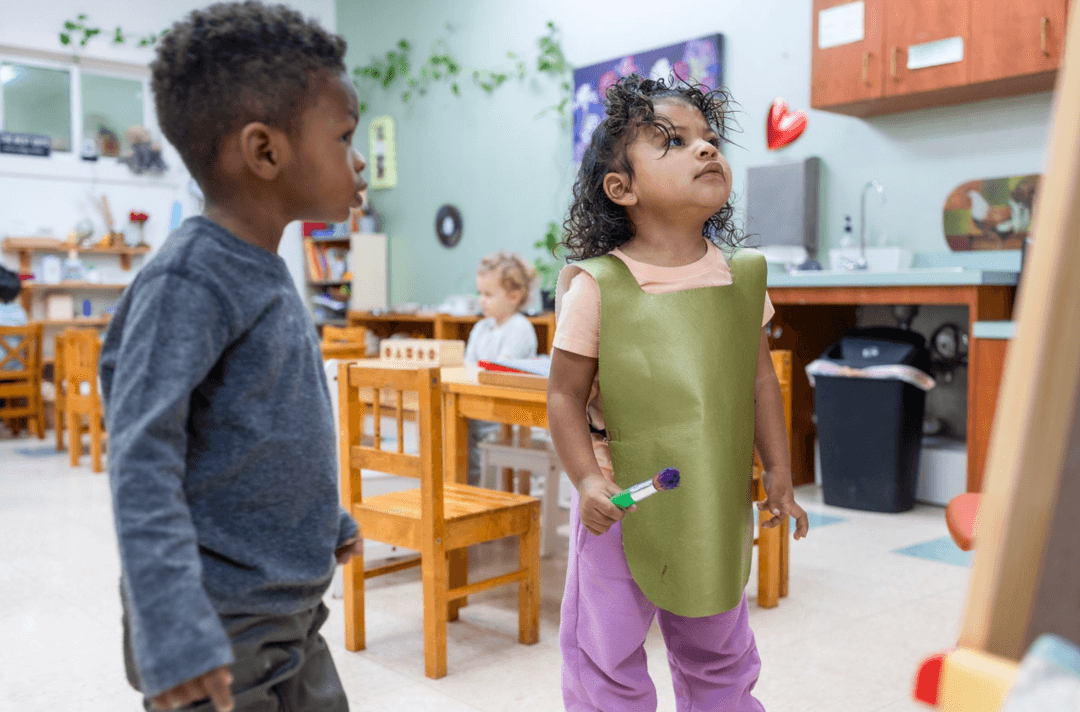
The most rewarding outcome is the independence and joy students gain. This begins in the Toddler program, where children as young as two learn to manage their own needs.
“We have a 2-year-old who refused to allow his parents to hold his lunch bag and his water bottle. He said, ‘I’ve got it,’ and he carried everything,” Pavani said.
This mastery builds a deep sense of confidence and ownership.
“Having children that love [school] and have that joy to come and learn is the best part. We have many children that would love coming to school even on the weekends if we were open,” Pavani said.
The school remains a cornerstone of the community by combining international AMI standards with a deep-rooted family legacy. It is a place where children are not just taught but are empowered to become independent, lifelong learners.
All programs offer extended after-school hours, and the Toddler and Primary programs offer half-day options. Extra-curricular activities such as chess, soccer, dance/tap, piano and a technology club for Kindergarten and Elementary students are offered.
Click here to learn more about Pflugerville Montessori School or to schedule a tour today.
The above story was produced by Senior Multi-Platform Journalist Sydney Heller with Community Impact's Storytelling team with information solely provided by the local business as part of their "sponsored content" purchase through our advertising team.