

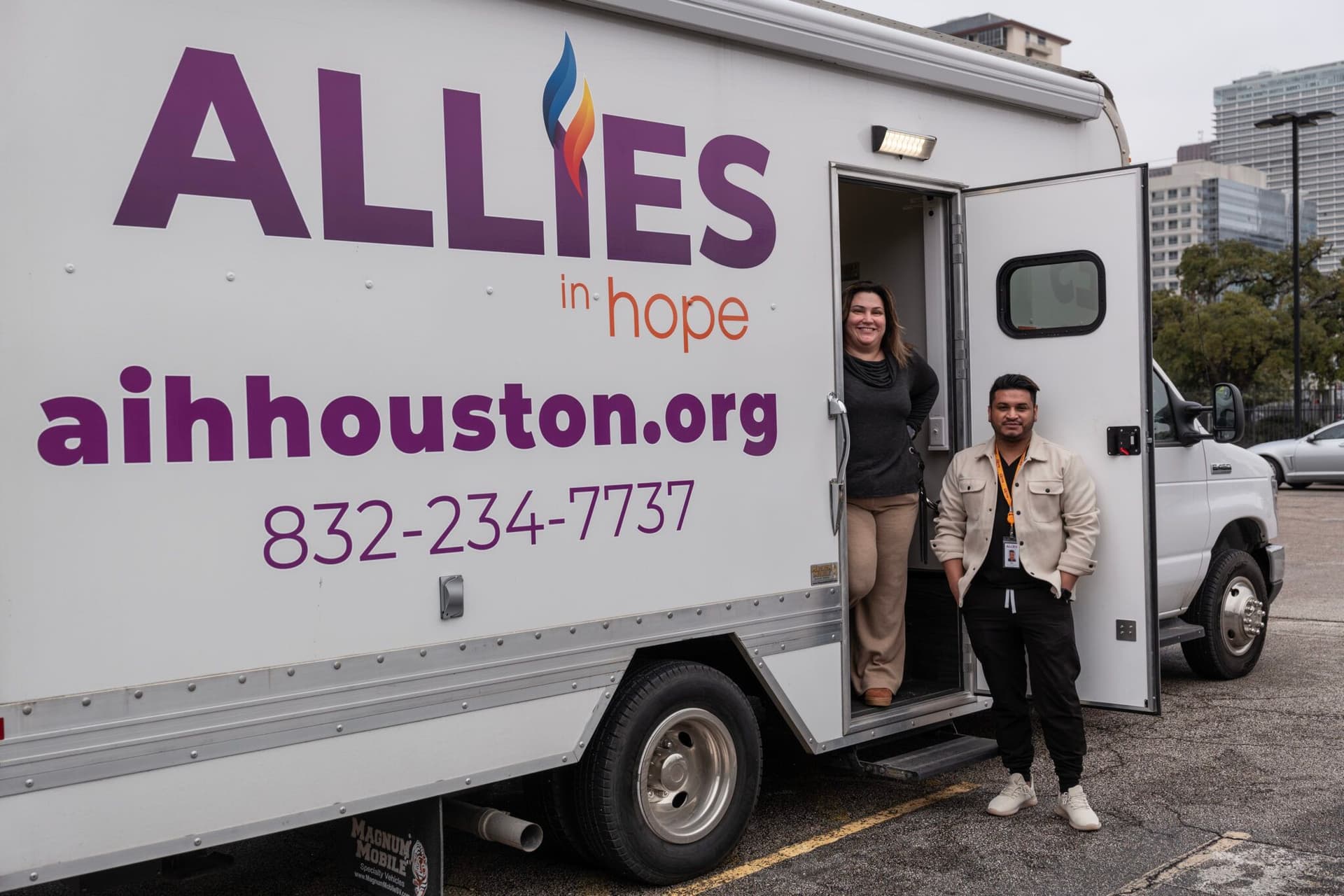
For decades, Allies in Hope has worked to reduce HIV transmission and connect Houstonians with lifesaving care. Now, federal funding changes threaten the resources supporting that mission.
The Houston nonprofit, formerly known as AIDS Foundation Houston, is losing nearly $500,000 in funding dedicated to HIV testing and education, according to Chief Executive Officer Jeffrey Campbell.
With approximately 1,200 new HIV diagnoses annually in Houston, Campbell said the cuts come at a critical time for public health.
How are funding cuts affecting Houston?
Campbell said the federal government has shifted HIV prevention funding away from directly funded community organizations and toward state and local health departments.
Although the Houston Health Department received approximately $2.9 million in additional funding to redistribute, Campbell said the change does not fully offset the nearly $3 million in prevention funding lost across local organizations.
For Allies in Hope, the reductions have already resulted in the loss of one full-time employee and reduced testing capacity.
Testing allows the organization to connect HIV-negative individuals with preventive medications, including pre-exposure prophylaxis or PrEP. Those testing positive can receive medical care and begin treatment within hours of diagnosis.
Why is HIV prevention critical?
Despite decades of progress in HIV treatment and prevention, Houston continues to face challenges in controlling the epidemic.
Campbell said an estimated 14%-17% of Houston-area residents living with HIV are unaware of their status.
Another concern is viral suppression. According to Campbell, approximately 67% of Houston-area patients with measured viral loads have achieved viral suppression, falling short of the 80% goal he cited under the Ending the HIV Epidemic initiative.
"When a person living with HIV has a viral load that is undetectable, they cannot transmit that virus to another human being through a sexual encounter," Campbell said.
Without testing and treatment, however, individuals may unknowingly transmit the virus.
"It just takes one encounter for someone to contract HIV," Campbell said.
Reducing prevention funding could further widen these gaps by limiting opportunities for early diagnosis, education and treatment.
What is Allies in Hope doing?
Despite the challenges, Allies in Hope continues offering HIV and sexually transmitted infection testing, preventive medications, rapid-start HIV treatment and connections to long-term care.
Additional services include housing assistance, case management, transportation support and Camp Hope, which serves children affected by HIV.
The organization also operates its Stone Soup Food Pantry at its Midtown and Westpark locations, providing food and household essentials to anyone experiencing food insecurity, regardless of HIV status.
Through partnerships with the Houston Food Bank and Amazon, the pantry distributes groceries, cleaning products and hygiene supplies.
Campbell recalled a mother who received free cleaning supplies through the pantry, allowing her to use the money she saved to pay for her child's school field trip.
What is the Hope for Houston Ball?
As federal support declines, community fundraising is becoming increasingly important.
The fourth annual Hope for Houston Ball, scheduled for Nov. 14, will bring together Houston supporters to raise money for Allies in Hope's programs.
This year's theme, "The Category Is ... High Fashion," celebrates fashion, philanthropy and community advocacy.
Guests can enjoy a cocktail reception, dinner, entertainment, dancing, live and silent auctions, and stories highlighting the organization's impact. The event will also honor Dr. Theresa "Tess" Barton with the Ada Edwards Humanitarian Award for her longstanding commitment to Camp Hope.
When: Saturday, Nov. 14, at 7 p.m.
Where: The Revaire, 7122 Old Katy Road, Houston
Tickets and information: Visit the Hope for Houston Ball website for tickets, sponsorships and donation opportunities.
How can Houstonians help?
Beyond attending the ball, Allies in Hope offers several ways for individuals, businesses and community groups to support its mission:
Direct donations: Make financial contributions to support programs and services.
Walk to End HIV: Participate in the organization's annual fundraising walk.
Corporate sponsorships: Support programs and events through business partnerships.
Matching gifts: Ask employers to match eligible charitable donations.
Stone Soup Food Pantry: Host donation drives or purchase supplies through the pantry's Amazon wish list.
In-kind donations: Contribute goods and supplies for programs and housing facilities.
Residents can also volunteer to support community programs.
For Campbell, sustaining these services remains essential as Houston works to reduce HIV transmission and expand access to care.
To learn more: Visit Allies in Hope. | To schedule an appointment: Book online.
Frequently asked questions
How much federal funding did Allies in Hope lose?
Allies in Hope is losing nearly $500,000 in federal funding for HIV testing, prevention and education in Houston. The cuts have already resulted in a staffing reduction and reduced testing capacity.
How are federal funding cuts affecting HIV prevention in Houston?
Federal funding cuts are reducing resources for HIV testing, education and early intervention. Houston continues to record approximately 1,200 new HIV diagnoses annually, making prevention and treatment services critical.
What services does Allies in Hope provide in Houston?
Allies in Hope provides HIV and STI testing, preventive medications, HIV treatment support, housing assistance, case management and food assistance through its Stone Soup Food Pantry. The nonprofit also operates Camp Hope for children affected by HIV.
How can Houstonians support Allies in Hope?
Houstonians can attend the Hope for Houston Ball on Nov. 14, donate, become event sponsors, volunteer or contribute supplies to the Stone Soup Food Pantry. Visit aihhouston.org for more information.