

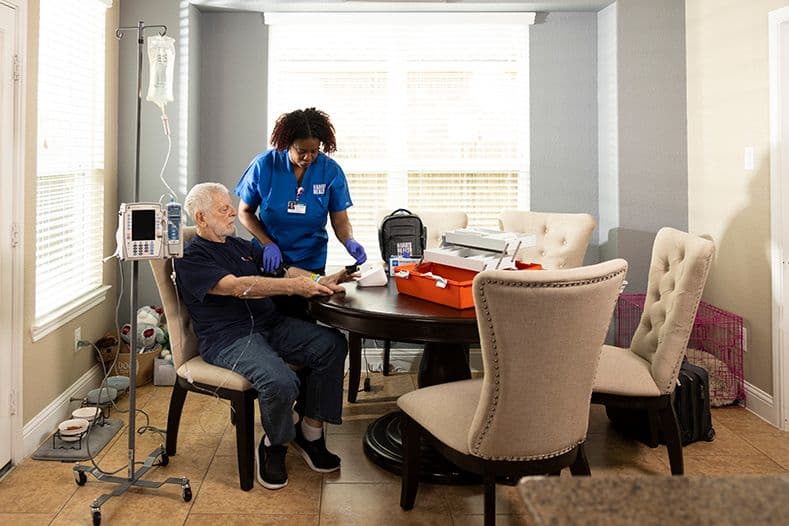

Imagine recovering from a severe infection or managing a serious health condition—not in a hospital bed amid the constant hum of monitors and overnight vital checks, but rather from the comfort of your own home.
Harris Health is making that possible through its Home Division, bringing hospital-level treatment, primary care, IV infusions and remote patient monitoring directly into patients’ homes.
The model allows patients to receive care in a familiar setting—surrounded by family, eating their own food and sleeping in their own beds—while still receiving the medical support they need.
Why bring health care home?
The drive to establish the Home Division stemmed from a growing challenge: Harris Health needed more ways to care for patients as demand for hospital beds increased. Even as the system adds physical capacity, including inpatient beds at Ben Taub Hospital, building more hospital space alone cannot meet every patient’s needs.
The system also recognized that some patients can receive care safely and effectively at home. Many face challenges such as limited transportation, difficulty taking time off work or responsibilities for children and other family members. For some, an extended hospital stay can create significant stress or even lead them to leave the hospital against medical advice to return home.
“You truly can't build enough hospitals to keep up with community growth,” said Amy Smith, DNP, senior vice president and chief health officer, Care Transitions and Integration, Harris Health. “Building physical facilities takes years and immense capital, but patient demand is happening right now. So, we had to come up with a creative solution that expands our capacity while meeting patients where they are. Home care was the natural route, as it acts as a capacity management strategy and an innovative model of care.”
What programs are offered under Home Division?
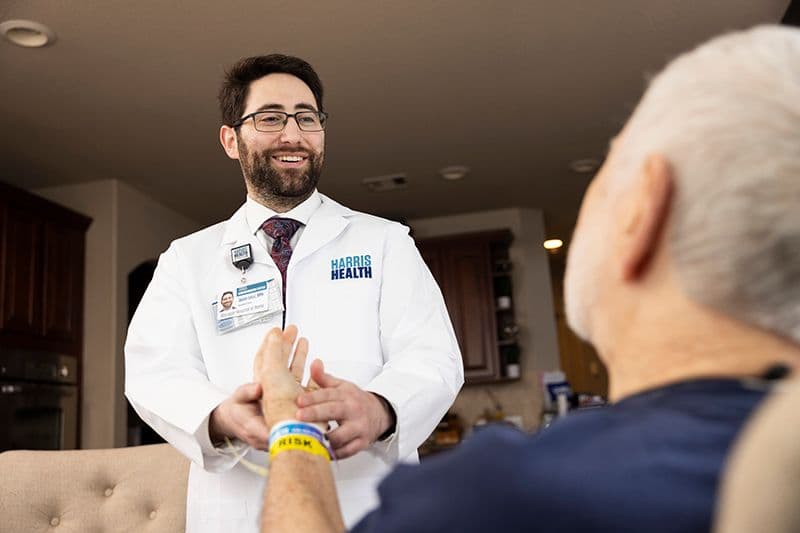
Home Division brings several programs together, allowing patients to receive different types of care at home based on their needs.
Hospital at Home: Provides inpatient, medical-surgical level acute care for eligible patients with conditions such as urinary tract infections, pneumonia, cellulitis, bacteremia, osteomyelitis, diabetic foot infections and congestive heart failure.
Home-Based Primary Care: Provides routine primary care, including physicals, vaccines, lab work and home safety evaluations, to patients who face significant mobility or transportation barriers.
Outpatient Parenteral Antibiotic Therapy (OPAT): Helps patients complete extended courses of IV antibiotics at home when they no longer need to remain in the hospital.
HealthyConnect: Uses remote patient monitoring to help manage chronic conditions, currently focusing on patients with uncontrolled or resistant hypertension.
“Hospital at Home was the genesis,” said Rohan Dwivedi, administrative director, Home Division, Harris Health. “It simply made sense for the system to centralize and coordinate home-based care delivery in a manner that’s consistent across the board.”
How does home care benefit patients?
Receiving care at home can remove many of the physical, emotional and practical challenges that come with a hospital stay. Patients can sleep in their own beds, eat familiar meals and remain close to their families and pets while continuing to receive medical care.
Home visits can also give clinicians a better understanding of circumstances that may be difficult to identify inside a hospital. Care teams may discover concerns related to food, water or home safety and connect patients with resources to address those needs.
“When you go into their home, unfortunately, some do not have basic necessities,” said Myishea Gilliam, nurse manager, Home Division, Harris Health. “When we see face-to-face what they actually need, we can get those resources quickly rather than waiting weeks or months.”
The approach can also help patients balance treatment with responsibilities at home. Someone who might otherwise leave the hospital early to care for a child or family member can continue receiving medical care without having to choose between their health and the people who depend on them.
Is care at home really hospital-level?
For eligible patients, Hospital at Home provides medical-surgical level care—not a lower level of treatment simply because it happens in a bedroom instead of a hospital room.
Patients are screened to determine whether their medical needs and home environment can safely support treatment. Those who qualify receive in-person nursing visits twice a day, 24/7 access to their care team through an iPad and the types of hospital equipment and medications appropriate to their condition.
If a patient’s condition changes, the care team can escalate treatment and return the patient to the hospital when necessary. Protocols allow for a transition back to the hospital within 30 minutes if needed.
“Our clinical outcomes are comparable, if not better, than traditional brick-and-mortar settings,” said Dr. Shazia Sheikh, medical director, Hospital at Home, Harris Health and faculty instructor, Baylor College of Medicine.
What does this mean for Harris Health?
Home Division is already showing what can happen when hospital-level care extends beyond hospital walls. Hospital at Home and OPAT have saved Harris Health more than 10,000 hospital days, helping preserve capacity for patients who need acute hospital care while allowing eligible patients to receive treatment at home.
But the impact is not measured only in hospital capacity. The program is also helping Harris Health rethink where care can happen and what the patient experience can look like.
“The home setting can and should be considered a core care delivery method,” said Jason Levy, operations manager, Hospital at Home, Harris Health. “Care delivery within the home should be thought of as equivalent, if not in certain moments superior, to what you might receive elsewhere.”
Harris Health plans to continue expanding Home Division, with potential growth in remote monitoring for conditions such as diabetes and heart failure, home-based oncology infusions and additional support for postpartum patients.
The goal, leaders say, is to make home-based care a standard part of the health system’s approach—not simply an alternative to traditional hospital care.
Ready to learn more?
To learn more about these initiatives or explore eligibility for yourself or a family member, check out the key programs within Home Division:
Home-Based Primary Care: Learn how to request in-home primary care visits, physicals, lab work and home safety evaluations. The program was formerly referred to as House Call Service.
HealthyConnect: Discover how patients manage chronic conditions such as high blood pressure with connected devices from home.
Harris Health Virtual Care: Access telehealth visits, schedule appointments and manage patient care online.
What is Harris Health Home Division?
Harris Health Home Division brings multiple health care services into patients’ homes, including Hospital at Home, Home-Based Primary Care, home IV antibiotic therapy (OPAT) and remote patient monitoring through HealthyConnect.
What conditions can Harris Health treat through Hospital at Home?
Eligible patients may receive hospital-level care at home for conditions such as urinary tract infections, pneumonia, cellulitis, bacteremia, osteomyelitis, diabetic foot infections and congestive heart failure. Patients are screened to determine whether their medical needs can be safely managed at home.
Is Hospital at Home the same level of care as being in a hospital?
Hospital at Home provides acute medical-surgical level care for eligible patients. Patients receive twice-daily in-person nursing visits and daily physician visits, 24/7 access to their care team, appropriate hospital equipment and medications, with protocols in place to return patients to the hospital if their condition changes.
How can patients access Harris Health’s home-based care programs?
Eligibility varies by program and a patient’s medical and personal circumstances. Patients and families can ask caregivers or learn more about Harris Health Home Division and other programs at harrishealth.org.