

For years, patients with chronic knee pain followed a familiar routine: anti-inflammatories, repeated steroid injections and eventually, a conversation about joint replacement.
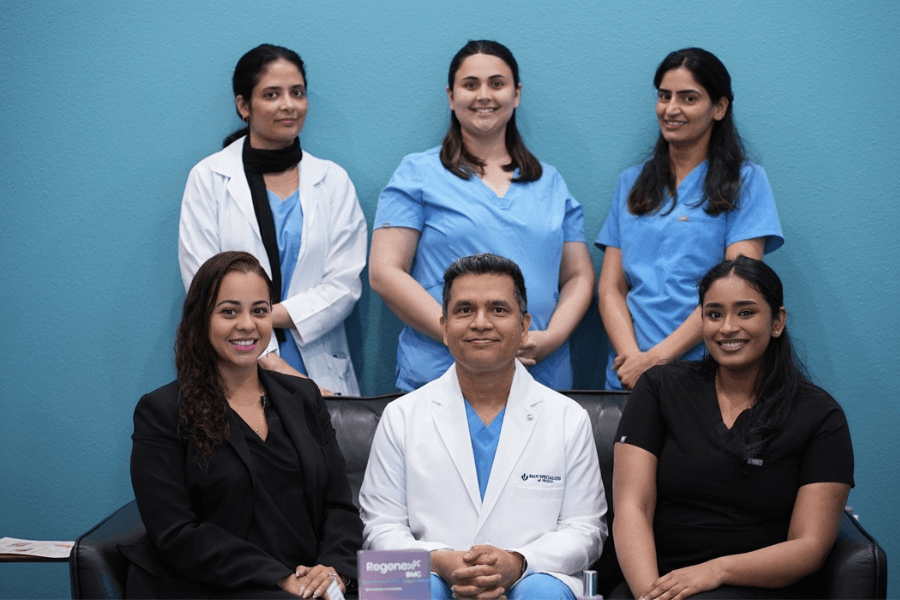
As a pain management and regenerative medicine specialist—and founder of Spine and Joint Doctor—Dr. Mahesh Mohan grew uneasy with that cycle. Steroid shots and nerve ablations quiet pain signals, but they do nothing to halt joint deterioration. To break that pattern, Mohan’s practice rebranded from Pain Specialists of Frisco to Spine and Joint Doctor.
“People want solutions—to fix things and move on—not something they deal with forever,” Mohan said. “We’re here to help you get to the root of the issue.”
Community Impact sat down with Dr. Mohan to answer common patient questions.
Why change the name at all?
Mohan: The old name described a symptom, not a goal. Pain management can involve medication or injections that mask the signal. Sometimes that is the right tool, but it is not repair.
The rebrand reflects the practice’s focus on nonsurgical orthopedics and regenerative medicine, with the goal of addressing the underlying problem, restoring mobility and supporting the body’s healing response.
Isn't osteoarthritis just wear and tear and a normal part of getting older?
Mohan: That is the most common misconception patients arrive with, and it matters because it convinces people there is nothing to be done. Osteoarthritis is not only mechanical wear; it involves active, localized inflammation in the joint and changes in the bone directly beneath the cartilage. Inflammation is something you can act on. Reduce it, and many patients get more usable range and more tolerance for activity, which is the part of aging most people actually care about.
What does a regenerative procedure involve?
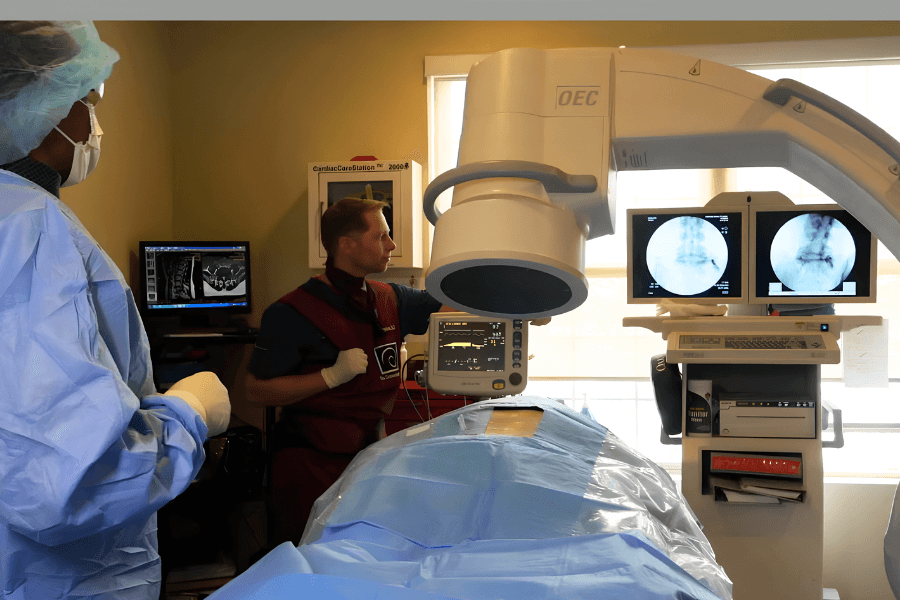
Mohan: The two main tools are platelet-rich plasma and bone marrow concentrate, prepared under Regenexx® protocols. Both use the patient’s own blood or bone marrow, processed in-office and injected under image guidance into damaged tissue—and sometimes into the bone beneath the joint. Bone injections are done with sedation and a nerve block for comfort.
What does a regenerative procedure involve?
What does a regenerative procedure involve?
Mohan: The two main tools are platelet-rich plasma and bone marrow concentrate, prepared under Regenexx® protocols. Both use the patient’s own blood or bone marrow, processed in-office and injected under image guidance into damaged tissue—and sometimes into the bone beneath the joint. Bone injections are done with sedation and a nerve block for comfort.
Where the injection is placed matters. A 2021 International Orthopaedics study followed 60 patients with arthritis in both knees for 15 years. Seventy percent of knees treated in the joint space eventually required replacement, compared with 20% of those treated in the underlying bone.
What do regenerative procedures treat?
Nonsurgical orthopedic and regenerative care addresses a wide range of musculoskeletal issues caused by injury, arthritis, or age-related wear, including:
Osteoarthritis (knee, hip, shoulder)
Spine conditions (herniated and degenerative discs, stenosis, neck pain)
Radiculopathy and sciatica
Rotator cuff and labral tears
Tendon, ligament and cartilage injuries (elbow, hip, hand, wrist, foot, ankle)
Whiplash and auto accident injuries
For crash injuries, Mohan emphasizes a customized approach: thorough imaging and examination come first to identify actual damage before selecting a treatment plan.
Can this help me avoid a knee replacement?
Mohan: For patients considering regenerative care, long-term research offers compelling results. A landmark study published in International Orthopaedics followed 140 patients with severe arthritis in both knees. Researchers treated one knee with bone marrow cells placed directly into the bone under the joint, while each patient's other knee underwent a standard full replacement.
Over an average of 15 years, 82% of the cell-treated knees never required surgery. In fact, the rate at which a cell-treated knee eventually needed a replacement was nearly identical to the rate at which a surgical knee required a second repair.
Can it also work as a replacement?
Mohan: No, and that is not what the study showed. It found that, in one trial with one surgeon, treated knees did not fail faster than replaced knees. That is meaningful, but narrow.
The study also had limitations. The average patient was 75, so the results may not apply to younger, active adults in their 50s. Researchers also found that patients whose damaged bone did not shrink significantly after treatment were four times more likely to eventually need a replacement.
That may be the most useful finding: Response can be measured through follow-up imaging rather than taken on faith.
My surgeon has suggested knee replacement. What does this mean for me?
Mohan: It means a nonsurgical option may be worth evaluating, not that a replacement is inevitable. Knee replacement is a reliable procedure with a long track record and is often the right choice for advanced arthritis.
Regenerative care offers another path without removing the joint, keeping surgery as an option later. For patients in their 50s, long-term data are more limited, so the decision depends on imaging, activity goals and how much joint surface remains.
What is recovery like?
Mohan: These are outpatient, needle-based procedures with no incision or hospital stay. Most patients return to daily activities within a day or two.
But being active again is not the same as being healed. The biological response develops over weeks to months, with specific activity restrictions and a staged return to loading. Following the full protocol is important for recovery.
Who is not a good candidate?
Mohan: This is one of the most important questions. Regenerative treatment may not be appropriate when the joint surface is largely gone, there is significant structural misalignment, an active infection, certain cancers or use of certain medications. Advanced arthritis may be better suited to replacement. No patient is a candidate for every procedure.
Do I have to be an athlete for this to be worth it?
Mohan: No. Regenerative medicine gained attention through professional sports, but the goal for most patients is much simpler: restoring mobility and comfort. Most are not athletes; they are people managing osteoarthritis, spine problems or injuries who want to do everyday things such as climb stairs, sleep comfortably, play golf or stand through a work shift.
Does insurance cover it?
Mohan: Generally, no. PRP and bone marrow concentrate for orthopedic conditions are usually treated as investigational by insurers and paid out of pocket, though the office visit and imaging may be billable. Anyone weighing this should ask for specific pricing in writing before committing.
Ready to get started?
The starting point is an evaluation—imaging and an examination to establish whether you are a candidate at all.
Address: 13052 Dallas Parkway, Suite 220, Frisco
Phone: 214-618-4010
Online booking: Via Healow
Other locations include:
Dallas: 5310 Harvest Hill Road, Ste. 135B
Fort Worth: 3345 Western Center Blvd, Ste. 120
Arlington: 4204 SW Green Oaks Blvd, Ste 110
The above story was produced by Community Impact’s storytelling team, using information solely provided by the local business as part of their "sponsored content" purchase through our advertising team.