

Open a jar of honey, and it may look simple: golden, thick and sweet.
But that jar tells the story of thousands of flights between flowers and hives, changing weather patterns, carefully timed harvests and one remarkably efficient natural process. At Wild Honey Box, that means no two honey seasons are exactly alike.
Since starting with a single backyard hive in 1994, the Reed family has grown Wild Honey Box into an 8,000-colony operation shaped by the rhythms of nature. From the flowers bees visit to the rain that falls, each harvest can vary in color, flavor and texture.
Kayla Simons, the Reeds’ daughter and Wild Honey Box’s social media and marketing coordinator, broke down how those factors influence the honey that ultimately reaches the jar.
How does a flower become a jar of honey?
It all begins in the field, where worker bees use their specialized tongues to extract liquid nectar from blooming flowers.
As they fly back to the hive, the transformation starts inside the bees’ specialized “honey stomachs.” There, the bee mixes the nectar with natural enzymes, primarily invertase, which breaks complex plant sugars into simple glucose and fructose.
Once back inside the hive, worker bees pass the nectar to processor bees, who spread the liquid across open honeycomb cells. To turn watery nectar into honey, the bees fan their wings to evaporate moisture until the water content drops to under 18%.
That moisture reduction is critical because honey with too much water can ferment. In humid areas such as Southeast Texas, Simons said the bees’ ability to remove moisture helps keep the honey at the right consistency for preservation.
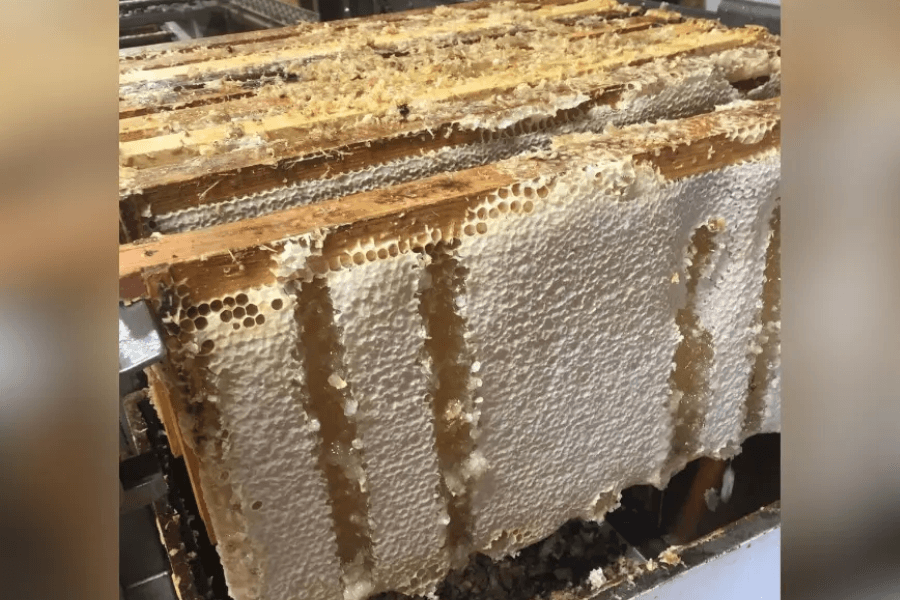
When the honey reaches the proper consistency, the bees seal the comb beneath a protective layer of beeswax. That wax cap does more than preserve the honey—it gives Wild Honey Box’s beekeeping team an important signal. Once the comb is capped and the season’s nectar flow slows, the family knows it is time to harvest.
How does the floral source affect honey’s flavor and color?
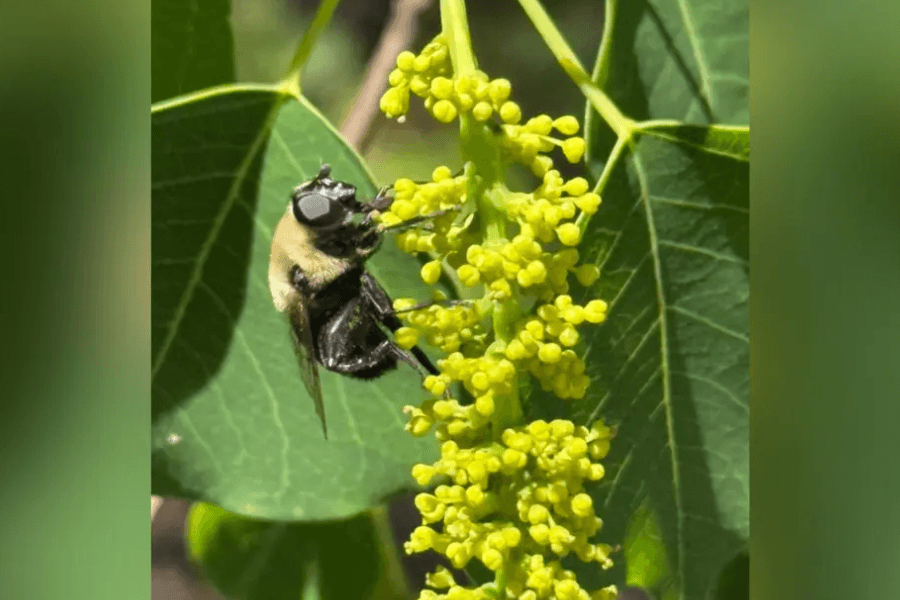
The flowers bees visit help determine the color, flavor and other characteristics of the honey they produce. Because Wild Honey Box follows different blooms throughout the season, each crop offers something distinct.
Texas Huajilla: The season begins in South Texas, where Huajilla blooms produce a mild, pale-colored honey. The crop can be difficult to make because weather and bloom conditions have to align. The family continues producing Huajilla because it is a unique honey that relatively few beekeepers make.
Texas Wildflower: Produced locally from a mixture of spring and early-summer blooms, this is Wild Honey Box’s largest crop. Simons described it as stronger and more robust than the Huajilla variety. As the family’s local honey, it reflects the mixture of blooms growing around the Montgomery area.
Sweet Clover: The bees travel to South Dakota for this crop, where the drier climate and sweet clover blooms produce a lighter-colored honey. This year’s harvest was particularly thick, which Simons described as almost “tacky” in texture. Clover is also a widely recognized honey variety, and Wild Honey Box works with fellow beekeepers in South Dakota who care for the colonies while the bees are there.
Even within the same variety, the finished honey can change from year to year depending on which blooms are most prevalent.
“Because we make true raw honey, there’s no way for us to control the flavor—some years, certain blooms might be stronger than others,” Simons said.
How much does weather change a honey harvest?
“Everything revolves around weather, so we’re at the mercy of nature,” Simons said.
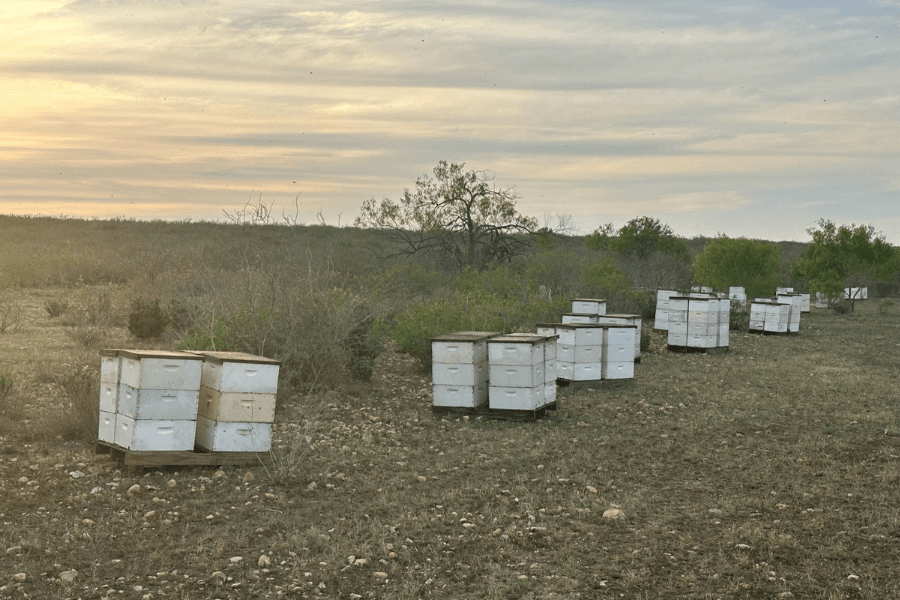
Rain helps plants grow and produce the nectar bees need, but timing is critical. Too little rain can limit nectar production, while daytime rain can keep bees inside the hive rather than out foraging.
Late freezes can delay blooms. Drought can reduce available nectar. Wind and hail can damage flowers altogether.
Even a particularly good growing season can shift the harvest schedule because Wild Honey Box has to follow the plants and bees rather than a fixed calendar.
During each honey flow, the team watches the weather, blooms and activity around the hives to determine when a crop is winding down.
How does honey get from the hive into a jar?
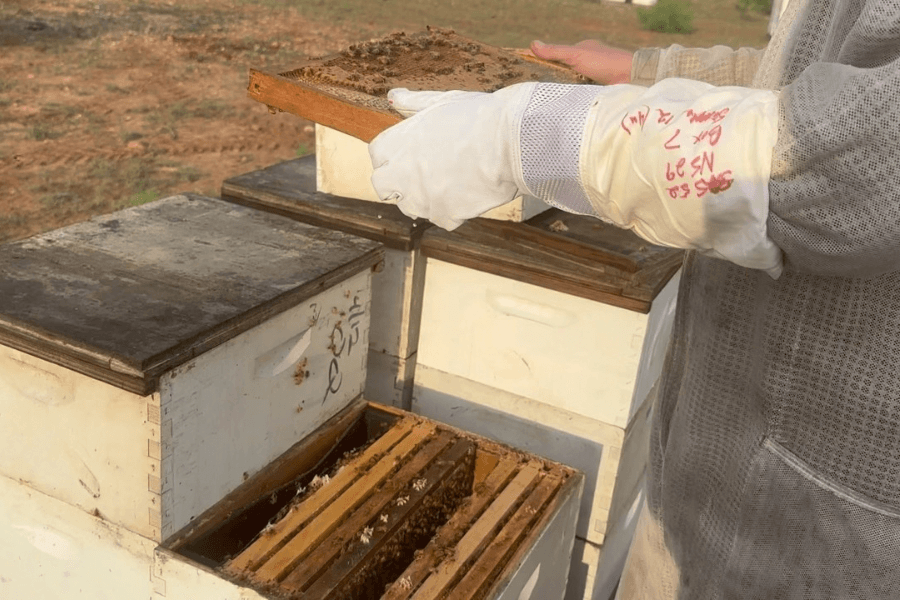
When the crop is ready, workers remove the upper boxes of the hive, known as honey supers. A productive super can weigh around 100 pounds when filled with honey.
Those boxes return to Wild Honey Box’s facility, where the frames are placed into extraction equipment.
The wax cappings are sliced away, exposing the honey beneath. The frames then enter a large spinning extractor, where centrifugal force pulls the honey from the comb and into a collection tank.
From there, the honey can be stored in large containers before making its way into individual jars.
What types of honey does Wild Honey Box offer?
Beyond traditional raw, unfiltered honey, Wild Honey Box offers several ways to enjoy the product, from smooth, spreadable varieties to honey infused with roasted peppers. Its main offerings include:
Raw honey: Traditional varieties including Texas Huajilla, Texas Wildflower and Sweet Clover.
Creamed honey: Raw honey that has naturally crystallized before being worked into a smoother, spreadable texture and blended with fruit powders, spices and other ingredients.
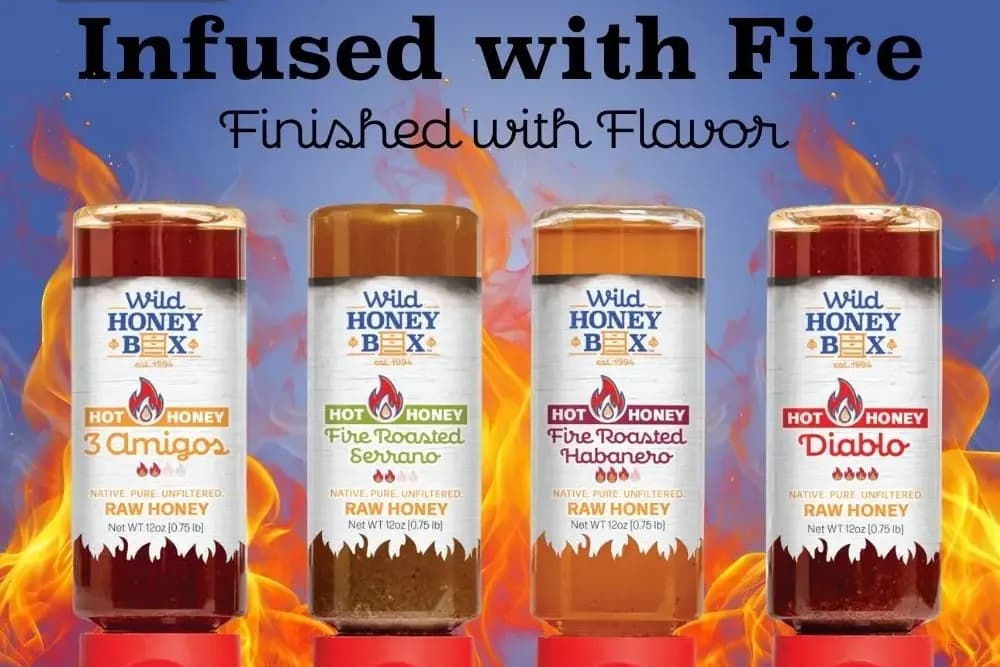
Hot honey: Raw honey infused with roasted peppers, ranging from mild options such as Fire Roasted Serrano and 3 Amigos to varieties featuring habanero, ghost pepper and Carolina Reaper.
Wild Honey Box offers more than 30 creamed honey flavors. Popular and seasonal options include French toast, chocolate churro, salted caramel, raspberry, lemon ginger, pumpkin pie spice, root beer and hibiscus.
The flavors build on the same raw honey produced by the family’s bees while giving customers different ways to use it, whether spread on toast, added to recipes or paired with savory foods.
What is available at Wild Honey Box in Montgomery?
As Wild Honey Box has grown, so has its vision for the family business.
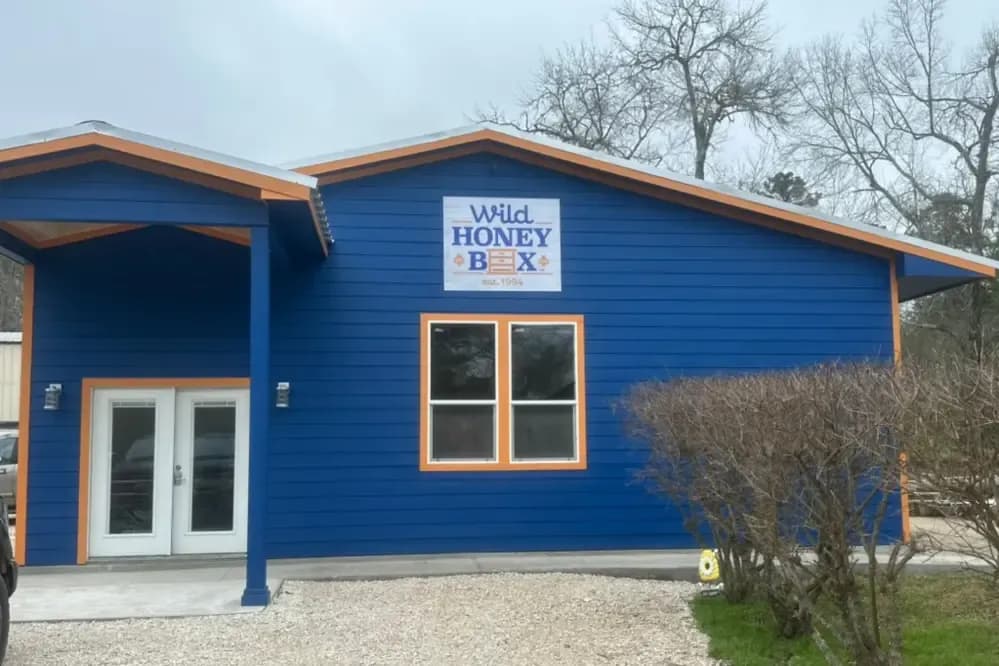
What began as a honey operation has expanded into a farm store where customers can find Wild Honey Box products alongside food and goods from other local farmers and producers. Current offerings include:
Raw, creamed and hot honey
Local sourdough bread
Farm-raised beef
Fresh eggs and chicken from neighboring farms
Natural products made by Kayla and Dax’s children
Seasonal products from local producers
The expansion is personal for the family. After losing a loved one to cancer at a young age, they became more intentional about the products they bring into their home and make available to customers.
Taste it for yourself
Readers who use code COMMUNITY10 get $5 off a purchase of $20 or more.
Address: 4963 Price Road, Montgomery
Hours: 10 a.m.-5 p.m. Wednesday-Friday
Phone: 936-449-4188
Website: wildhoneybox.myshopify.com
Frequently asked questions
What types of honey does Wild Honey Box offer?
Wild Honey Box offers raw, unfiltered honey, flavored creamed honey and hot honey. Its traditional varieties include Texas Huajilla, Texas Wildflower and Sweet Clover, while its creamed honey lineup includes more than 30 flavors.
How do flowers affect the taste and color of honey?
The nectar source helps determine a honey’s flavor, color, texture and other characteristics. Different plants produce different nectar, which is why Texas Huajilla, Texas Wildflower and Sweet Clover honey each have distinct appearances and flavor profiles.
How does weather affect honey production?
Rain, drought, freezes, wind, hail and temperature can affect when flowers bloom, how much nectar is available and whether bees can forage. Because conditions change each year, the flavor, color and texture of raw honey can also vary between harvests.
How is Wild Honey Box honey harvested?
Once bees have reduced the nectar’s moisture and capped the honeycomb with wax, beekeepers remove the honey supers from the hive. The wax cappings are removed before the frames are spun in an extractor, allowing the honey to collect in a tank before it is stored and bottled.
Where can customers buy Wild Honey Box products?
Customers can shop Wild Honey Box products online or visit its farm store in Montgomery. In addition to raw, creamed and hot honey, the store carries products such as local sourdough bread, farm-raised beef, eggs, chicken and seasonal goods from local producers.