
Dzago “Struggle” Chatsama remembers walking into the school cafeteria. He was there to check on a teenager he had been assigned to advocate for through CASA of Galveston County.
Instead, the moment she spotted him, she stopped in disbelief.
Struggle sat beside her for lunch and realized why the visit meant so much. She had watched other students welcome parents and family members to school, but no one had ever come to visit her.
Years later, he still remembers her reaction. For Struggle, it was a simple lunch. For the teenager, someone had shown up.
Who can become a CASA volunteer?
You do not need a background in social work or child welfare to become an advocate. For Struggle, it started with a love of working with children and a desire to help his community.
Originally from Zimbabwe, Struggle had spent years working with young people. After moving to the U.S., he continued coaching soccer and volunteering with his church’s children’s ministry and a local daycare.
His introduction to CASA came in 2011 while visiting Corpus Christi as a touring artist. He stayed with a woman who volunteered with CASA, and her stories stayed with him. When Struggle moved to Galveston County in 2019 and looked for a way to serve, he remembered CASA and became a volunteer.
“In today’s world, life moves so fast and everyone is just trying to survive,” Struggle said. “That leaves a void for these kids when there aren't enough adults around to mentor them. I’m just trying to fill that gap and say, ‘Hey, I’m here. I can talk, listen and advise you.’”
What does a CASA advocate do?
One of Struggle’s cases began when the child was only a few months old. He stayed involved as she grew, visiting her, learning her needs and getting to know her circumstances.
With that knowledge, Struggle advocated for her best interests, including speaking up for a placement where he believed she was safe and supported. Eventually, she was adopted by that family.
“We did the work and put in the visits and research,” Struggle said. “Once every need of the child is being met, then we go up and stand up for those rights.”
CASA advocates make regular visits, build relationships and learn about a child’s education, health and living situation. They use what they learn to advocate for the child in court and throughout the child welfare process.
They also use Collaborative Family Engagement to explore a child’s family and support network, sometimes uncovering relatives, half-siblings or trusted mentors who can provide a safe placement or lasting connection.
How does a CASA volunteer make a difference?
He remembers visiting a boy who was living with his grandmother. Some days, Struggle helped with homework. Other times, he simply sat in the house while the children played.
“Sometimes you’re not even saying anything—you’re just there,” Struggle said. “They see you showing up every single time, and that alone builds trust.”
That consistency has also changed how Struggle sees children and families involved in the child welfare system. He said he now better understands why children enter foster care and what families may need.
“It’s not just listening and judging people without getting all the information,” he said. “As CASA volunteers, we are now there to understand when they need help and when the community should step in.”
The experience has taught Struggle that helping does not always require money. Sometimes, it means making time.
Do CASA volunteers work alone?
Becoming a CASA advocate does not mean knowing everything about the child welfare system or figuring out each case alone. Volunteers have supervisors who answer questions, help with reports and appointments and guide them through difficult situations.
CASA also provides training, educational resources and opportunities for advocates to learn from one another. Volunteers can connect through gatherings and receive help with expenses related to serving children.
“The first thing is, you’re not doing this on your own,” Struggle said. “CASA has a lot of great supervisors, and the supervisors do everything they can to help you to walk this journey.”
That support extends beyond the work itself. Struggle said CASA creates a community among its advocates, celebrating their accomplishments and important moments in their lives.
“CASA, for me, is like a family,” he said. “They celebrate all my achievements. They remember my birthday. They’re always there. It’s that feeling of having a community that cares about you, not just because you’re a volunteer, but because they really care about you as a person.”
Why are more male CASA advocates needed?
For Struggle, being present has also shown him why children need advocates who can bring different experiences and perspectives into their lives. As a father of three, he understands the importance of having a consistent male figure who listens, encourages and simply shows up.
CASA of Galveston County says male advocates are especially needed. Joanna Mendoza, CASA of Galveston County’s director of strategic marketing and community engagement, recalled working with a boy who loved football and desperately wanted someone to play with him. When she found a male volunteer who shared that interest, the child’s reaction was immediate.
For Mendoza, the moment showed how something as simple as playing catch can help a child connect with an advocate and experience a sense of normalcy.
Struggle hopes more men will see themselves as capable of filling that role.
“It takes a village to raise a child,” he said. “It’s not just the moms. It takes men, women and really everybody in different roles and different capacities.”
He said volunteering does not require having unlimited free time or knowing exactly what to do. It starts with deciding that a child is worth making time for—and knowing CASA will help with the rest.
How to become a CASA advocate
CASA of Galveston County is committed to serving every child who needs an advocate, but the need is constantly growing. To ensure every local youth in foster care has a dedicated voice by their side, the organization is currently seeking around 40 more volunteers to step into advocacy roles.
Becoming an advocate does not require specialized experience, and CASA guides candidates through every step of the onboarding process.
Steps to become an advocate:
Complete the interview process
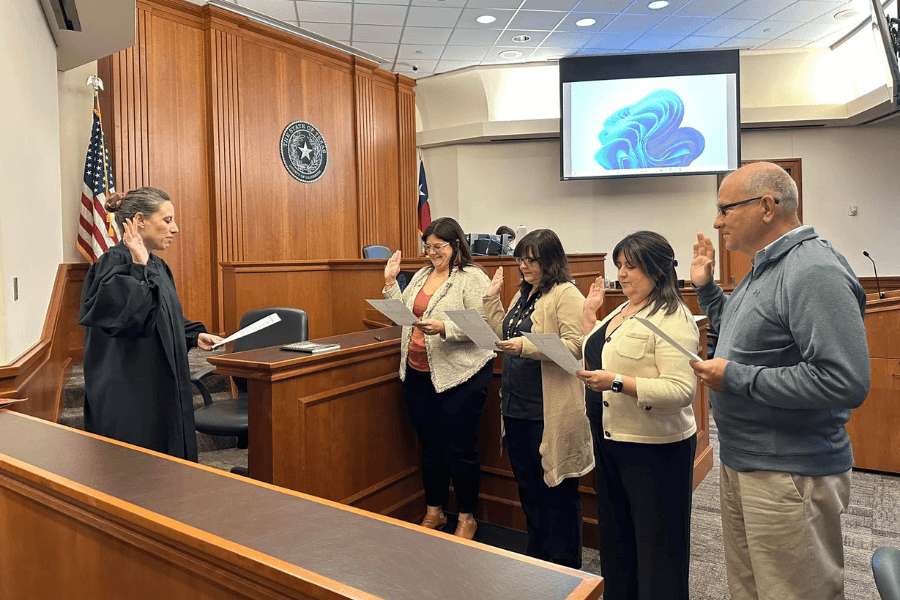
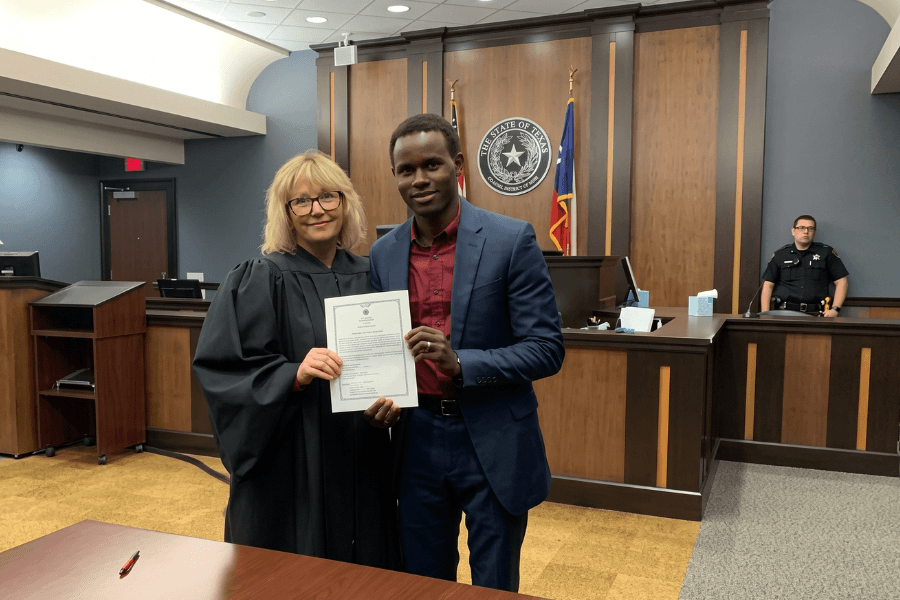
If selected, attend all volunteer training classes, court observation and swearing-in
More ways to get involved
CASA emphasizes that everyone can contribute, regardless of time or resources. Other ways to get involved include:
Visit the CASA of Galveston County website
Volunteer at one-time events or community activities
Donate to CASA to fund programs and resources
Join a committee or apply for board service
Attend or sponsor CASA fundraising events
The above story was produced by Multi-Platform Journalist Chloe Chapel, with Community Impact's Storytelling team, using information solely provided by the local business as part of their sponsored content.
What is the difference between a CASA volunteer and a CPS caseworker?
A Child Protective Services caseworker is a state employee managing dozens of family cases simultaneously. A CASA volunteer is an independent, court-appointed advocate assigned to only one child or sibling group at a time, allowing them to provide deep, individual attention and personalized advocacy in court.
How much time does being a CASA volunteer require?
On average, CASA volunteers dedicate 10 to 15 hours per month to their case. This time includes making monthly visits with the child, speaking with teachers and medical providers, writing court reports and attending periodic legal hearings.
Do I need a degree or prior background in social work to join CASA?
No. CASA volunteers come from all backgrounds. from all professional and educational backgrounds, from teachers and business owners to retirees and parents. CASA of Galveston County provides all required pre-service training, courtroom orientation and ongoing supervisor mentorship before volunteers are assigned a case.
Are CASA volunteers reimbursed for travel and out-of-pocket expenses?
Yes. CASA of Galveston County ensures volunteers do not take on a financial burden. The organization provides resources and reimbursements for travel gas and mileage for distant visits, as well as support for child activities, school needs and birthday gifts.