As Collin County continues to experience rapid growth, local leaders say clarity is needed more than ever in voter education as residents navigate complex issues that shape their daily lives, such as school funding, transportation, taxes and bond measures.
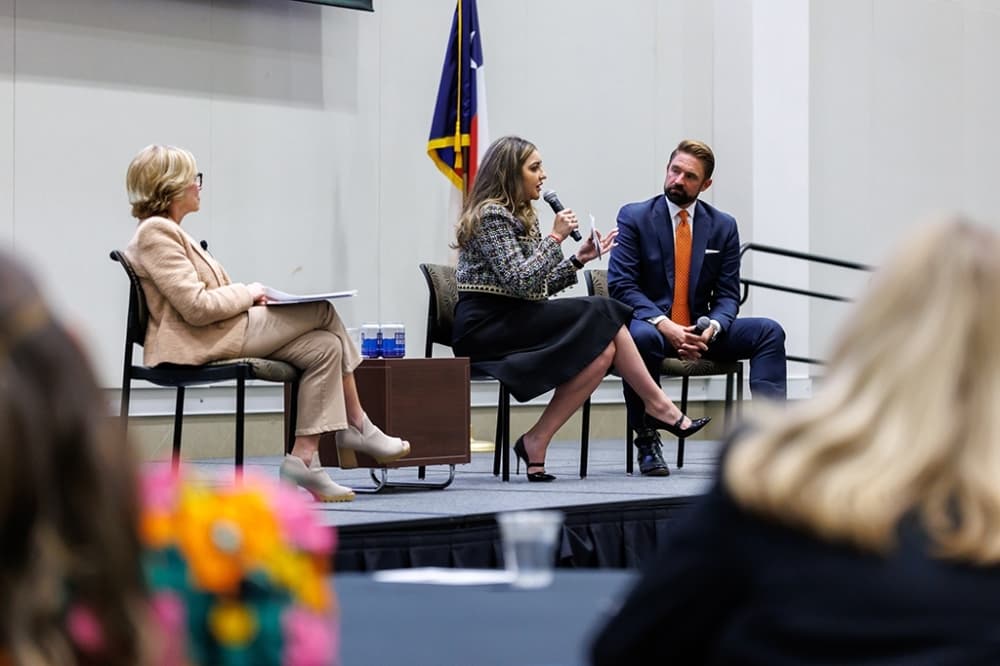
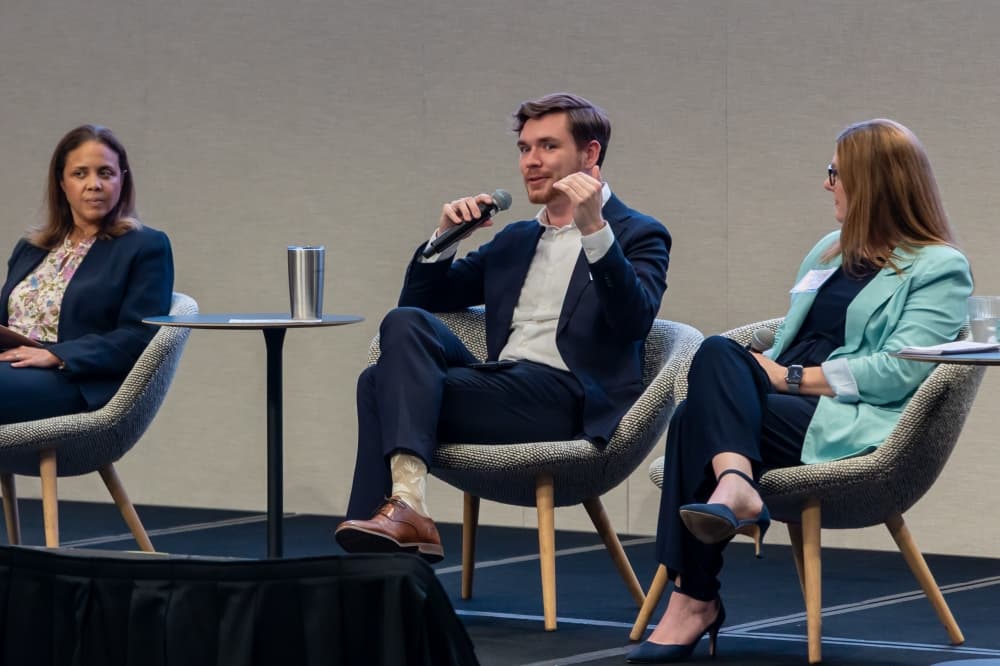
That was the focus of a recent Collin County Connects forum, hosted by the Collin County Business Alliance in partnership with Project Unity. Held at the Capital One Conference Center in Plano, the event brought together residents and community leaders alike for a candid discussion on how voters can better understand local ballots and elections, so they can participate more confidently when making civic decisions.
“Our goal is to help residents move past the noise and better understand local ballots so they can vote with confidence,” moderator Maher Maso of Ryan, LLC said.
Growth driving new questions
Panelists of the forum said the challenge facing many voters is no longer just turnout, but understanding what appears on local ballots and how decisions at different levels of government affect everyday life in a fast-changing county.
Maso, who moderated the panel, framed the evening around a practical question: how can residents better understand local ballots and elections, so they can participate with confidence?

Leanne Libby, founder and principal consultant at LL Business Collective, and a content consultant for local election and voting guide, Collin County Votes, said the county’s rapid population growth is shaping many of the questions residents are asking.
She noted that about 76,000 people moved to Collin County last year, and the county has grown 21% since 2020 to nearly 1.3 million residents.
“Many newcomers are focused less on abstract political issues and more on practical concerns, such as who pays for roads, how schools are funded, and what local propositions mean for taxes and services,” Libby said.
Registration and process confusion persist
Ian Seamans, city hall advocate for Environment Texas and former president of the League of Women Voters of Collin County, said that Collin County performs relatively well on voter turnout compared to the rest of the state. However, it still trails in voter registration rates, particularly among newer residents unfamiliar with Texas election rules.
“Texas does not offer online voter registration, and residents must register more than 30 days before an election by mail or in person,” Seamans said. “You shouldn’t wait to register to vote. You should do that as soon as you can.”
Panelists also said confusion about the voting process can discourage participation. Some residents are unaware when early voting begins, while others believe they must fully understand every race or proposition before going to the polls.

Economic pressures shape civic engagement
Hilary Evans, vice president of policy and advocacy at the United Way of Metropolitan Dallas, said civic engagement is closely connected to financial pressures facing many local families.
Nearly 1 in 3 households in Collin County are working families struggling to cover basic needs, such as housing, childcare, transportation, health care and food, she said, citing United Way and partner data. She added that about 13.3% of residents—roughly 150,000 people—experience food insecurity.
“Your vote is your voice,” Evans said.
Understanding ballots and staying engaged
Panelists also addressed confusion surrounding bond measures and complex ballot propositions. Seamans encouraged residents to review nonpartisan voter guides and materials from school districts, cities and other public entities that place measures on ballots, noting those sources often provide clearer explanations than campaign mailers or social media posts.
Speakers also emphasized that civic participation extends beyond voting alone. Community organizations can help residents stay engaged between elections by following policy issues, contacting elected officials and sharing reliable information with neighbors.
After the panel, Project Unity facilitated table discussions on voter education and political civility. This gave attendees a safe, guided space for constructive conversation about how to stay informed, engaged and respectful across differences.
In a county experiencing rapid growth that is reshaping roads, schools and household budgets, panelists said informed engagement remains one of the most effective ways residents can influence local decisions before ballots are cast.
For nonpartisan voter information and local election resources, residents can look to Collin County Votes and the League of Women Voters of Collin County.

The above story was produced by the Collin County Business Alliance team with Community Impact's Storytelling team, using information solely provided by the local business as part of their "sponsored content" purchase through our advertising team.