
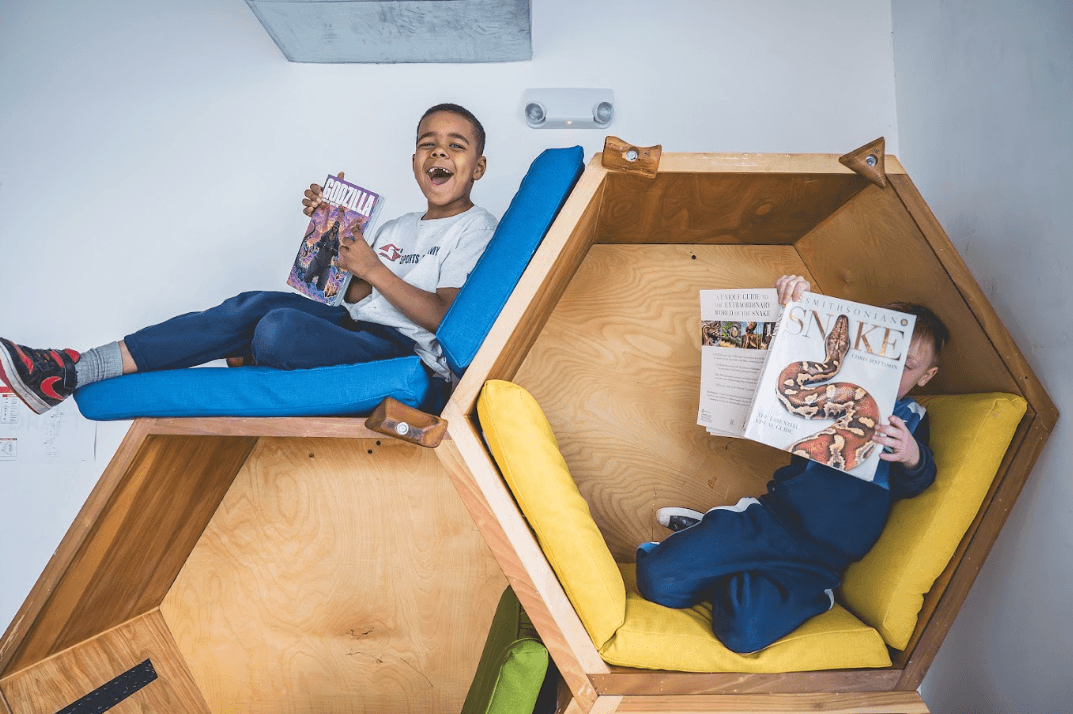
Imagine telling a parent that their eight-year-old could complete core academics in two hours, then spend the afternoon tackling a financial literacy challenge, designing a product with classmates, training for a 5K or practicing how to pitch their business idea, and come home begging for the next school day to arrive.
They would most likely say it’s impossible, but at Alpha School in Austin, it’s just a normal day.
Alpha isn't just changing the traditional classroom model; it's reimagining education entirely. Co-founder Mackenzie Price explained how traditional schools often rely on passive learning: group lectures presented to rows of students in desks for six hours, followed by hours of nightly homework. Alpha flips that paradigm on its head, driven by a simple question: What if school was actually built for how kids learn best?
Students complete their academic coursework in only 2 hours per day
The engine behind Alpha’s approach is its 2 Hour Learning model. Instead of sitting through lectures aimed at the "average" student, kids log into TimeBack: an adaptive mastery platform that helps students learn twice as fast.
It is important to understand that the TimeBack platform does not use generative AI, nor does any part of the Alpha School curriculum.
"[One common misconception is], ‘Is it just AI chatbots teaching my kid?’” Alpha graduate and Stanford sophomore Kate Liemandt said. “Alpha agrees with the concern behind it. AI chatbots are terrible for education, so Alpha doesn't use them. Not a single part of the academic program involves any sort of ChatGPT or generative AI chatbot.”
Instead, TimeBack uses a targeted, adaptive learning platform that pinpoints exact learning gaps, requiring 90% mastery before a student moves on. Because of this, two students of the same age might be learning completely different lessons, one working on addition and the other on algebra, both completely engaged and operating at their peak.
And the data shows just how successful this model is. As of September 2026, Alpha School reports:
2.6x growth: On average, Alpha students grow 2.6 times faster than peers on nationally normed Measures of Academic Progress (MAP) tests.
99th percentile: The majority of students consistently outperform national averages.
Top performers: Their best students achieve up to 6.5 times growth.
What do students do after their two hours of academic learning?
After the two hours of academics are completed, students tackle real-world challenges that build grit and life skills:
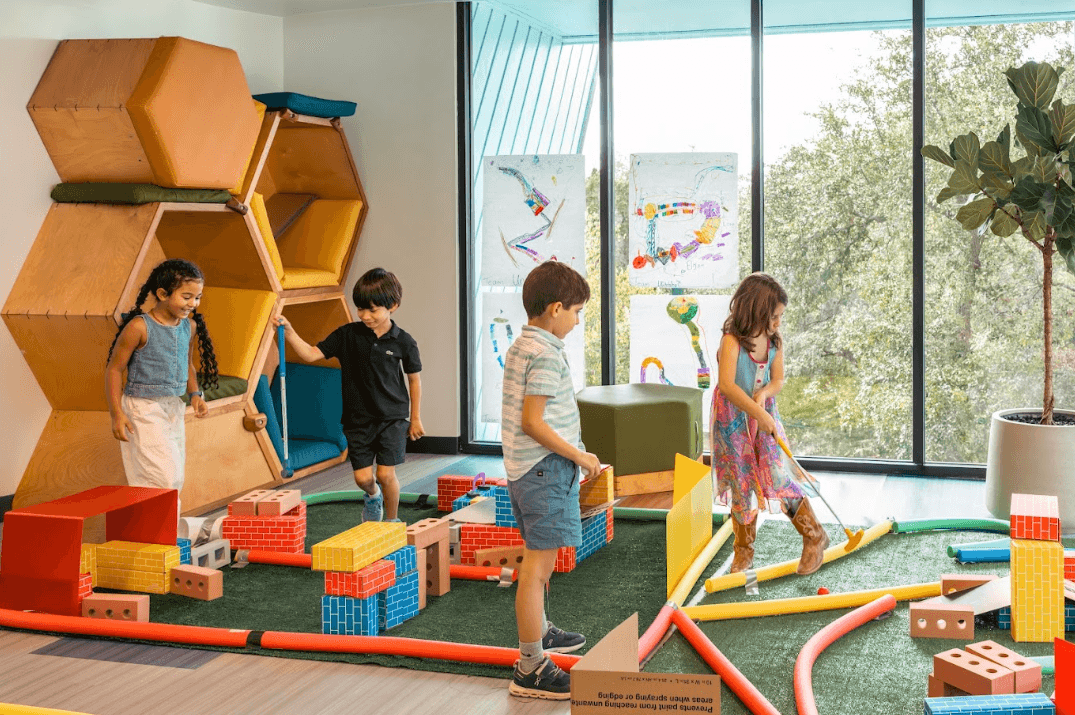
Kindergarten and 1st grade: Students learn they are "limitless" by tackling 100-piece puzzles, learning to swim or completing 5-mile bike races.
2nd grade: Students draw inspiration from Atomic Habits to train for a 5K race, face off against their parents in a spelling bee (and win) and launch a business to raise $1,000 for a cause they support.
3rd and 4th grade: Students build independence by learning financial habits, including saving, spending and investing, coding self-driving cars and drones, mastering juggling, and running their own student Town Halls.
5th and 6th Grade: Students launch food trucks, handling everything from menu design to raising capital, and participate in "Hype Squads" to celebrate their peers' daily wins.
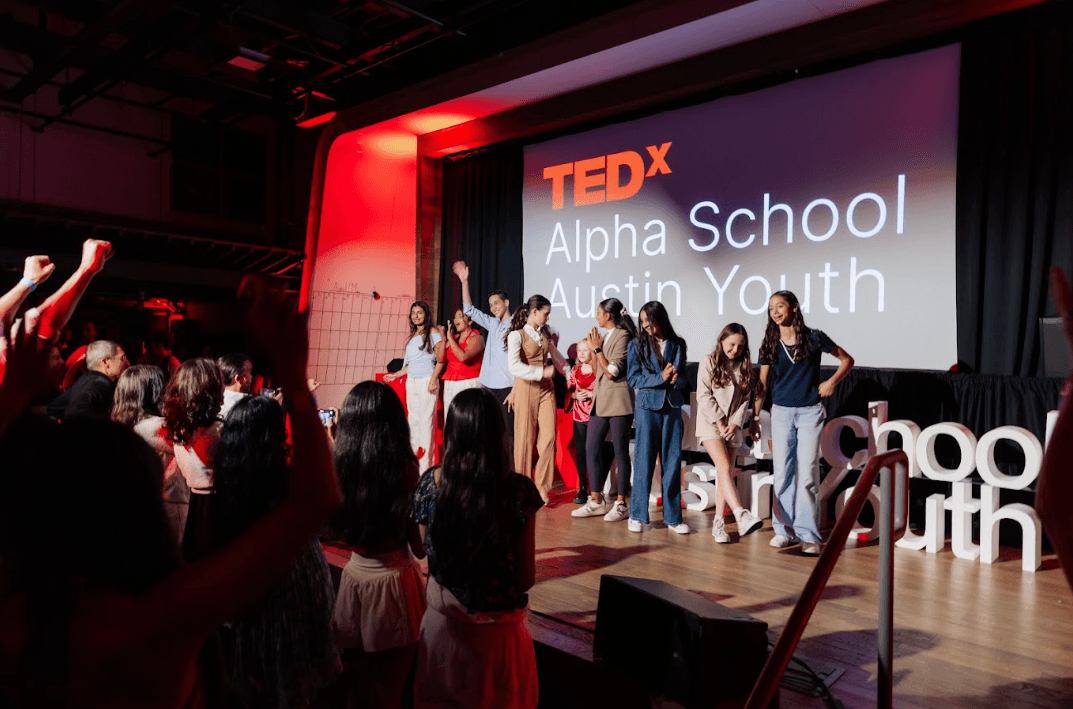
Middle school: Students recreate high school cafeterias to practice social confidence, take on public speaking and prepare for top-tier high schools.
“At Alpha we make three commitments to our students: one, they will love school; two, they will learn twice as much in just 2 hours; and three, they will develop life skills that will last a lifetime,” Price said.
What role do educators play?
At Alpha, the traditional teacher role is redefined with "guides”: mentors whose job is motivating and connecting with students. Instead of managing a room of 25 kids, guides work closely with small groups of five, putting 100% effort into understanding each child.
“A student's guide will ensure that they are known not just by their name, but as who they are as a person. So when critics say there's no real teacher, what they mean is there is no adult standing in front of a classroom talking at your kid for six hours a day,” Liemandt said. “Instead, there is someone who earns double a traditional teacher's salary and has five times the bandwidth to actually care about and get to know your kid.”
One parent shared her experience with Alpha’s guides.
“What I've experienced … with the guides is they really give that one-on-one, individualized experience,” she said. “You can tell that they love what they're doing. I'm going to get emotional [because] my daughter had a Makers Market, and all her guides showed up. It was 30 minutes away, too, which is an hour drive essentially, and they all came to support her.”
Why does the Alpha education model work?
When kids take on huge challenges, they inevitably hit walls. But at Alpha, setbacks aren't failures; they are part of the curriculum.
“When someone fails, they really embrace that. [They say] ‘Failure is fuel,’ and the kids get so excited,” one parent said.
That shift changes how kids feel about stepping through the front doors. One parent recalled a friend witnessing their child arrive at school.
“One of our closest friends … texted us, ‘Oh my god, I heard London walk in. That child loves school so much,’” the parent said. “[London] comes home and wants to share with us how proud of herself she is. I mean, the motivation and the incentivization that Alpha is doing, you can really see how the kids connect to that.”
Why choose Alpha School?
Parents choose Alpha School for many reasons, two of which include its unique learning model and its high-quality educators.
“The concept of Alpha was really fascinating to me. … It is significantly different than a traditional school. The idea [and] the concept of using adaptive technology to teach children makes total sense to me. Incorporating life skills into every day of a student's life makes total sense to me,” one parent said. “What truly helped me get to the point where we were very comfortable sending our son to Alpha, and next year our daughter, was just the people, both the leadership as well as the guides. Alpha has done a very good job of hiring very high-quality people. Alpha is always trying to get it right and always trying to get better where possible.”
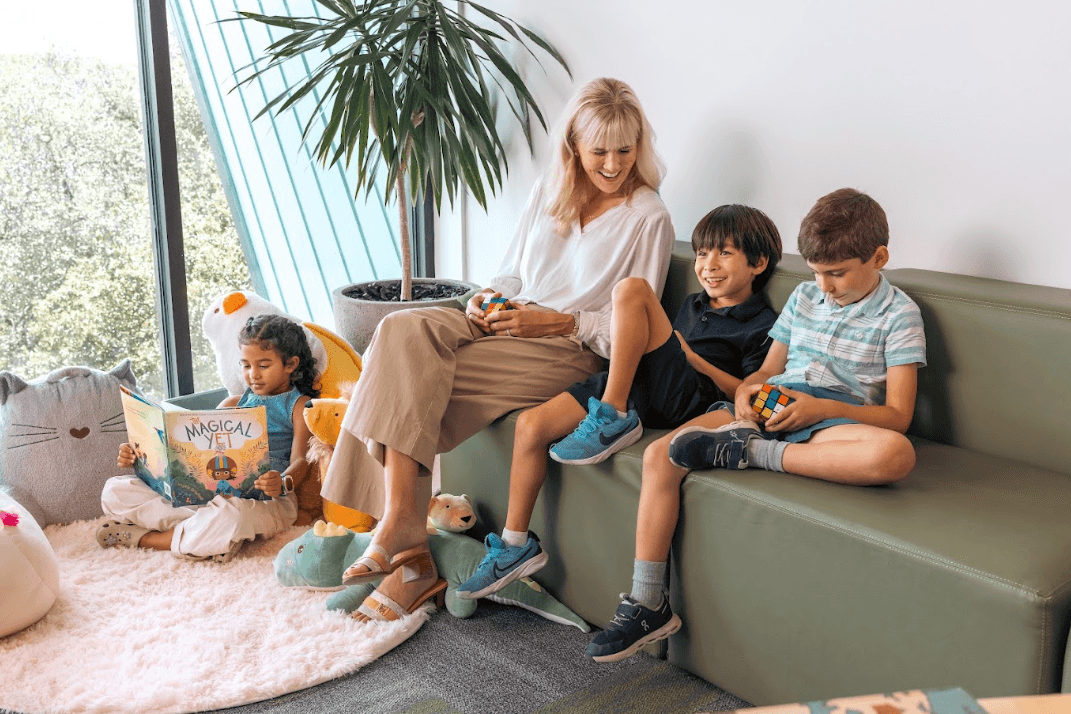
How can I learn more about Alpha School?
For families looking to redefine what school can be for their child, Alpha School will be hosting an in-person Open House on Oct. 21 from 6-7:30 p.m. They also consistently host both in-person and virtual informational sessions.
Those interested in learning more or signing up can find resources here:
Website: https://alpha.school/austin/
Student success data: https://alpha.school/blog/alphas-mid-year-report-card-is-in-heres-what-the-data-actually-says/
Addresses:
PreK-5th Grade: 1201 Spyglass Dr., Austin, TX 78746
6th-8th Grade: 201 Colorado St., Austin, TX 78701
Hours: Monday-Friday, 8:15 a.m. to 4 p.m.
Phone number: 512-358-1672
Frequently asked questions
What is Alpha School in Austin?
Alpha School is an Austin private school that replaces the traditional classroom model with a two-hour adaptive academic program followed by real-world life skills challenges. The school serves students from kindergarten through middle school at 1201 Spyglass Dr.
How does Alpha School teach core academics in only 2 hours a day?
Students use TimeBack, an adaptive learning platform that identifies each student's exact learning gaps and requires 90% mastery before advancing to the next concept. Because the platform adjusts to each individual, two students of the same age may be working on completely different lessons simultaneously: one on addition, another on algebra. The remaining school hours are spent on life skills and real-world challenges tailored to each grade level.
Does Alpha School use generative AI in its academic curriculum?
No, the Alpha curriculum does not use ChatGPT or any generative AI chatbot. Alpha's position is that generative AI chatbots are harmful to education.
What is a "guide" at Alpha School, and how are they different from traditional teachers?
Guides are mentors whose primary role is motivating and connecting with students. Each guide works with a small group of five students rather than a traditional classroom of 25, giving them far more bandwidth to know each student individually. Guides earn double a traditional teacher's salary. Parents have noted guides driving significant distances to attend student events outside of school hours.
The above story was produced by Senior Multi-Platform Journalist Sydney Heller of Community Impact's Storytelling team, with information solely provided by the local business as part of their "sponsored content" purchase through our advertising team.