

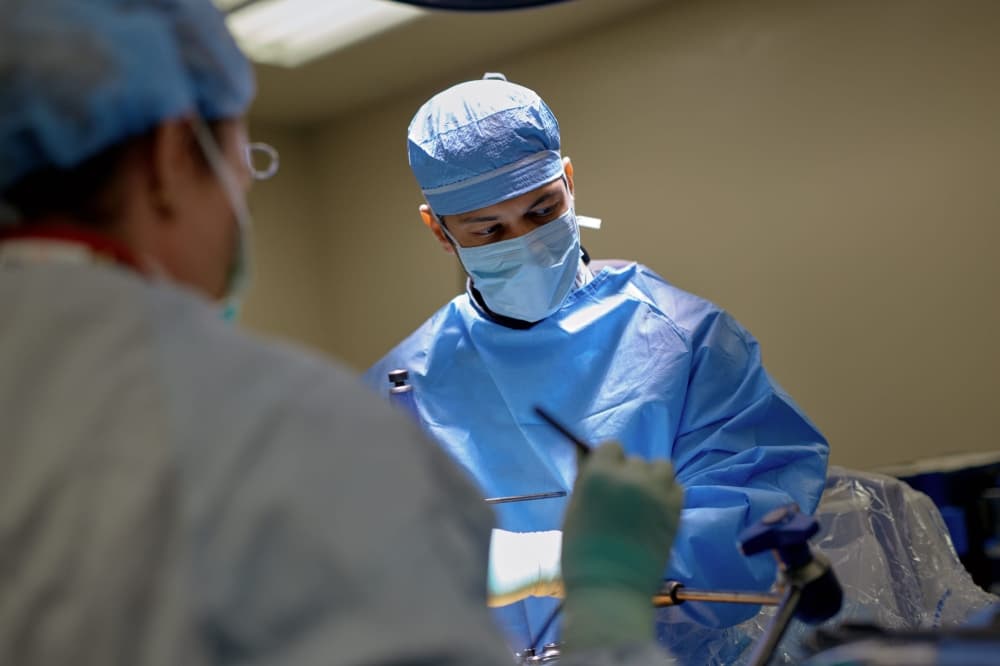
For years, patients with chronic neck and back pain—from degenerative conditions to complex spinal deformities—believed the best spine care required leaving Central Texas.
At Ascension Seton, new technology and surgical planning approaches are shifting advanced spine care in Central Texas.
Building the surgery beforehand
A major change in spine surgery today is the amount of preoperative planning.
At Ascension Seton, surgeons start with advanced full-body imaging that shows how the spine aligns with the rest of the body, helping them evaluate posture, balance and overall function—not just a single problem area.
The imaging is processed through AI-assisted planning technology that creates a preliminary surgical model based on the patient’s anatomy and condition. Surgeons can review, refine, and simulate the procedure ahead of time, mapping implant placement, alignment goals, and correction angles before surgery.
“The evolution has been one-size-fits-all, but now we can personalize care,” Dr. Cruz says. “The technology is here, and it’s not down the path.”
That planning can extend into patient-specific implants and robotic-assisted surgical tools designed around an individual patient rather than a generalized template.
The goal is to create more precise, predictable surgeries aligned to a patient’s long-term recovery and function.
Firsts in Texas
That evolution is leading to major milestones in Central Texas.
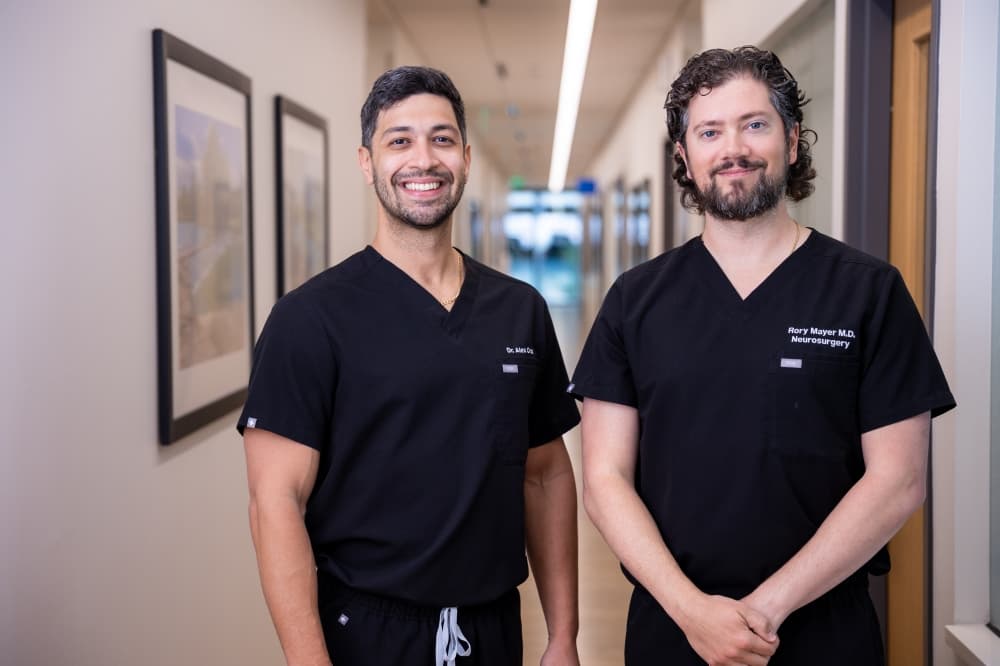
Dr. Alex Cruz recently became the first surgeon in Texas to use a new cervical spine implant system for neck procedures and perform a lower back fusion surgery using that advanced technology.
Dr. Rory Mayer recently performed one of Texas’ first procedures using a new surgical approach for complex spine reconstruction, expanding treatment options for patients with severe spinal instability or deformity.
Those procedures position Ascension Seton among the first Texas programs implementing next-generation spine technologies and personalized surgical approaches
Why it matters for patients
The advancements are particularly impactful for patients with spinal instability, degenerative spine disease, deformity, debilitating neck and back pain, and other conditions requiring advanced surgical expertise.
The techniques are designed to:
- Improve surgical precision and spinal alignment
- Reduce disruption to surrounding healthy tissue
- Support faster recovery and earlier mobility
- Improve long-term function and quality of life
- Lower the risk of complications and revision surgeries
Preliminary outcomes from these approaches indicate improved functional recovery and lower revision rates in certain complex cases.
Surgery isn’t the first step
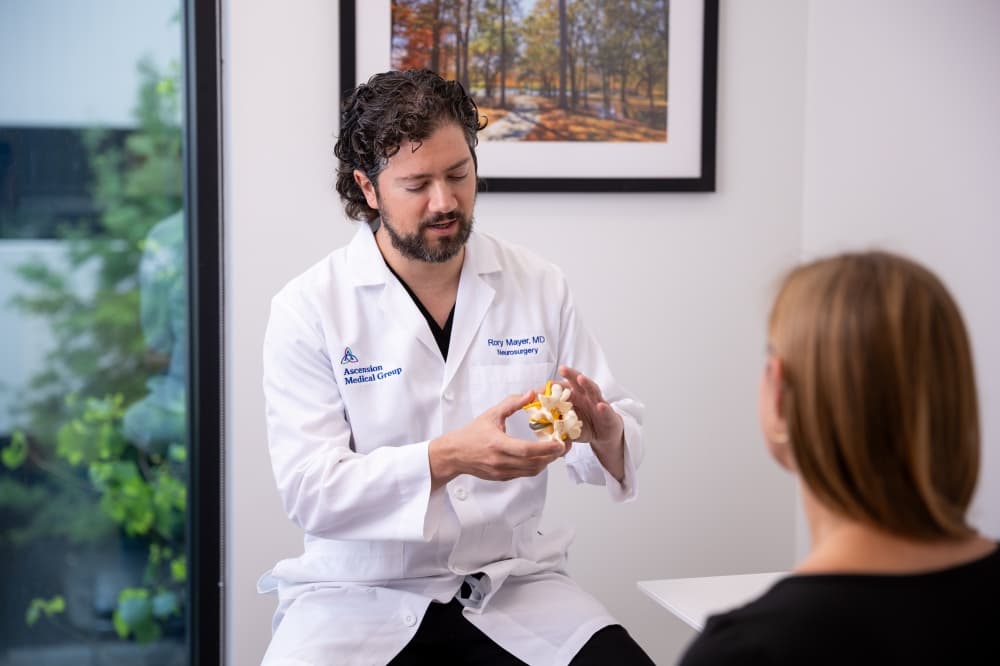
Despite investing in advanced surgical technology, both physicians emphasize that surgery isn’t the starting point for most patients.
Ascension Seton’s model combines neurosurgery, orthopedic spine surgery, and physical medicine and rehabilitation into one coordinated system with a strong emphasis on conservative care first.
“We manage 99% of people without surgery,” Dr. Mayer says. “But when surgery is necessary, this approach allows us to handle both large and small issues safely.”
That multidisciplinary structure allows patients to access nonoperative therapies, rehabilitation, and surgical care within one integrated model, ensuring surgery is considered carefully rather than automatically.
Keeping care local, building forward
For Ascension Seton, the shift toward personalized, technology-driven spine surgery is not a short-term change; it is an ongoing direction for the program’s growth.
Dr. Cruz and Dr. Mayer aim to adopt new surgical technologies while building a system for Central Texas patients to access the same planning precision and specialized procedures as major national spine centers.
This includes continued investment in advanced imaging, AI-supported surgical planning, and patient-specific implants, along with ongoing collaboration across neurosurgery, orthopedic spine surgery, and rehabilitation specialists.
The intended impact on patients is cumulative: more complex cases treated locally, more individualized surgical planning, and continued expansion of what can be safely and effectively performed within Ascension Seton’s spine program in Central Texas.
To learn more about spine care at Ascension Seton, click here.
The above story was produced by Multi-Platform Journalist Chloe Chapel, with the Community Impact's Storytelling team, using information solely provided by the local business as part of their "sponsored content" purchase through our advertising team.