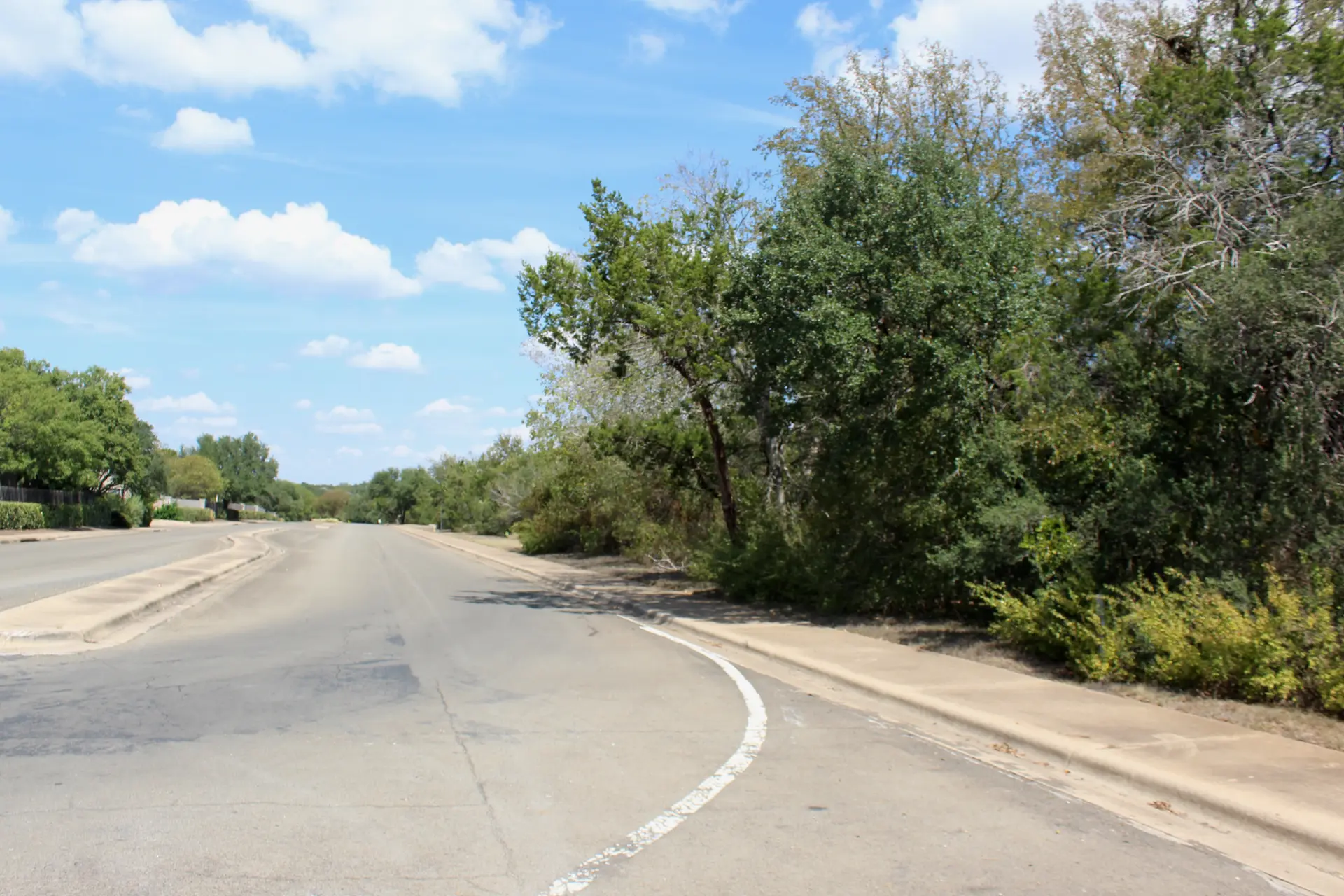
A 1,000-unit housing development on the "Tract 110" property between MoPac and Dahlgreen Avenue can proceed after City Council approved a rezoning and changes to a local development agreement. (Elle Bent/Community Impact)
City officials cleared the way for 1,000 housing units off MoPac near Circle C, despite objections from many area residents who've voiced concerns over the project's impact on traffic and safety.
The big picture
A more than 67-acre portion of "Tract 110" at 11010 1/2 S. MoPac is undeveloped and has no connections from the Circle C neighborhood to the highway. The site was zoned for mixed-use commercial services and is subject to a 2002 development agreement between the city and landowner Circle C Land Corp.—Stratus Properties.
Under the previous agreement, Stratus has been limited to building 651,000 square feet of offices, about 10,000 square feet of retail space and limited housing on Tract 110. The construction of a new segment of South Bay Lane, which is currently broken up between Circle C and MoPac, was also required with the tract's development.
Stratus has worked to adjust those limitations since last year to permit housing instead of an office project, with 1,000 apartments including 100 affordable units proposed, and to strike the South Bay extension requirement. City Council signed off on those changes Sept. 24 over general local opposition.
“I don’t think there is a magic wand that helps us get the exact perfect thing where everybody is really excited about it. But I think given the tight constraints of this area and the general need for more housing, and affordable housing, in Southwest Austin, that this is a workable plan," said council member Paige Ellis, who represents the area and engaged with stakeholders on the case and its "unique challenges."
Some context
Circle C neighbors largely turned out against Stratus' new plans as cases moved through city zoning approvals in recent months.
Locals were resistant to cutting the obligation to build a new roadway connection, and the related impacts of bringing hundreds of new residents and funneling traffic through Circle C down Dahlgreen Avenue. Attention was also given to the property's location between Kiker Elementary School to the north and Valor South Austin to the south, where parents and residents have pointed to frequent traffic back-ups and student safety concerns today.
"This is already a dangerous situation, so to say, ‘We’ll just figure it out later’ is unacceptable," resident Alicia Keswani told officials Sept. 24. "I do want to say the hard part out loud, that with this traffic setup at these speeds a tragedy is inevitable.”
Resident raised concerns about the impact of developing Tract 110, which borders the Circle C neighborhood off MoPac.Elle Bent/Community Impact
The phased residential project would eventually reach the 1,000-unit count with 10,000 square feet of commercial space and none of the originally envisioned offices. Given the environmentally sensitive location, development on the portion of Tract 110 would also be limited with just 16 acres of impervious cover—surfaces that don't absorb rainfall, like buildings and parking lots—allowed.
Development would also include the dedication of onsite parkland and a new public trail network, according to land-use lobbyist Amanda Swor, representing Stratus.
Zooming in
A traffic impact analysis, or TIA, will be required once formal site plans are submitted to the city. If that analysis suggests improvements like a new traffic signal on Dahlgreen, which Swor said members of the development team "highly anticipate," the builder would have to fund its construction. Traffic studies could also call for a new shared-use path along Dahlgreen, which the developer would have to dedicate land for, if warranted.
Two access points will also be required around Tract 110, while the South Bay extension is no longer mandated. Swor said that requirement was outdated, and both she and Ellis noted area residents had formally opposed a South Bay addition during the Austin Strategy Mobility Plan's creation.
“This change reflects current conditions, not a paper roadway network from 25 years ago that doesn’t exist. And it provides the city with the opportunity to have a full review of access and vehicular movements at the time of site development permit," Swor said of the new traffic plans.
Put in perspective
Still, several residents criticized the decision to strike the roadway construction requirement. They said city officials were letting Stratus, or another developer, off the hook for a project that could now have to be funded with public dollars if it ever moves forward. Some also noted Tract 110's future prospects are uncertain as Stratus is moving to dissolve and sell its assets, and that the zoning proceedings may have been aimed at reducing obligations on the property to boost its value for a sale.
“We urge the city that your duty is to your citizens and not to the shareholders of Stratus. We’re not opposed to housing on this site, we’re opposed to how the amendment handles the density, the traffic safety and mobility," said resident Lisa Lyons with the Protect Circle C Coalition.
While most public feedback was against the approved changes, resident George Cofer said he was involved in negotiating the early 2000s Circle C development agreement and that the updates could be in the community's best interest given current market conditions. Officials also received resident feedback in support of more housing, and the Hill Country Conservancy reported Stratus plans ongoing donations related to the development.
“Stratus has donated $2.7 million cash since 2008, and they’ve never asked for anything. I’m not here on behalf of Stratus. I’m not here today on behalf of Stratus, I’m here because we cut a good deal back then and we even have a better deal on the table today," Cofer said.
Before council's final vote, Ellis said the Tract 110 case was the most complicated she and her staff have worked on in recent years given interest in Circle C's last undeveloped property. In outlining her support for the rezoning and development agreement revision, Ellis said traffic concerns remain to be addressed but that issues would likely arise whether offices or residences are built off MoPac.
She also said the process resulted in positive conversations with Austin ISD and community members about safety around nearby schools, and that city traffic engineers will focus on future improvements there. The Tract 110 updates both passed 10-0-1, with West Austin council member Marc Duchen abstaining on both votes.
“I know that whether it’s office or whether it’s multifamily, there’s going to be some issues there. But there has been a firm commitment to 173 acres of keeping open space, complete compliance with the Save Our Springs ordinance, even a potential trail access to the Valor school to help with some of the issues about where that school was built—which I think is a terrible location, but we’re doing what we can to help make those families and those students as safe as possible," Ellis said. "They’ve also stepped up to make sure that the Hill Country Conservancy’s financial needs … continues through this process."
More Development news from Southwest Austin - Dripping Springs