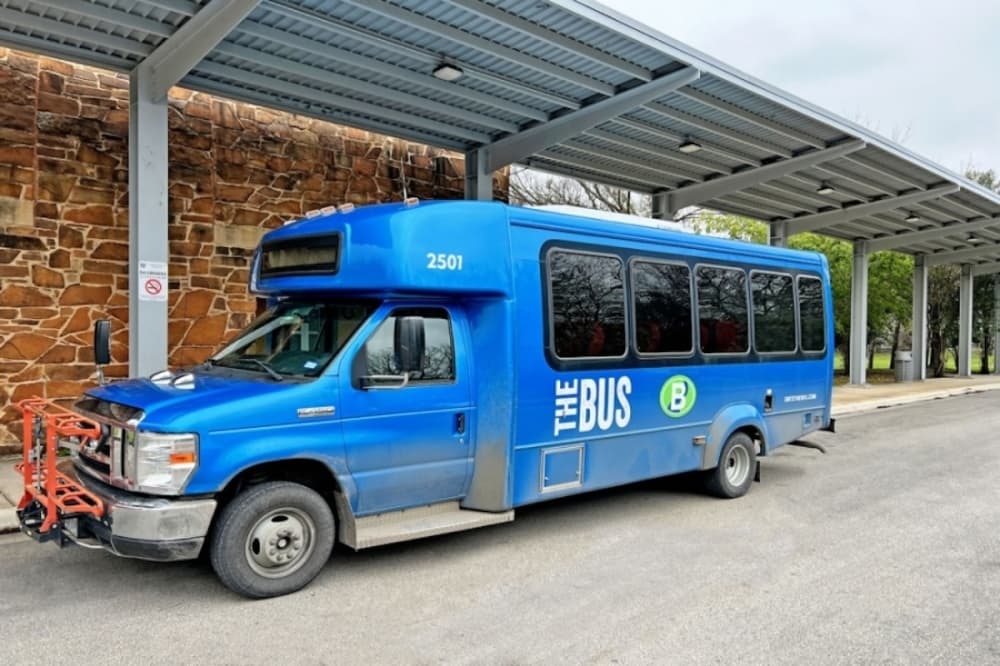
The city of San Marcos has contracted with the Capital Area Rural Transportation System, or CARTS, to provide public transit services since 2013. The city will pay more than $100,000 in fiscal year 2026-27 for the service due to rising operating costs.
The gist
As a result of San Marcos’ population exceeding 50,000 in 2010, the city was classified as a small urbanized area and became responsible for providing public transportation services to the community, according to agenda documents.
The City Council approved a new interlocal agreement with CARTS to continue offering the transit service for residents and visitors in the upcoming fiscal year during a Sept. 1 meeting. CARTS supplies buses, vehicle operators and maintenance services.
A major difference in the agreement from the previous fiscal year to the upcoming year is an increase in the service cost per hour, according to agenda documents. The per-hour cost will increase from $90 to $94.05 per service hour, or 4.5%.
Increases in maintenance costs of the aging bus fleet, recent unpredictability of changes in fuel prices and rises in personnel costs have contributed to the rate increase, according to agenda documents.
The breakdown
The Federal Transit Administration, or FTA, recognizes San Marcos as a small urban transit system and provides funding to the city to support public transportation services, including:
Free fixed-route bus services
Complementary paratransit service for those with disabilities
Low-cost interurban express service from San Marcos to Austin
The total cost of the FY 2026-27 agreement is $2,486,747, with the city paying $792,101 from its general fund. The FY 2025-26 cost was $2,382,246, with the city paying $621,414 from its general fund, $170,687 less than the new agreement, according to agenda documents.
Also of note
The public transit system in San Marcos gives residents and visitors more mobility through the city and better access to their jobs, schools, hospitals and other essential locations, according to agenda documents.
The system reduces single-occupancy vehicle trips, lowering the amount of greenhouse gas emissions. Traffic congestion is decreased due to fewer individual vehicles being on the roads and the increased city access strengthens economic growth and development, according to agenda documents.