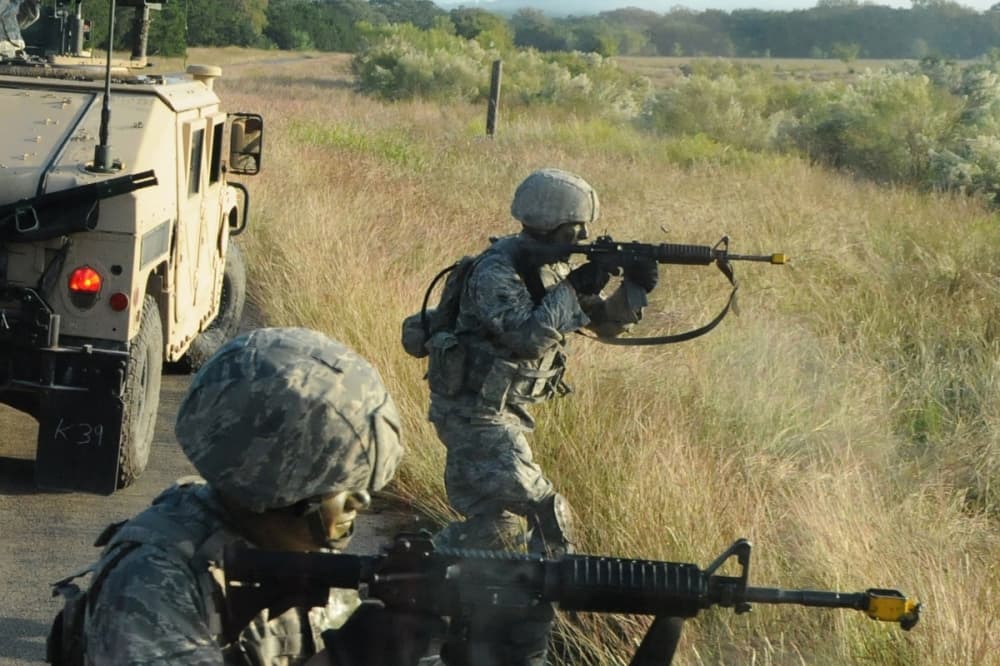
For more than 100 years, the U.S. Air Force’s Camp Bullis on San Antonio’s north side has been home to military training operations that took advantage of its more rural location.
Over time, homes, businesses and a booming population began to encroach on the camp and put at risk the military’s ability to succeed at its mission: effectively training today’s men and women who serve.
Now with the help of the Sentinel Landscape designation, efforts are underway to help area landowners preserve nearly 1 million acres around the camp, protect water and wildlife, and reduce noise and light pollution.
“The challenge is how do we work across this vast landscape to aggregate all of the various technical and natural resources in a way that supports landowners around Camp Bullis and supports the training mission,” said Daniel Oppenheimer, land program director with the Dripping Springs-based nonprofit Hill Country Alliance. “A lot of that comes back to protecting water, soil health through conservation, enhancing groundwater—those things will help to mitigate flash floods as well.”
Conservation and preservation
Camp Bullis is part of the Greater Joint Base San Antonio operations and supports training of military members who serve at any of San Antonio’s bases, including the north side’s JBSA-Randolph.
The 27,990-acre military site houses state-of-the-art training and simulation equipment, firing ranges surrounded by open skies not clouded by light pollution, and an abundance of land for training maneuvers that are not affected by noise pollution.
On Feb. 1, 2022, the federal government designated Camp Bullis and nearly 1 million acres around it a Sentinel Landscape.
Securing this designation enables stakeholders—such as private landowners and conservation organizations—to leverage federal and state monies to fund initiatives to help meet five overarching goals, said Oppenheimer, who is coordinating communications and the efforts of 57 private- and public-sector groups that support conservation efforts and Camp Bullis.
Those goals include promoting responsible development and land stewardship; maintaining and improving agricultural productivity, such as farming; addressing climate-related challenges, such as drought, flash flooding and wildfire risks; preserving and enhancing habitats to aid in the recovery of native and threatened wildlife species, including the golden-cheeked warbler; and supporting and expanding recreation opportunities, such as parks and trails.
All the stakeholders aim to work together to conserve natural resources within the area and reduce risks that are the byproducts of development, such as light pollution and drainage runoff, Oppenheimer said.
Such efforts will benefit surrounding properties, communities and ecosystems and strengthen military readiness at Camp Bullis, which is important because JBSA’s military activities contribute $31 billion yearly to Texas’ economy, Oppenheimer said.