New developments in Round Rock may have fewer parking spaces, with an amended city ordinance removing minimums for most nonresidential projects.
In a nutshell
The proposal to adjust parking requirements comes as the city is reevaluating whether the existing policy is "appropriate for current development patterns and land use goals." Round Rock Planning and Development Services Director Brad Dushkin said the city has had parking minimums for decades, and city staff spent about a year preparing the proposal to amend the ordinance.
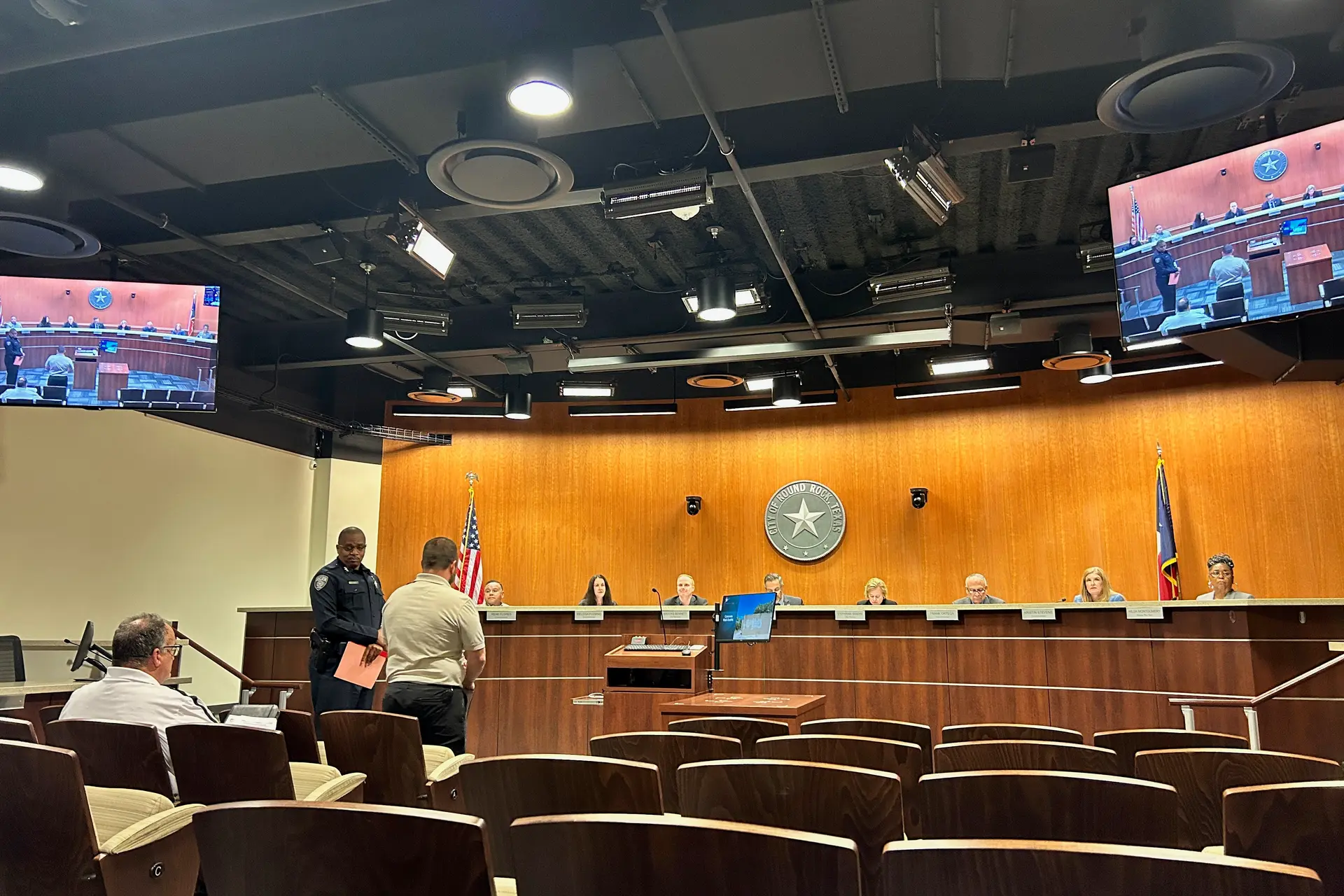
City officials approved the measure in a May 14 meeting.
What they're saying
Dushkin said the amendment would leave parking volume up to the free market, in a time when consumers are driving less, using rideshares more and generally spending less time in parking lots. Parking is also expensive to build, he said, and requirements have an "outsized" influence on site selection or the feasibility of locating a business in the city.
"This is one of those issues where you're considering the government mandate versus the will of the free market," Dushkin said in a May 12 packet briefing. "Generally, we would like to trust that the developer knows exactly how much parking they're going to provide."
Additionally, he said the change could encourage redevelopment as well as more efficient use of land, and that excessive pavement can impact the environment by increasing runoff and the "urban heat island" effect.
He also said the amendment could allow large retail developments to add more pad sites in existing parking lots.
The details
Proposed amendments include but are not limited to:
- Remove minimum on-site parking requirements for certain nonresidential uses
- Provide recommendations for parking ratios
- Retain minimum parking requirements for certain assembly uses
- Update the off-street parking table for selected public, civic, commercial and industrial uses
- Clarify that where no minimum parking is specified, on-site parking will not be required except for land uses including single family (SF-R, SF-2, SF-D) the C-2 commercial use, and mixed use MU-R.
Accessible parking would still be required, in accordance with the Americans with Disabilities Act, when on-site parking is provided, Duskin said.
The amendment does not change the dimensions of parking spaces, lots and drive aisles; requirements to stack spaces for drive-thrus and fleet parking; stormwater drainage requirements; or landscaping and screening requirements for parking lots; and does not change parking requirements for downtown.
Additional information about the amended ordinance is available on the city's posted agenda.
What else?
City officials acknowledged May 12 that the proposal could potentially lead to drivers parking in residential areas if developers choose to build too few parking spaces. They suggested that if such an issue arises, residents can request a residential parking permit district. Two such districts exist: Lake Creek West near Round Rock High School and Plantation Cove near Old Town Elementary School.