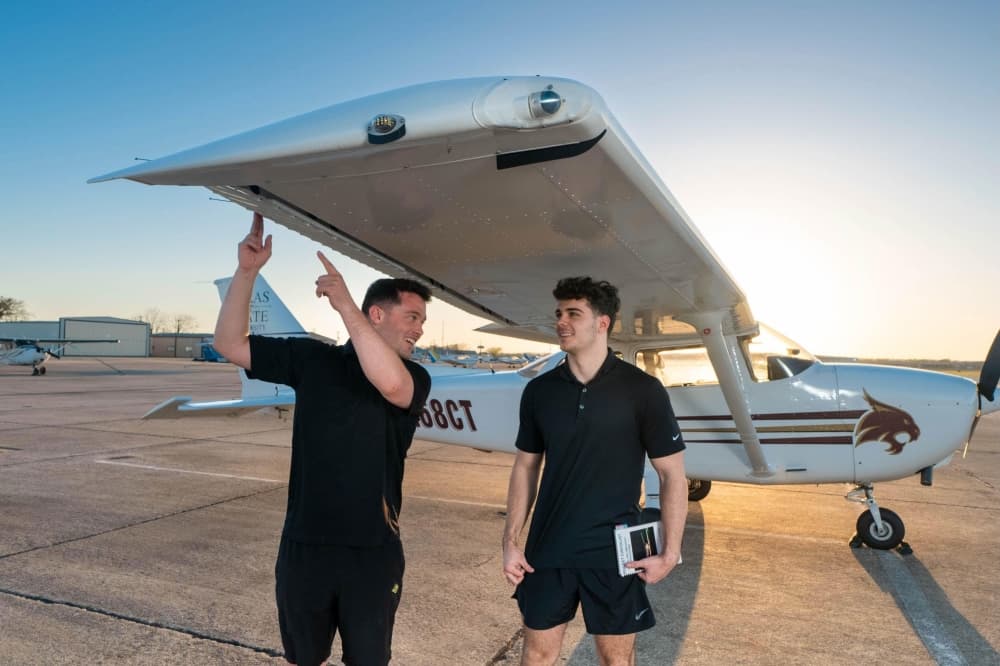
Central Texas students have a clearer path from the classroom to the skies with a new pilot training program at Texas State University’s Round Rock campus. The expansion brings a program in place at other Texas State campuses to Round Rock.
In partnership with local flight schools, the university offers students a bachelor’s degree in aviation science, as well as seven certifications and licenses, including their private pilot’s license.
The program prepares students to potentially work for major airlines as well as other career opportunities, said Donald Wimp, program coordinator and assistant director for the university’s aviation program.
“People are looking for something that’s not just challenging but very rewarding,” Wimp said. “If you’re one of those people that likes to just go and won’t let anything stop them, it’s a great career.”
The big picture
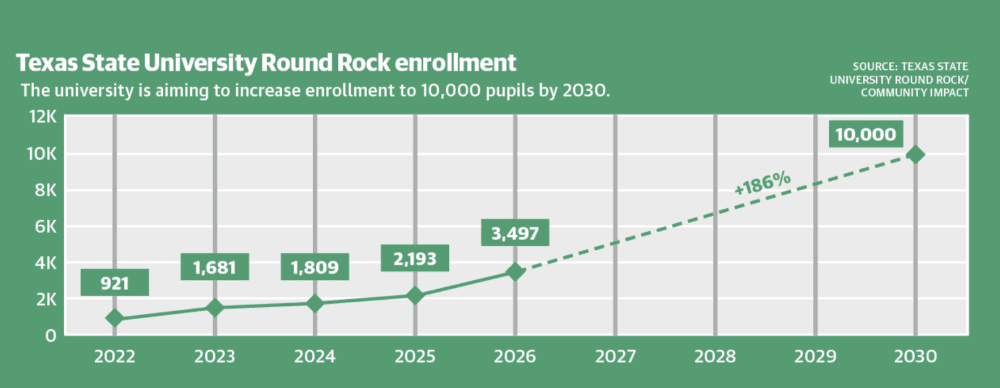
Expanding program options is central to the university’s goal of enrolling 10,000 students by 2030, said Julie Lessiter, vice president of Texas State Round Rock.
The program will capitalize on existing pipelines of students through aviation-related programs at nearby Georgetown and Round Rock ISDs, as well as encourage them to stay local, potentially reducing housing costs during their time in college.
“We’re here serving our community, helping our students stay local to get a great Texas State education,” Lessiter said. “We are here to help our students and help the community provide that strong pipeline of employees.”
The aviation science program is part of a larger, data-driven effort to roll out other workforce-centric programs in the next few years, she said.
How we got here
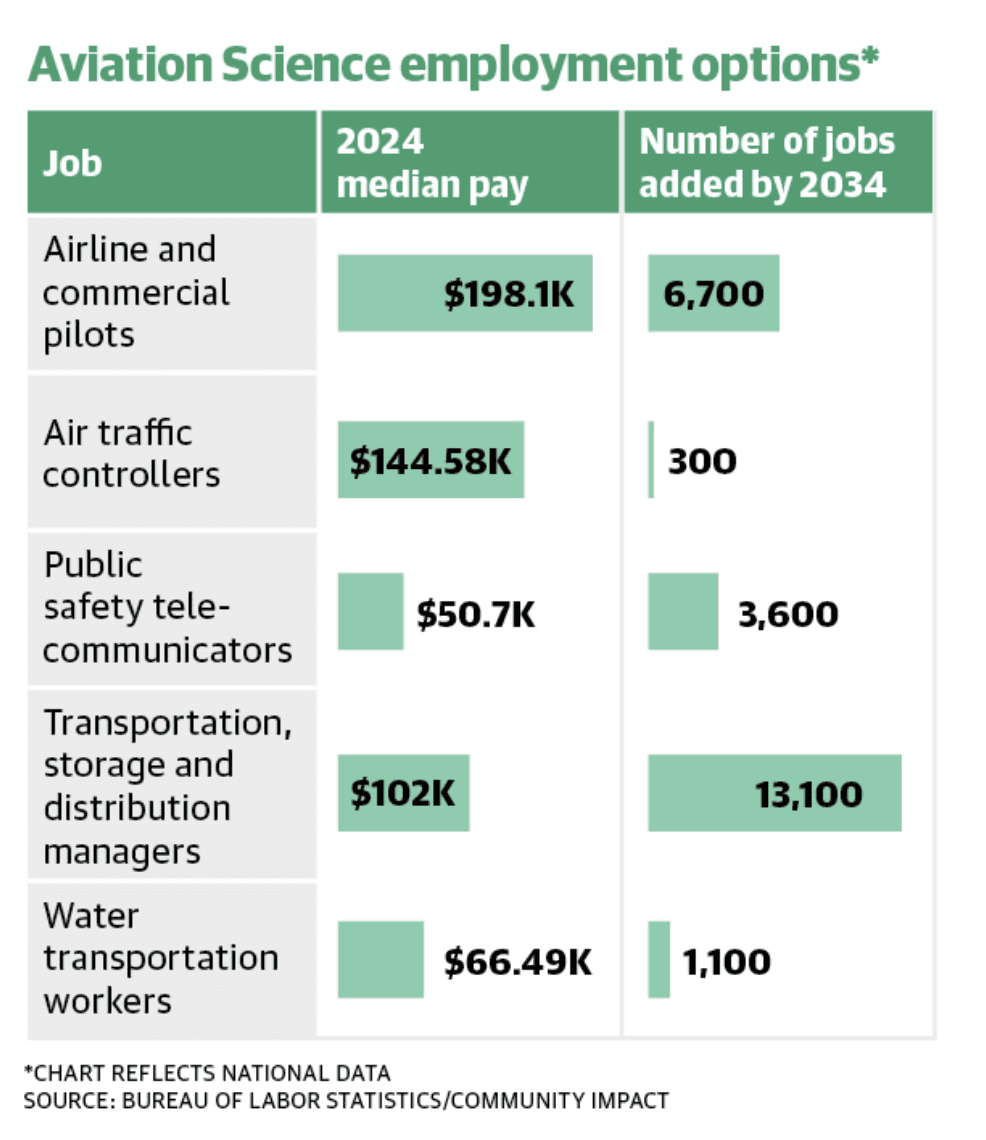
Lessiter said the program’s development was guided by workforce studies conducted by the university. These studies identified the ongoing national shortage of pilots as an area where the university could provide a pipeline of skilled employees. The U.S. Bureau of Labor Statistics projects about 18,200 job openings for commercial pilots annually, between growth and turnover.
Graduates of the program are not limited to careers as pilots, Wimp said. An aviation science degree can also open doors to many careers in the public and private sector, he said.
“Any government agency you can think of ... they’re going to be looking for pilots or they’re going to be looking for people with a skill set in aviation to do those ground support jobs,” Wimp said.
About the program
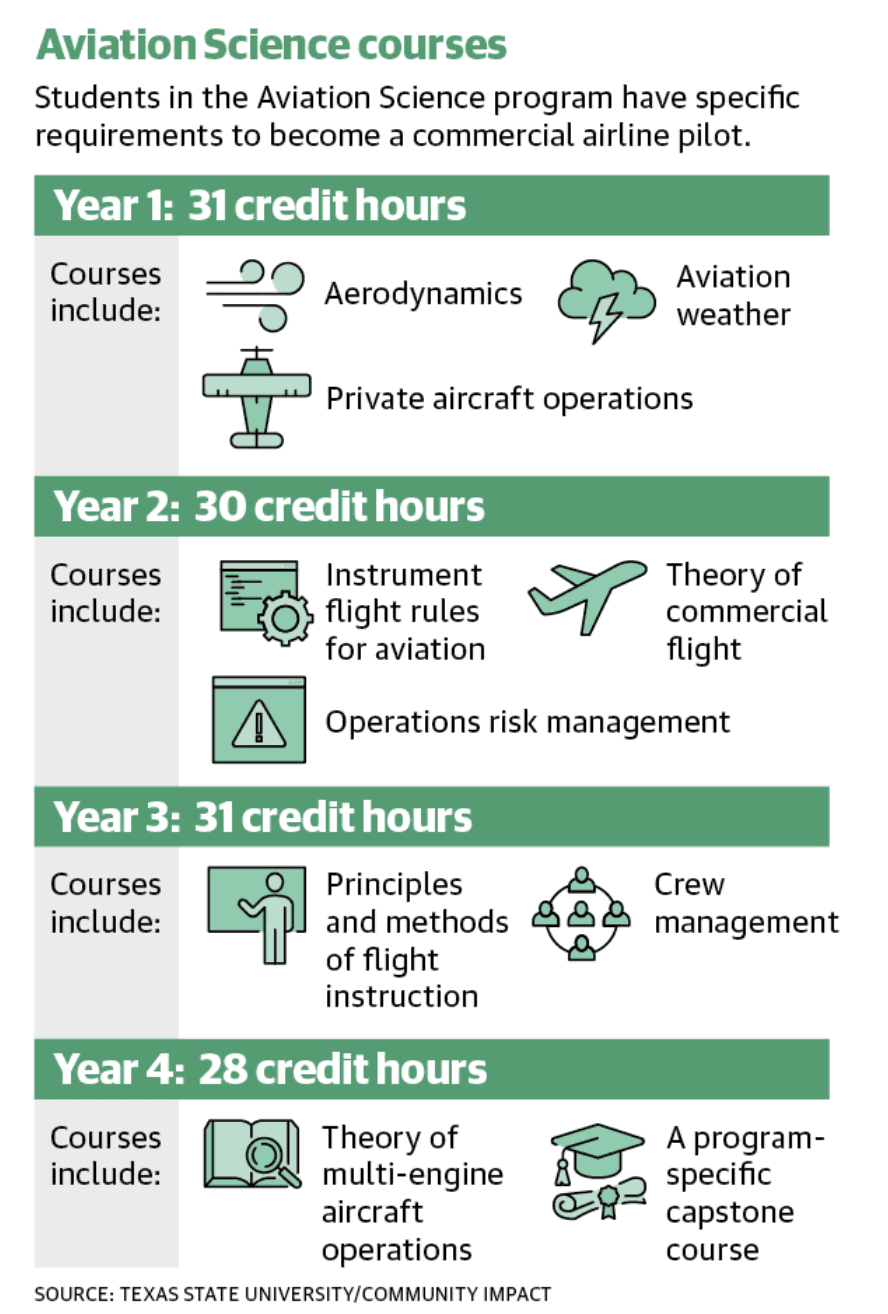
At Texas State, aviation science is structured as a seven-semester degree utilizing a hybrid model that blends traditional college courses with hands-on flight training through local flight school partners. Wimp said this program is possible through the Federal Aviation Administration’s Part 141 program, which certifies pilot training programs.
The Round Rock campus’s pilot training partner is Genesis Aero, located at the Georgetown Municipal Airport.
“This partnership reflects our shared commitment to developing the future generations of professional pilots through high-quality flight training,” Kyle Keeling, owner of Genesis Aero, said when the program was announced in January.
Wimp said students are expected to balance a full course load while spending three to five days a week at their local airport.
What's next?
Wimp said he is currently working on two more courses: accident and mishap investigation as well as the history of aviation.
The university will also launch an aptitude test for the aviation program this fall, and a concentration in aviation management is in the works. The degree program is being scaled nationwide, with a remote component and partnerships created with 19 flight schools across the country.
As a whole, the Texas State Round Rock campus will add degrees in healthcare administration, supply chain and logistics, and pre-physical therapy starting in fall 2027.