As Round Rock ISD staff forecast a multi-million-dollar shortfall for the district's self-funded health insurance going into 2027, the district is proposing an increase to employee healthcare costs.
The big picture
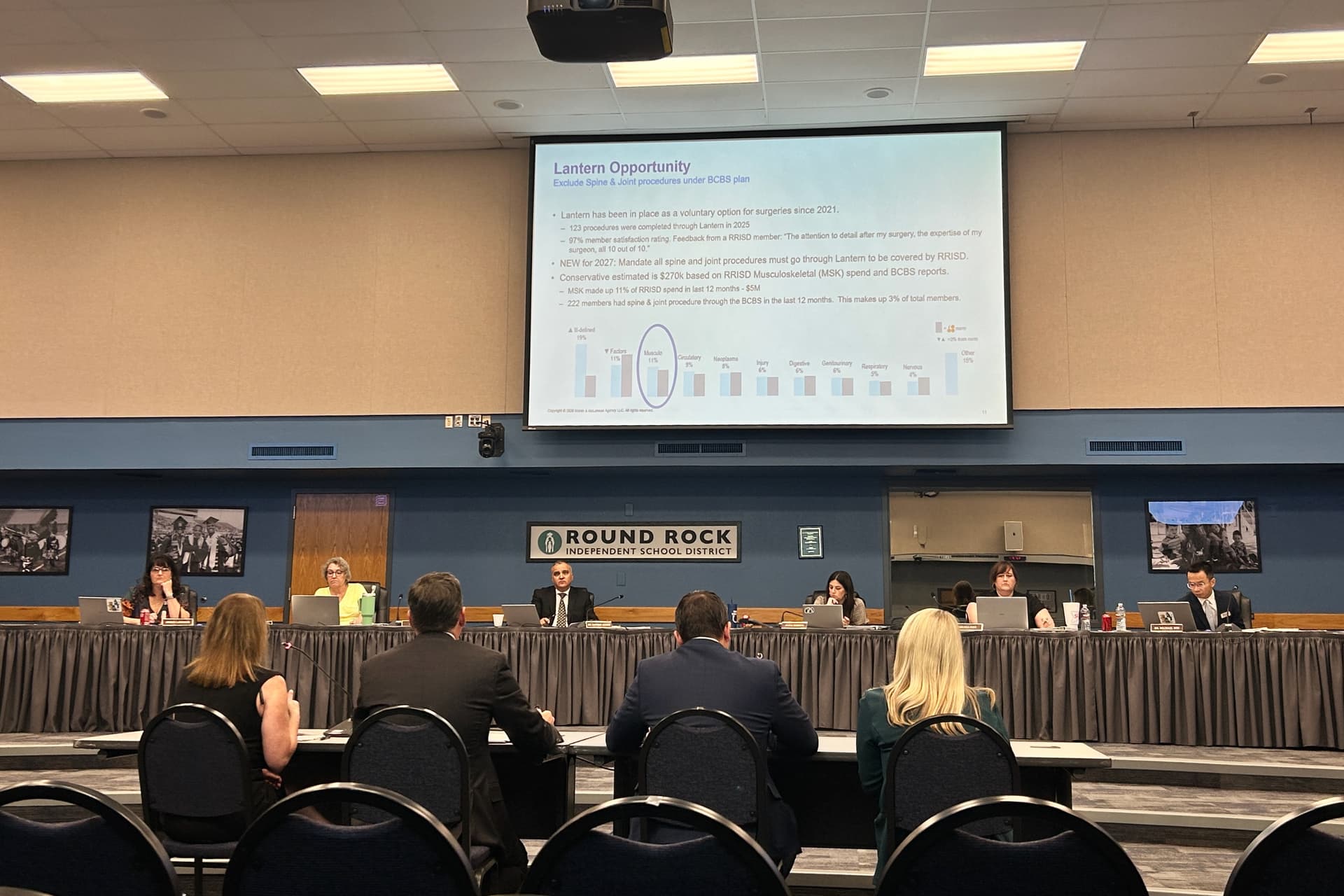
In September, RRISD administration presented a proposal for changes to the district's healthcare plan for employees.
Historically, RRISD has absorbed cost increases for healthcare using its fund balance. However, costs have risen for many things in recent years, including healthcare claims, and the district can no longer prevent these increases from being passed on to employees, Chief Human Resources Officer Eddie Curran said Sept. 17.
The district is contributing $7,795 per employee for its self-funded healthcare plan. That breaks down to an outright contribution of $5,592 per employee, with about $2,200 of additional costs absorbed from medical claims that were much higher than projected, he said.
"The reality is what we have been contributing through a combination of the contribution and that budget deficit that we were absorbing ... it's just not sustainable," Curran said.
The options
Without making any changes to its healthcare plan, the district is forecasting a $13 million shortfall that the district's fund balance can't absorb, Curran said.
The proposal shared in September states that the district can reduce this shortfall to less than $1 million by implementing changes to its healthcare strategy, such as:
Replacing existing preferred provider organization plans with one that is deductible-only, with no copay, known as Easify. This would cost $275 per month for employees, with higher costs for family plans.
Increasing the cost of health maintenance organization, or HMO, plans to $100 per month for employees on a health savings account plan or $175 for employees on the copay plan. The district would also eliminate contributions to employee HSAs.
Additionally, all plans would have lower costs if the district's voter-approval tax rate election were to pass. If the VATRE is successful, the HMO employee-only contribution would be $60 per month for an HSA, $135 for the copay plan and $235 for the deductible-only plan. Costs would also be slightly lower for family insurance plans.
Under the proposal, the least expensive employee-only option would increase from $10 per month to $60 per month, according to the district.
Curran said the district could also choose to end its self-funded health plan and join the state's Teacher Retirement System ActiveCare program. This program is partially subsidized by the state, and would come with fixed rates for 12 months. However, the district would lose local control of its healthcare plan if it joined ActiveCare, and a two-year surcharge would apply.
In their own words
Some trustees said they did not want to have to pass additional costs on to employees, and encouraged staff to look for other options.
"I'm really upset about what we're doing here," Place 2 trustee Melissa Ross said. "I know our funds, but I wish that we could do something different."
Tammy Conrad, the president of the district's teachers union, Education Round Rock, called on the district to find another option that does not potentially wipe out any pay increases that could come from the passage of the VATRE.
What's next?
The board did not vote on the proposal in September, but the district will need to make a decision soon, Curran said.
The district has until Dec. 31 to elect to join TRS ActiveCare, he said.