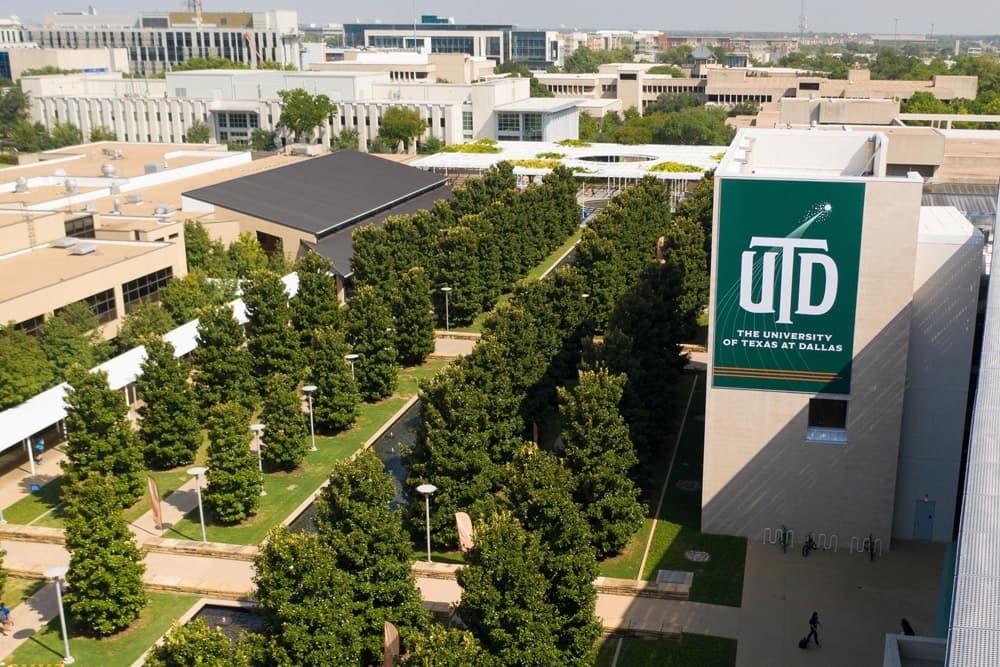
North Texans report greater affordability pressures, less neighborhood connectedness and unease about artificial intelligence in a new quality-of-life survey from the University of Texas at Dallas.
Researchers from the university’s School of Economic, Political and Policy Sciences presented results from the 2026 William C. Short Quality of Life Survey on Oct. 21. They have conducted the survey annually since 2024 to identify issues important to North Texans and bring community members together, said Jennifer Holmes, dean of the School of Economic, Political and Policy Sciences.
The overview
Timothy Bray, project director for the North Texas Quality of Life Initiative and director of the Institute for Urban Policy Research at UT Dallas, said the survey’s guiding question for 2026 was, “What does it take to make North Texas a place to call home?”
The research team surveyed residents in Denton, Tarrant, Collin and Dallas counties in August and received 1,933 usable responses, Bray said. He said he hopes the data can be used to provide guidance and identify solutions for regional issues.
“The challenge we face as a region is we need faster, more accurate, more accessible data,” Bray said. “We begin by listening to North Texas, asking the folks who live in our communities what they think.”
The survey asked questions about economic pressures, affordability, life satisfaction and civic engagement. Bray said the research team also chooses two “pressing topics” each year—for 2026, they surveyed residents on AI and the American dream.
“These are exactly the kinds of questions where perception and reality can diverge, and where good data can help community leaders, policymakers, researchers and nonprofits act wisely,” Holmes said.
The quality-of-life initiative includes a public dashboard, annual report, downloadable data and “pulse surveys” on current issues, Holmes said.
The details
Respondents identified inflation and prices and housing affordability and availability as the most important issues currently facing their communities.
“Growth and employment [data], these federal numbers that come out, they tell a story, but they don’t always tell the whole story,” Bray said. “They can’t fully capture everyday security.”
Bray said the survey results show North Texas both as a region that people value and a region that is under pressure. Per the survey results, 76% of respondents reported being satisfied with where they live, while the majority of renters are also housing-burdened, spending at least 30% of after-tax income on rent. Over half of respondents also reported “sometimes or often” running out of food without money for more.
Bray noted that there is “no single North Texas experience,” as many responses differ by county, race and generation.
Zooming in
Bray said 57% of respondents reported feeling uneasy or afraid about increasing the use of AI, while 32% considered themselves hopeful or enthusiastic. Millennials were the least enthusiastic generation about AI, he said.
Respondents said they wanted to see more AI used in weather forecasting, scientific discovery, and healthcare and other clinical spaces, but less AI involved in counseling, relationship advice, mental healthcare and spiritual guidance.
“The places that are the domain of human interaction, North Texans don’t want to see AI,” Bray said. “The places where it’s cutting edge and the potential to make revolutionary change—more AI.”
The majority of North Texans also reported that they think AI will worsen people’s ability to relate well to others and to think independently and creatively.
A closer look
Bray said the survey shows “less connected, less happy” individuals in North Texas, based on responses around opportunity, belonging and the future.
About half of respondents said that the American dream can still happen and reported that they consider their opportunities to be better than their parents', but 50% of respondents also said future generations will have worse opportunities.
Bray also tracked a significant decline in respondents’ expectation of future home values over the three years of the survey.
“Fear of the future, fear of AI, fear of change is as important in understanding how people interact with society as the change itself,” Bray said.
A growing percentage of individuals are also reporting that they are “not at all” committed to their neighborhood, Bray said.
“People are becoming more disconnected,” Bray said. “Unless we create space for interaction intentionally, interaction doesn’t happen.”
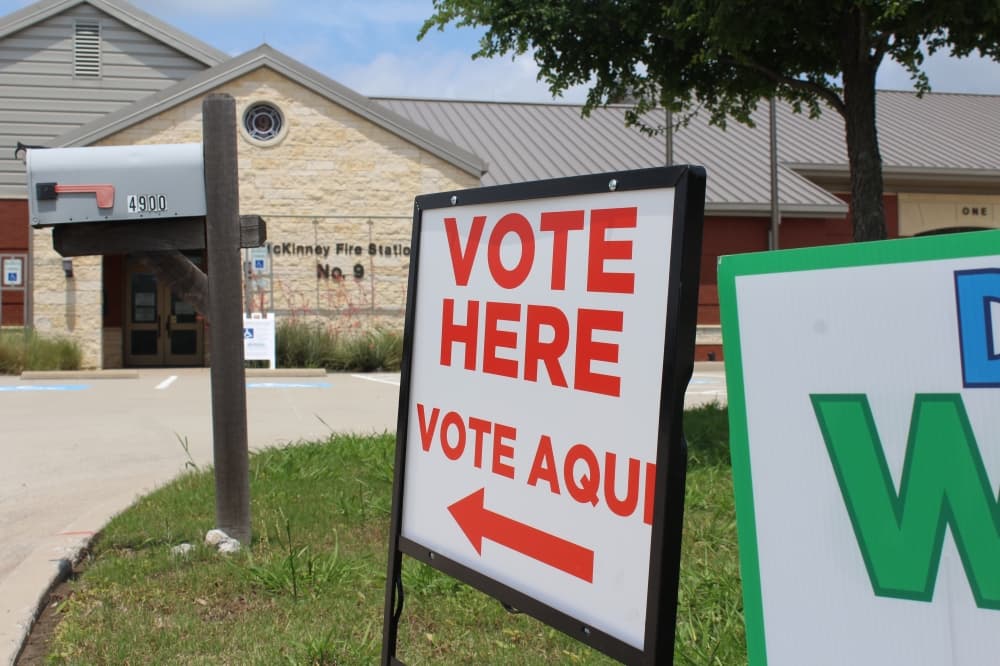
Only 17% of respondents said they felt that they had a high influence on local government, Bray said, even though close to three-quarters agreed that voting is a civic duty. Bray said that civic organizations, local boards and commissions and nonprofit organizations are all seeing the impact of a less engaged populace.
“This is a real disconnect that we’re dealing with,” Bray said. “People believe they have a role and a civic duty to lead, to participate in government, to provide for the future, but they don’t think what they do makes a difference.”
Looking ahead
In light of the increasing disconnection demonstrated in the survey, Bray said the role of the initiative at UT Dallas is to bring people together. He said he wants to use the survey to build an “enduring resource” for North Texas that will help governments, businesses and other stakeholders make informed decisions.
Bray said the project team is planning a 2027 State of North Texas Forum to convene regional leaders around the issues in the survey and develop policy solutions.
“It’s not about the data,” Bray said. “It’s about bringing the data to bear on problems and helping people make informed decisions.”