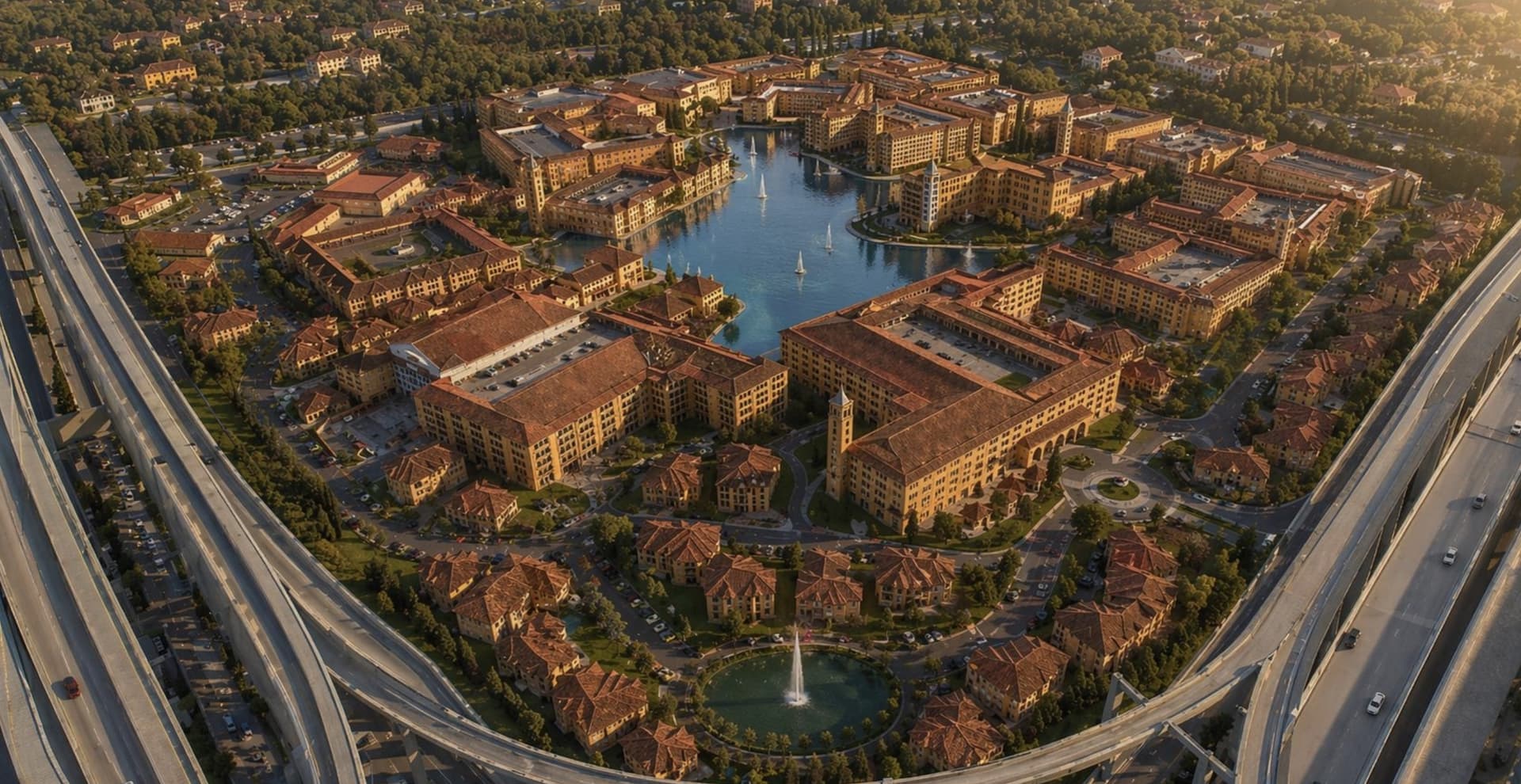
The Marco, a 143-acre proposed mixed-use development designed to mimic the feel of an Italian village on the northeast corner of Dallas North Tollway and US 380, is moving forward in Prosper.
Conceptual plans for the development include a public square, retail, single-family and multifamily housing, a performing arts venue and a hotel, all centered around a lagoon with canals big enough to navigate by boat.
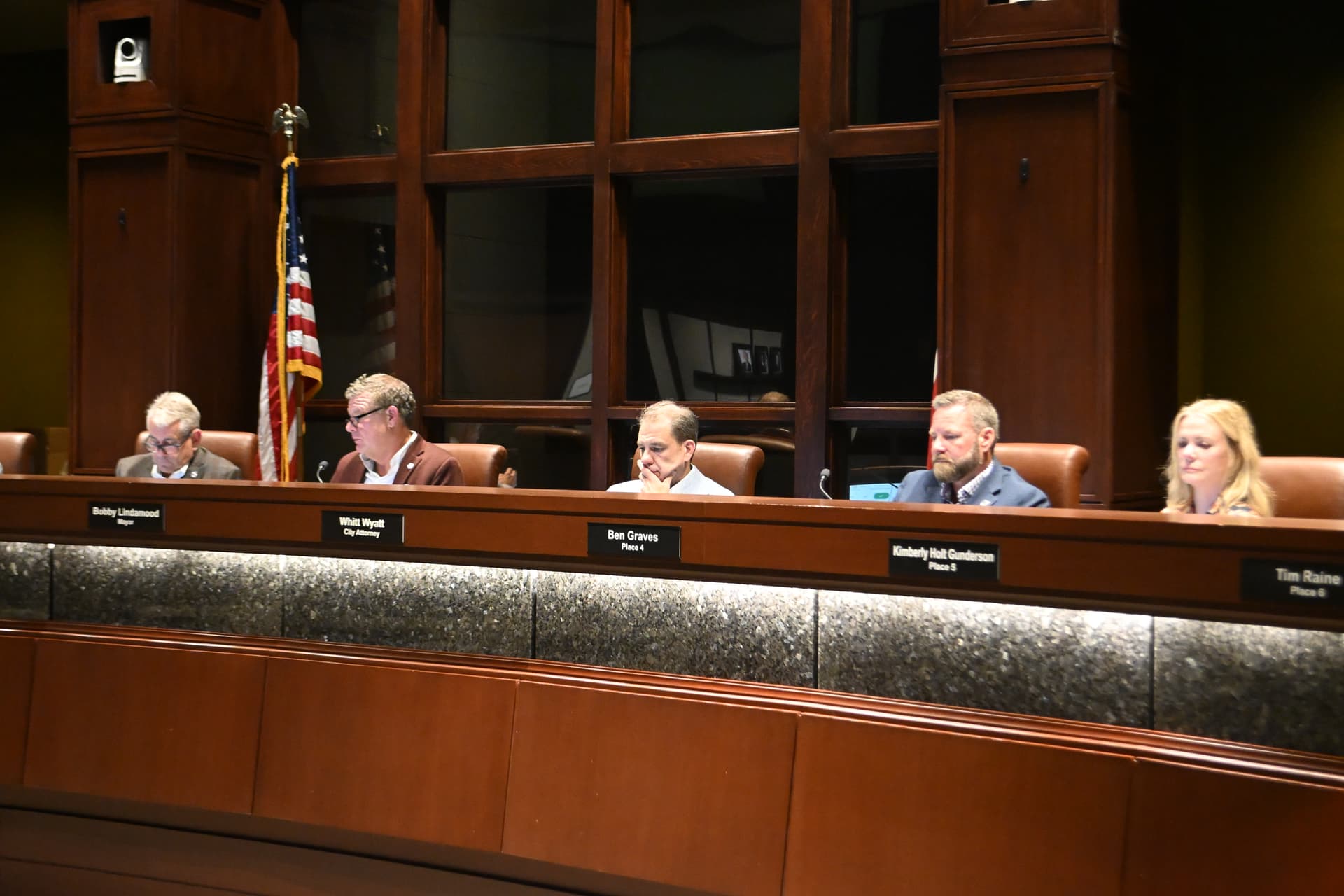
The Prosper Planning and Zoning Commission voted in favor of amending a previous planned development and rezoning the land from a commercial planned development to a mixed-use planned development at an Aug. 18 meeting.
The commission recommended approval 4-2, with Chairman Damon Jackson and Commissioner Josh Carson in opposition and Commissioner Brett Butler not in attendance.
Diving in deeper
The Marco’s defining lagoon and canal system is set to span over 15 acres, according to conceptual plans.
In addition to serving as the development’s primary open space, the lagoon will also act as stormwater detention.
“Otherwise I’d have to build a 10-acre detention pond,” developer Jeffory D. Blackard said. “I might as well build a 15-acre lake.”
Around the lagoon, The Marco’s thoroughfares are designed for both cars and pedestrians.
The lagoon is encircled by a passeggiata, a continuous 26-foot wide walkway with “limited access” to cars, while traffic and parking are concentrated along the outer ring of the development, according to The Marco’s conceptual layout plan.
On the lagoon, visitors will be able to traverse the canals via water taxi, according to the planned development’s list of permitted uses.
The plan
Plans for The Marco feature a mix of housing options with the total number of residential units capped at 4,400:
- Mid-rise apartments: maximum 2,500 units
- High-rise residential (condominiums or apartments): maximum 400 units
- Retirement community: maximum 500 units
- Single-family and duplex housing (villas, townhomes, etc.): maximum 1,000 units
The 4,400-unit cap on total units and the 2,500-unit cap on mid-rise apartments are final according to the current draft of the planned development, although the exact numbers of other kinds of units are subject to change.
“There’s a big number of multifamily units, much bigger than we’ve seen in Prosper,” Carson said. “We’re obviously a little sensitive to that.”
According to Blackard, the 4,400-unit residential population of The Marco will make the development financially self-sustaining.
“That nighttime population that sleeps here can support the retail that we put here and basically make it break even,” Blackard said. “It starts to become a real village.”
Prices for a one-bedroom apartment in the development are expected to start at around $2,500 a month, and on the higher side of the price range, one individual has already expressed interest in purchasing a residence at The Marco for roughly $20 million, Blackard said.
More details
The Marco also includes a significant office, commercial and entertainment component.
In addition to office condos for smaller companies, conceptual plans for The Marco show two larger campuses with separate parking designated for corporate headquarters.
The corporate campuses at the corner of DNT and US 380 will be up to 14 stories, some of the tallest buildings in the development, to help block noise from the roadway from the rest of the development, Blackard said.
The development’s retail will largely be concentrated along DNT, according to the conceptual plans.
One retail area features larger lots with central parking, while another area centers smaller retail spaces around a plaza next to The Phoenix, the development’s proposed performing arts center.
Blackard hopes to work with Prosper ISD, whose voters approved $125 million for a new performing arts center as part of its 2023 bond package, to build The Phoenix, though conversations with the district to finalize those plans have not yet happened, he said.
“I would love to ... have ‘Hamilton’ playing in two years, or ‘Cats,’” Blackard said. “This corner can be what Frisco has got with soccer and with the Cowboys.”
For business and recreational travelers drawn by the development’s offices, retail and potential performing arts venue, The Marco will include a waterfront hotel with individual condos, per the conceptual plans.
Why it matters
The 143 acres at the corner of DNT and US 380 “is the best piece of undeveloped real estate, maybe in the world,” Blackard said.
According to Blackard, town officials came to him and asked him to consider developing the property, which is owned by a third party.
Prosper has a 3-mile stretch along the tollway, and town officials are eager to make the most of their slice of a growing commercial corridor, according to prior reporting.
“This is not next year’s development,” Prosper Mayor David Bristol previously told Community Impact. “This is literally a blueprint for the next 25 to 50 years.”
The Marco’s unique character and village feel will turn Prosper into a defining destination on DNT, Blackard said.
“I know I’ll dominate the whole toll,” he said. “I’ll get the cream of the crop to come here because there’s nothing like this.”
On the other hand
Given the importance of land along the tollway, some commissioners sought additional clarification on plans for the development before granting a recommendation of approval and sending the project to Prosper Town Council.
“I feel like we’ve done less with [The Marco] than we’ve done with much less significant projects,” Carson said.
Much of the application for the planned development relies on renderings of the project, which Commissioner Glen Blanscet referred to as “zoning via picture.”
Other than strict compliance with engineering and fire codes, the planned development includes flexibility for things like building heights and the orientation of the lagoon because “it would be almost impossible to line out every single thing” at this point in the development process, Development Services' Director David Hoover said.
While town officials often include specific details in planned developments, the legally enforceable descriptions of things like building materials, heights and setbacks are defined later in the development process through the development agreement and site plans, he said.
Carson wanted to table the application and hold a work session to get additional details on multiple aspects of The Marco, including:
- Permitted uses
- Building materials
- Open space
- Minimum unit size
After nearly two hours of discussion, the commission recommended approval of the planned development without an additional work session for the commissioners.
About the developer
The Marco wouldn’t be Blackard’s first “village.”
He’s also the developer behind Adriatica Village, a mixed-use development in McKinney modeled after a Croatian fishing village.
Whereas Adriatica Village is a near-replica of a real village in Croatia, The Marco is designed to emulate how a village would have naturally developed, Blackard said.
When planning The Marco, Blackard was bolder about making water the central feature of the development and prioritizing walkability, he said.
“I did a lot of things wrong; I did a lot of things right,” Blackard said of Adriatica Village. “I learned a lot.”
Looking ahead
Following the commission’s recommendation of approval, The Marco is set to go before council on Sept. 22, town staff said.
If approved, construction on Phase 1, which includes the lagoon, utilities and infrastructure as well as certain retail, residential and office components, would probably start within a year, Blackard said.
Editors note: This story has been updated. Commissioner Josh Carson opposed the item.