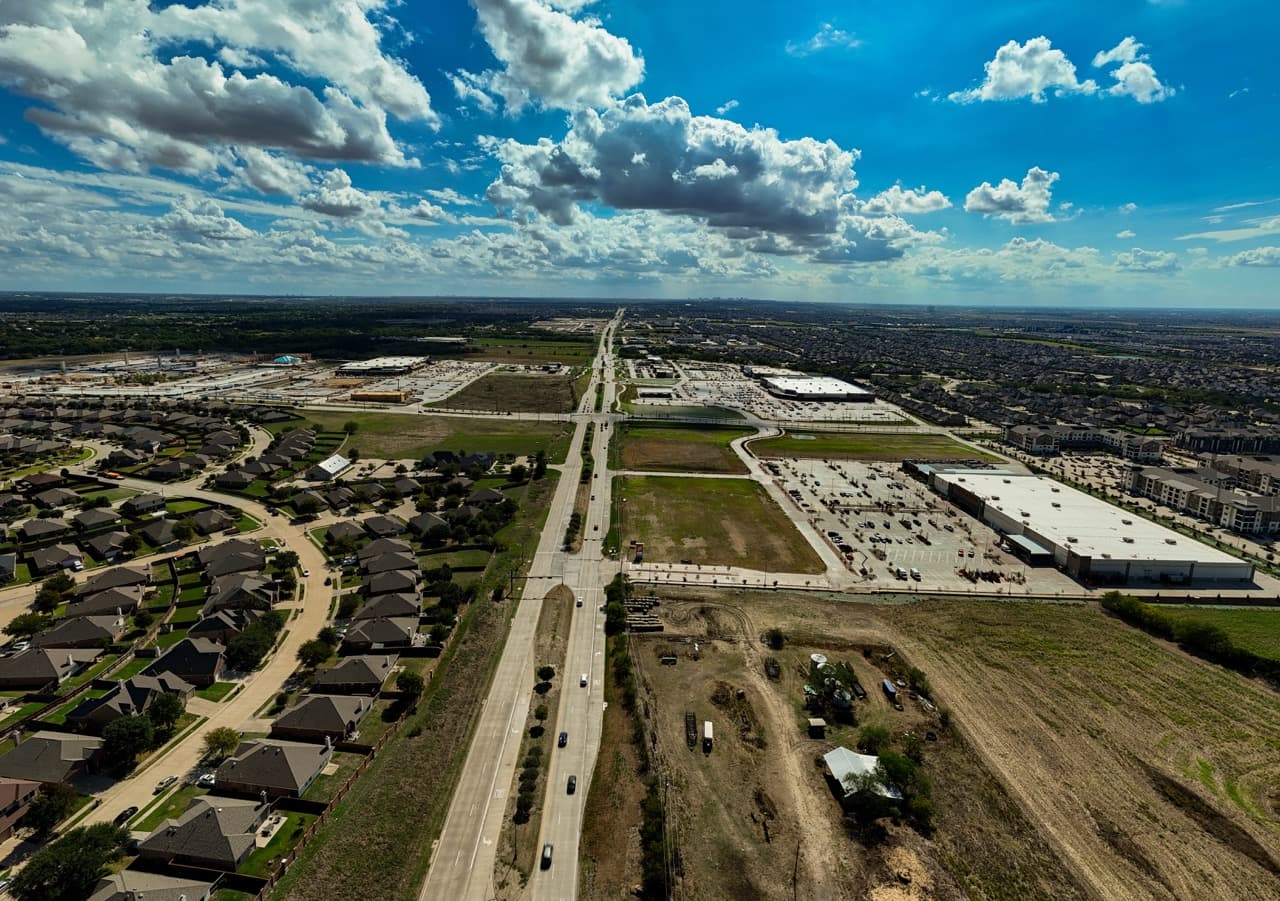
Celina City Council laid the groundwork for a 40-acre mixed-use development at the corner of FM 455 and future J. Fred Smith Parkway at a Nov. 10 meeting.
The proposed development, known as the Celina Stone Tract, would feature both commercial and industrial uses.
Council approved a development agreement that outlines the future annexation and zoning of the property, which is currently part of Celina’s extraterritorial jurisdiction.
As part of the agreement, the developer waived potential rights to build multifamily or high-density single-family housing on the site.
During an Oct. 13 discussion of the development, Mayor Ryan Tubbs indicated the council could make such waivers standard to preempt possible expansion of state law.
The specifics
At least 10 acres of the Celina Stone Tract will house a mix of retail, restaurants and office space, according to the development agreement.
Mini-warehouses and self-storage will make up a maximum of 10 acres.
The industrial component of the development is limited to light industrial uses, which include manufacturing and assembly of goods with a low footprint like clothing or furniture, according to the city’s zoning ordinance.
Any heavy or high-risk industrial uses on the property would require a special use permit from council.
The developer can build one gas station on the property without asking council for a special use permit, according to the agreement.
The gas station will eventually sit at the intersection of a four-lane and a six-lane roadway, according to a presentation by city staff.
Under the agreement, the developer has until August 2035 to present the final annexation and zoning to council.
Diving in deeper
The development agreement for the Celina Stone Tract includes provisions designed to counteract two laws passed by the Texas Legislature in 2025, according to a staff report:
Senate Bill 840: Requires certain cities to permit multifamily and mixed-use residential developments in all nonresidential zoning districts. It only applies to cities with a population higher than 150,000 that are located within a county with a population higher than 300,000.
Senate Bill 15: Prohibits cities from requiring a lot to be larger than 3,000 square feet or 30 feet wide anywhere single-family residential development is permitted. It only applies in cases where a site is 5 acres or more and has no recorded plat.
Proponents of the legislation have said state action is necessary to meet housing demand, while officials in cities like Plano have argued the laws, particularly SB 840, erode local control over development.
Although SB 840 doesn’t apply to Celina’s current population of roughly 65,000 people, the city is expected to reach 350,000 residents at buildout, according to the city’s website.
Council already amended the city’s ordinance in an effort to negate possible applications of SB 840 via a loophole related to heavy industrial zoning back in February.
Lawmakers could close that loophole and expand SB 840 to include smaller cities like Celina during the upcoming legislative session, Tubbs said.
“I had our state representative ask me about [the loophole] the last time I saw him,” Tubbs said in October. “How, in turn, can we hedge against that in this property?”
The city could make multifamily and high-density housing waivers standard in its development agreements going forward, Development Services Director Dusty McAfee said at the October meeting.
“If that’s something we can legally do, then we can make that routine and boilerplate moving forward,” he said.