Construction will start this fall on a two-year project designed to aid mobility on MoPac by adding one tolled express lane in each direction between Parmer Lane and Cesar Chavez Street.
Preliminary work will begin in November to set up the construction zone, with major construction beginning in December, said Steve Pustelnyk, director of community relations for the MoPac Improvement Project at the Central Texas Regional Mobility Authority, which is overseeing the project.
Crews will start construction first between RM 2222 and US 183, then begin construction south of RM 2222 and lastly start work north of US 183. By next summer, Pustelnyk said all sections will be under construction.
"We're going to be doing an extensive outreach effort to try and make sure the drivers know what we're doing and when so they can avoid any issues," Pustelnyk said. "We'll be working with the neighborhoods to try and minimize the impact of both the roadway construction and the sound wall construction."
Drivers could see their commute times increase as MoPac turns into a construction zone; however, Pustelnyk said lane closures will be prohibited between 5 a.m. and 9 p.m.
"We don't anticipate huge delays as a result of the project during peak hours, but because it will be more of a construction zone and things will not move as quickly as they do today, [vehicles] might move slightly slower than they do during peak hours," he said.
Because the MoPac corridor is constrained in some areas, Pustelnyk said there is only enough room to add one additional lane in each direction. Instead of a general-purpose lane, the lane will be tolled.
"If we had just gone and added just one general-purpose lane in each direction, pretty quickly that lane would have filled up and become congested, and that would not have been good for our regional transit system," Pustelnyk said. "Buses would have continued to be stuck on MoPac—vanpools likewise—and we wouldn't have been able to provide any degree of travel certainty to anybody in the corridor."
The total cost of the project is about
$200 million. Funding is being provided in the form of a grant from the Texas Transportation Commission, which is the governing board for the Texas Department of Transportation. The Mobility Authority also has an agreement with the Capital Area Metropolitan Planning Organization to receive $130 million.
Pustelnyk said the purpose of the lanes is to provide reliable transit, but they are not meant for everyday use.
"They're really meant for high-priority trips on that day you need to get to day care, that day when you need to get to your son's baseball game because you're running late or your daughter's play, or whatever activity is a high enough priority that day where paying the toll makes sense to you," he said.
Effect on public transit
Capital Metro buses and registered vanpools will be able to use the express lanes at no cost. Capital Metro is already looking at changes it could implement because of an anticipated increase in ridership and quicker service, said Todd Hemingson, vice president of strategic planning and development.
"We think [the project] could potentially be a game-changer because our services won't be stuck in traffic," he said.
Capital Metro is discussing how to modify existing service that uses US 183 and MoPac, such as routes 982, 983 and 987, all of which serve The University of Texas, the Capitol complex and downtown, Hemingson said. One option is to have some of the buses exit Cesar Chavez into downtown instead of at 35th Street and serve those three destinations in reverse order.
"Most of that we could do with existing funding," he said.
What would require new funding is adding service, such as an express bus that would depart the Howard Lane Park & Ride to use MoPac, Hemingson said.
Sound walls
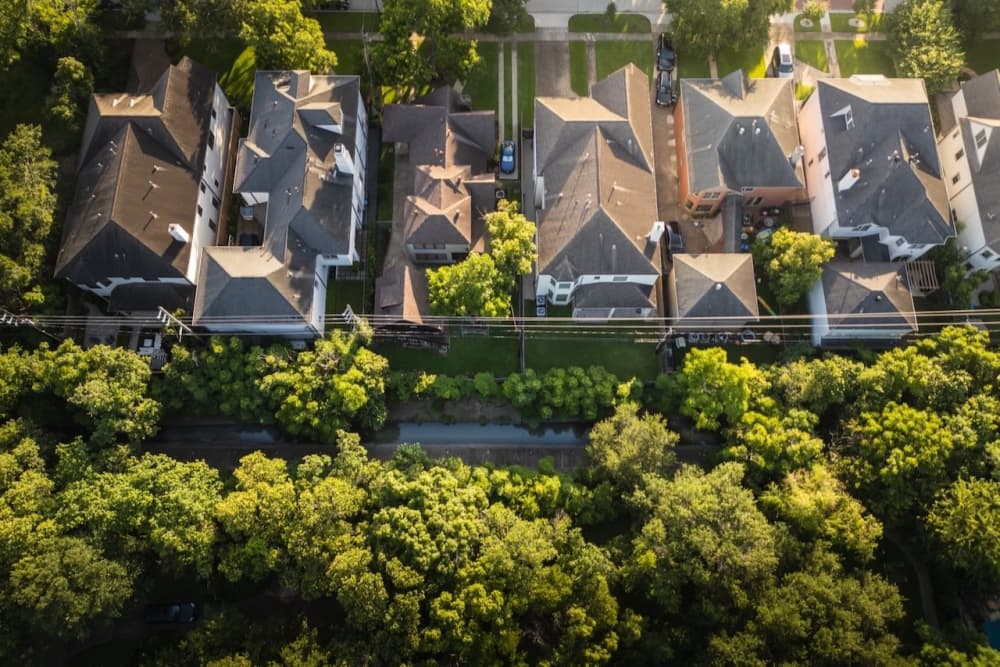
MoPac construction includes building more than 7 miles of sound walls throughout the project. The walls will abut neighborhoods that would be affected by noise from MoPac traffic. Pustelnyk said sound modeling studies were completed during the environmental study to determine which areas qualified for a wall. The northernmost sound wall segment will be built between Steck Avenue and Anderson Lane.
Some residents in the Allandale neighborhood oppose building part of a 1-mile sound wall segment on Great Northern Boulevard between RM 2222 and Far West Boulevard because of concerns such as graffiti and aesthetics.
"Our goal is always to create an environment that is as natural as possible," said Don Goertz, executive director of the Austin Montessori School on Great Northern. " Trees, the breeze are a part of nature. It's something we're losing so rapidly."
Pustelnyk said the Mobility Authority followed a voting process set up by TxDOT that allowed residents whose properties abutted proposed sound walls to vote on whether to build them. The voting occurred in 2011.
"As of today, we don't believe there's any opportunity to revisit that issue in terms of construction of that wall," he said.





 Photo by Amy Denney