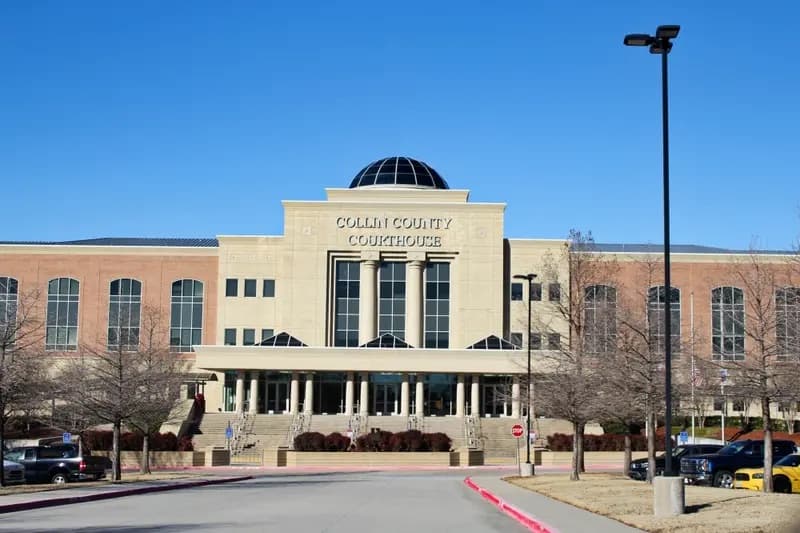
1. County passes resolution in opposition of re:SearchTX
On Jan. 9 Collin County joined a growing number of counties across the state when it passed a resolution opposing a recently created web portal aimed at consolidating the database of civil court case information that has been e-filed. The portal, created by the Texas Office of Court Administration under the direction of the state’s Supreme Court, was supposed to provide a delivery system for attorneys for e-file documents to the courts—information that would only be retained for 30 days. But, the TOCA is retaining the information filed within the system and plans to make it available to attorneys and the public for a fee through re:SearchTX. County commissioners said the county and district clerks are the designated custodians of court records and are responsible for the management, preservation and access of court records. Counties are responsible for providing resources to clerks for the management of those records, officials said, adding that it is in the best interest of Collin County and its taxpayers to oppose any change to current statutes regarding care, custody and control of records held by the county and district clerks and to any actions that would result in those records being centralized within any other entity, be it public or private.
County officials said they are opposed to the amendment and/or repeal of any current statutes or rules that authorize local control by commissioner's court in the administration of our duties concerning records held by the county and district clerk or how the county chooses to offer those records to the public.
2. Funding and management of Methadone treatment becomes priority
The Texas Health and Human Services Commission has documented a significant number of indigent individuals in Collin County who have been receiving Medication Assisted Treatment for opiate addiction.
When the county transitioned from its NorthStar, its former health authority, to LifePath Systems, the THHSC committed one-time funds for the continuation of this treatment, which included both Methadone and Suboxone. County commissioners said state regulations currently require that anyone in the treatment program remain in that program for their lifetime.
Commissioners passed a resolution Jan. 23 that asks state legislators to pursue the continuation of those funds and seek more flexibility to ensure funds and treatment are provided in the most effective and efficient manner.
3. Commissioners discuss potential bond election this fall
County commissioners have been working since last April to determine the best way to get priority when state transportation funds start trickling in sometime in 2018-19. So far, they’ve determined the best chance to receive state funding is to find consensus with its cities and create a list of priority roadways. As commissioners work to refine that list, they are also working to secure any potential funding they may need to secure rights-of-way or preliminary roadwork. Right now, commissioners are working with county staff to determine whether a bond election is needed this fall to ensure that funding is available.
4. LifePath funding a top priority
Commissioners also passed a resolution Jan. 23 seeking state-funded psychiatric inpatient beds by asking its legislative delegation to pursue the continuation of and an increase in funds earmarked for psychiatric care within the state’s budget. The resolution states the commissioners recognize that mental illness is a chronic disease and at times individuals may need higher levels of care, including inpatient treatment. However, county officials said the low availability of state-funded psychiatric inpatient beds creates long delays in access to appropriate levels of care.
5. County told not to pay Paxton legal fees, for now
On Jan. 30, a state appeals court temporarily blocked the Collin County Commissioners Court from paying three prosecutors in the case against Texas Attorney General Ken Paxton.
According to Commissioner Chris Hill the emergency stay was issued in response to a Petition for Writ of Injunction and Emergency Motion for Temporary Relief filed by Collin County resident Jeff Blackard. Based upon Blackard's current and previous court filings, Hill said, it is clear that Blackard feels the prosecutors' fees violate the tenets of the Texas Fair Defense Act as implemented in Collin County.
According to the order of the appeals court, the stay will remain in effect until further order of the court. All interested parties must file responses to the petition on or before Feb. 9.
On Oct. 24, the Collin County Commissioners Court signed a resolution asking an appeals court if the county is legally obligated to keep paying three prosecutors who have already submitted $254,000 in bills for a case that has yet to go to trial.
State Attorney General Ken Paxton is accused of violating securities laws in an investment deal involving a McKinney company before he was elected as attorney general. He faces three felony charges as a result. Collin County District Attorney Greg Willis, who would normally be involved in such cases, recused himself from the case because of his longtime friendship with Paxton and special prosecutors were appointed in his place.
Since Collin County is Paxton’s home county, county taxpayers are required to pay for his prosecution. Commissioners called the $300 hourly rate charged by private attorneys prosecuting Paxton “excessive” and said the rate violates the county’s local rules, which cap the rate at $1,000 for pretrial work, $1,000 per day for trial work and another possible $1,000 if the judge deems it necessary. The Tarrant County judge presiding over the case said the fees are appropriate given the unusual circumstances of the case.
6. Commissioners to continue discussion of special prosecutors rates
County commissioners have been vocal about their concerns over the special prosecutors fees in the Ken Paxton case, calling the fees excessive.
The fees were determined by the case's presiding judge and are far above the indigent defense plan set forth by the Collin County Board of District Judges. Usually when special prosecutors are assigned to a case, they are paid the same rate a court-appointed attorney is paid for someone who cannot afford their own attorney. The county's local rules cap the rate at $1,000 for pretrial work, $1,000 per day for trial work and another possible $1,000 if the judge deems it necessary. The fees for the Paxton case are approaching $300,000 as the casework continues.
In January, the Collin County Board of District Judges, who set the rate cap, began meeting to make changes to the county's indigent defense clause and have removed what county commissioners called an "ambiguous exception clause" that would allow a judge to increase the rates. County commissioners said since the clause has been removed, any future cases involving special prosecutors must be paid in the same manner as appointed counsel with no exceptions. The discussion will continue during the Commissioners Court meeting held at 1:30 p.m. Feb. 13 on the fourth floor of the Jack Hatchell Administration Building, 2300 Bloomdale Rd., McKinney. To see the full agenda once it's posted, click
here.