Editor's note: To view this story as it appeared in Community Impact's Leander-Liberty Hill edition, click here.
A recreation center, a hundred-million-dollar expansion to Leander’s wastewater treatment plant and new traffic signals are all major infrastructure projects Leander residents can expect to see in the coming years.
Leander City Council adopted 70 infrastructure projects June 18, included in its capital improvement program for fiscal year 2026-27. Many projects are already underway, while the rest are slated to begin over the next decade.
“This capital improvement program isn't just a list of projects, it's a strategic blueprint for Leander's future,” council member Stephen Chang said. “By [allocating] over $265 million over the next five years, we're taking a disciplined approach to ensure that infrastructure scales intelligently with our rapid growth. For the residents of Leander, this translates directly to the reliability of daily services.”
In a nutshell
A little under $355 million has been funded for projects between FY 2026-30, with an additional $329.7 million required for projects within this timeframe. For the following five-year period from FY 2031-35, the city will need to identify an additional $218.6 million.
Leander's Capital Improvement Program provides a 10-year outlook with a five-year focus on major infrastructure projects. To qualify, the work must be a major capital expenditure rather than a routine cost. The projects can deal with transportation, city spaces, parks, water infrastructure and purchases of land or major equipment. These projects are funded through a variety of methods, including bonds from cities and counties, utility fees and state funding.
While funding for projects this fiscal year has been secured, the city is still working to identify funding sources for future phases of projects. According to CIP manager Tony Bettis, the city is actively seeking grants and funding to support these projects.
Projects included in the current plan are already budgeted for, while priorities beyond this fiscal year will be discussed during annual workshops, Chang said.
“We're laser-focused on expanding our water and wastewater capacity, alleviating transportation bottlenecks and ensuring that our utility and public safety infrastructure is robust to meet current demands,” Chang said. “We're also moving past the phase of short-term fixes, or simply putting out operational fires. The CIP is about making strategic, data-driven investments today, so that Leander remains structurally sound, economically competitive, and fiscally responsible for the next decade.”
By the numbers
The three most expensive projects include:
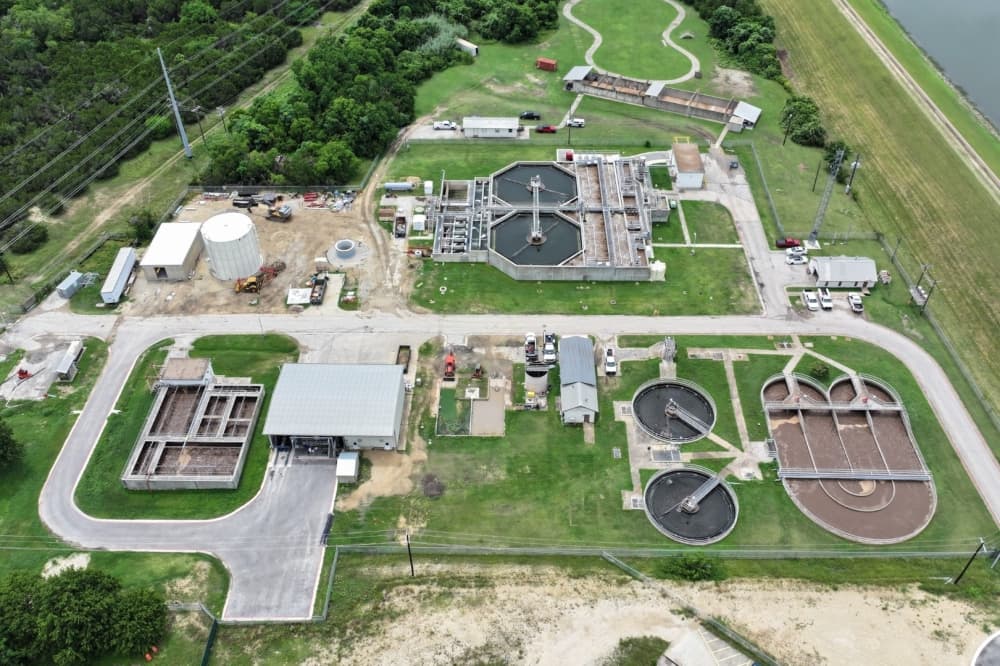
- WW.30: This expansion of the RM 2243 Wastewater Treatment Plant will increase the facility's capacity of 2.25 million gallons per day, or MGD, to 4.25 MGD, with the intent of eventually expanding capacity to 5.25 MGD. The expansion will include amending existing permits to reflect the increased capacity, equipment upgrades, improvements to the disinfection system and upgrades to the emergency power system.
As part of the project, smaller plants that were constructed in 1985 and 1987 will be decommissioned. Combined, these two plants treat 0.95 MGD.
The project, which was approved for $6.2 million of funding in FY 2026-27 through a combination of debt issuances and utility funding, is projected to have the majority of its costs concentrated in FY 2028-29. The majority of the project is anticipated to be funded through future utility debt issuance, according to city documents.
- T.63: This project seeks to extend Crystal Falls Parkway east from Ronald Reagan Boulevard to CR 175 to address growth on Leander’s east side. The new roadway, which would require purchasing land, would feature four lanes, a bridge and traffic signals.
Williamson County is funding $7.5 for design and land purchases under the condition that Leander contributes $2.5 million as well.
A little under $1.78 million has already been funded for FY 2026-27 and the bulk of the project's $42 million price tag is expected to occur in FY 2029-30 when construction is anticipated to begin.
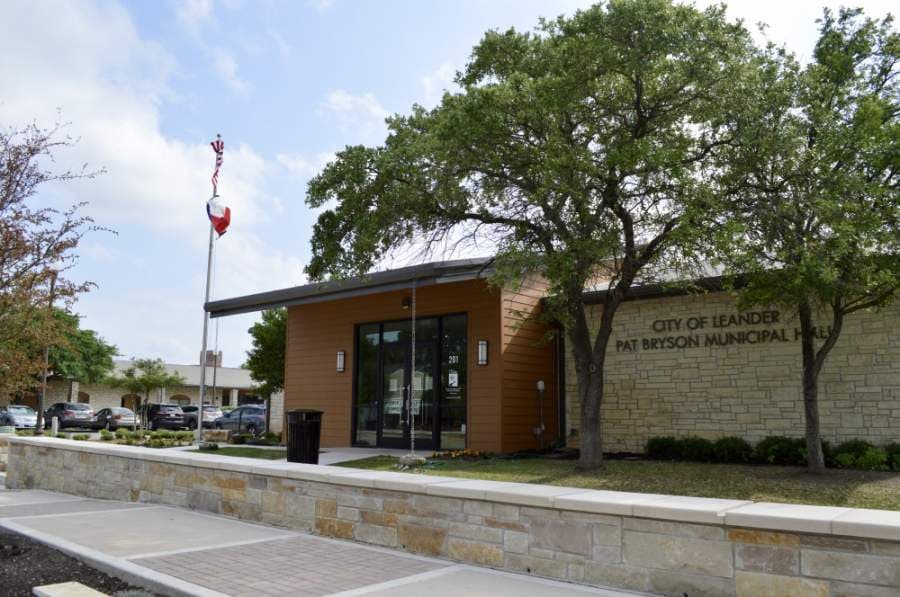
- P.14: The City of Leander is searching for potential sites to house a future recreation center, including the possibility of remodeling the Pat Bryson Building. The project has been approved for $5 million in funding for FY 2026-27 and the majority of its nearly $47.5 million cost is anticipated to hit in FY 2029-30, when construction is anticipated to begin.
Unlike previous year’s, transportation has overtaken water infrastructure to make up the largest category in terms of funding this year.
Since 2018, water infrastructure projects have comprised the majority of the city's CIP, according to city documents. Bettis said the city is now shifting its attention toward transportation projects after making progress on expanding water infrastructure and beginning construction on water projects.
“What we've done is we're saying, hey, we've got the water stuff under control, those projects are all planned, they're all in, they're all in construction phase,” council member Michael Herrera said. “Now we're doing all these other plans.”
Recent upgrades to the Sandy Creek Water Treatment Plant seek to increase its capacity from 9 MGD to 12 MGD. Expansions to the BCRUA treatment plants aim to treat up to 30 MGD per day.
As part of the CIP process, city leaders evaluated each project against a matrix that measures its potential to improve operational capacity, economic development, public safety and quality of life. Additionally, Chang noted that the matrix ensures there are “equitable service levels across all parts of the city.”
Both Chang and Herrera noted that traffic remains a key issue for Leander residents, with Herrera noting that street signals are especially frustrating for drivers.
“People like new developments, [and] they like new stores, but they don’t always think about roadway infrastructure or expansion of wastewater or freshwater services,” Chang said. “These are things that we have to be proactive about or they fall behind.”
The context
City officials have noted the rapid growth of Leander as a motivation behind many of the projects included in this year’s CIP. According to a draft of the city's 2023 Wastewater Master Plan, the population of Leander could grow to 225,000 by 2040.
Currently, the city has about 700,000 square feet of commercial space being built, said Bridget Brandt, president and CEO of the Leander Chamber of Commerce.
Brandt said expanded infrastructure, including water, sewer, roads and power, has contributed to the appeal of Leander for businesses. While Brandt said the infrastructure businesses are seeking is here—, such as access to the toll road—the new projects approved help businesses recruit employees.
“When businesses come to Leander, they are looking for either already built [facilities] that they can move into instantly, or they're looking for buildable land,” Brandt said. “Fortunately, Leander still has both.”
Other projects
Although the majority of projects by number and funding revolve around water infrastructure and transportation, the city is also investing in visible amenities for residents.
- $13.1 million for a fire station near Ronald Reagan Boulevard and San Gabriel Parkway
- $8.9 million for a second building with expanded athletic facilities near the Senior Activities Center
- $4 million to acquire property for the new city hall to be located in Northline development
Funding sources include state loans, water impact fees and municipal certificates of obligations. However, funds can be reallocated if priorities or revenues change.
While reallocating these funds would require a process that could include public hearings and budget amendments, City Manager Todd Parton said the CIP is a “living document” intended to “prioritize” spending on competing projects.