Editor's note: To view this story as it appeared in Community Impact's Leander-Liberty Hill edition, click here.
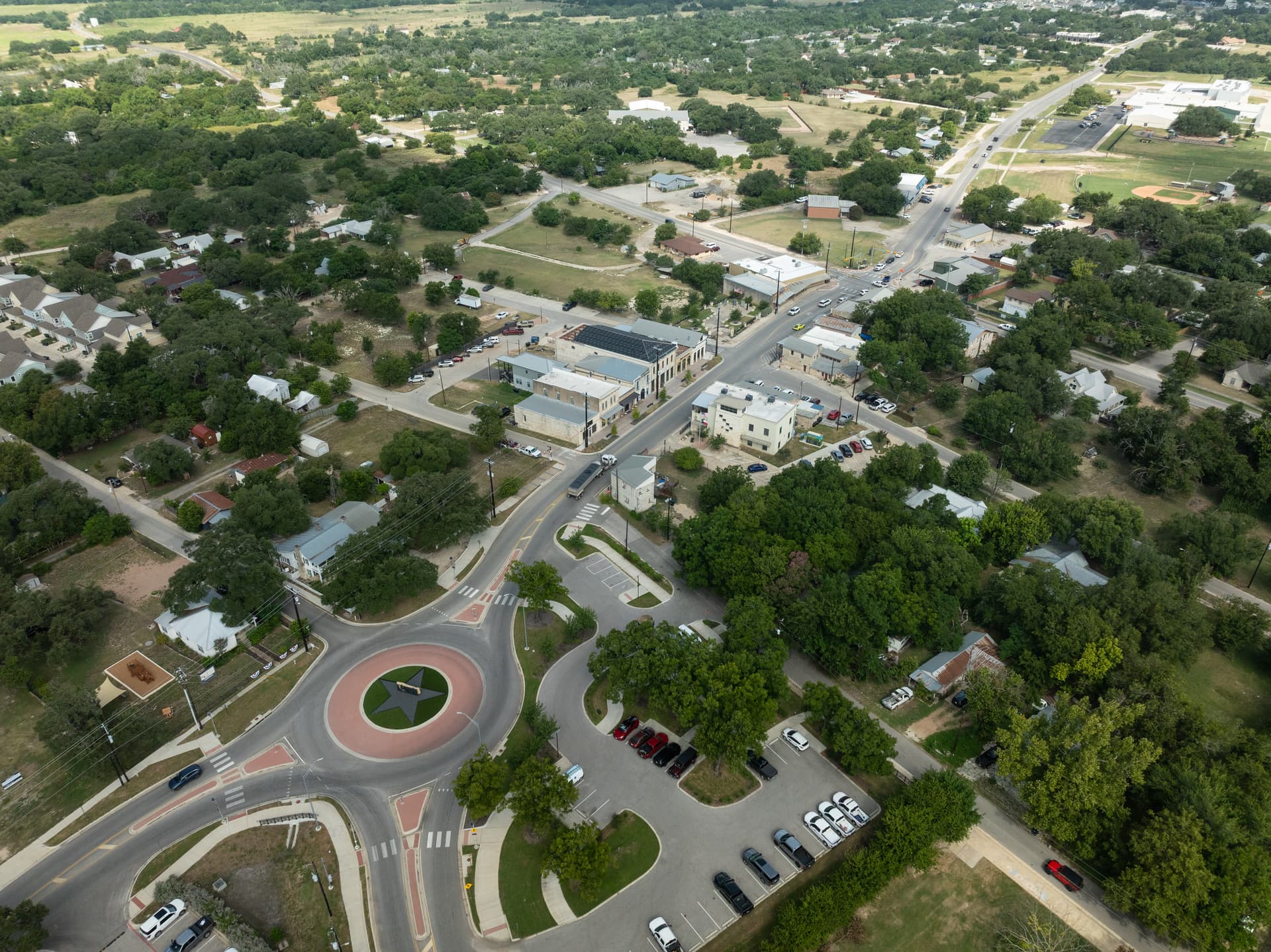
Liberty Hill is making progress on a downtown revitalization project that has been in the works for years.
The details
The city approved a $1.5 million contract with Griffin-Swinerton July 8, allowing the firm to coordinate with the city to lead the downtown development’s strategy, create budget projections for infrastructure and provide preliminary cost estimates for the project.
“When a project like this came around, the City Council, along with city management, saw this as a chance to realize a downtown that reflects who we are today while preserving everything that makes Liberty Hill special—and to give our residents that dream of a family-oriented, community gathering destination,” Liberty Hill council member Tim Hennessy said in a statement to Community Impact.
Griffin-Swinerton has a portfolio of active projects that are collectively valued at $1.2 billion, including Pflugerville’s mixed-use Downtown East development.
Liberty Hill City Manager Thomas Hunter said community engagement is one of the “cornerstone pieces” of the city’s contract with Griffin-Swinerton and that residents will have opportunities to provide input.
“We find ourselves in this unique place, in this grand opportunity,” Hunter said. “You probably get one chance every 75 years to do something like this. This project will really reshape the next 40 [to] 60 years of what Liberty Hill is.”
Hunter said some initiatives that come out of this initial planning phase may be completed by private developers. Other projects might be shared between different city departments, such as infrastructure improvements that live both in the city’s capital improvement program and downtown development initiative.
While the city will evaluate if there are any parcels of land it is interested in purchasing, Hunter noted that there are city-owned parcels that Liberty Hill is considering to “return to the private market.”
Kristan LeBaron, chair of the Downtown Revitalization Committee, said downtown is more than its buildings, serving as a gathering place for Liberty Hill’s history, businesses and community. The planning process offers an opportunity to preserve and strengthen that identity, she said.
The local impact
One potential financial impact city officials are eyeing is downtown’s potential to keep sales tax spending in Liberty Hill.
While Texas has a 6.25% sales tax rate, local entities add an additional 2%. Liberty Hill residents currently see a combined local sales tax rate of 2% split between the city at 1.75% and the library at 0.25%. By growing businesses downtown, the city could increase the sales tax revenue.
“Liberty Hill is also uniquely positioned in an area that really doesn't have an amenity like this,” Hunter said. “When we talk about the regional draw that a [downtown revitalization] project like this could have, and the reinvestment of sales tax into a community that really needs that, from a financial solvency standpoint, that's a very significant thing.”
Assessing the need
Liberty Hill’s population has grown nearly 500% over the past decade, from 1,416 in 2016 to 8,371 in 2024. Current city data indicates that the downtown population is 375, just under 5% of the city’s population, with much of the town’s residential and commercial growth concentrated away from downtown along Hwy. 29.
Liberty Hill Chamber of Commerce President Steve Schiff said the chamber’s business membership has grown from roughly 160 when he first moved to town in March 2020 to 350 members.
Hunter said Hwy. 29 continues to attract businesses that rely on visibility along major roads, while downtown is focused on small, local storefronts and gathering places—“places where you’re going to go and spend time rather than just buy a good or a service.”
Years of “robust” public input have given the city confidence in moving forward with the next stage of the project, Hunter said. Among the responses, Hunter said residents repeatedly asked for places for community and families to gather. Top priorities within the 2024 master plan include walkability, restaurants and “small-town charm.”
The business perspective
“I have never opened a business ever, anywhere, where the people are as nice as they are here,” downtown business owner Mike Farr said.
Farr, whose two sons operate Wish Kitchen + Bar, had inquired about the iconic Parker’s building for years. After the city purchased the property in January, a staff member reached out to him.
The new “Parker’s Mercantile” features a live music stage, dance floor, bar and board game area. The area closest to RM 1869 is an “incubator” for Central Texas businesses.
“If we can put 80 or 90 people in here every Friday and Saturday, and 50 people in here every Sunday, well, that's 150 people that didn't go to Georgetown to spend their money, didn't go to Round Rock and spend their money, or didn't go to Austin to spend their money,” Farr said.