As Lakeway approaches buildout, the city will increasingly have to look beyond traditional new development to sustain commercial growth and generate revenue.
City officials say projects such as The Square at Lakeway, along with efforts to encourage local spending and attract new businesses, could help strengthen the city's commercial tax base.
However, the success of those efforts will depend on whether developers can move projects forward amid economic uncertainty.
What's happening?
With fewer opportunities for new construction and development revenue falling, officials are beginning to rethink how the city attracts businesses and generates revenue as Lakeway approaches buildout.
Lakeway started planning for its fiscal year 2027 budget with a nearly $1.6 million shortfall.
In 2021, $2.9 million from building and development services, or BDS, contributed to 20% of Lakeway’s operating revenue, which included revenue from building permits, site development applications, zoning requests and other permitting services, yet at the end of fiscal year 2026 that number was at $914,927.
The city has historically built its budget around booming development growth, but now the decline in high-value developments is a major contributor to the decrease in revenues, Lakeway Assistant City Manager Ashby Grundman said.
“The past two years, as we get built out, we have seen the trend of declining BDS revenues,” Grundman said. “It’s really impacted our budget over the last couple of years because those larger scale developments haven’t come through.”
One of the contributors to the city’s slowing development is the lack of space left.
Many of the available commercial properties are more expensive to develop due to challenging topography and utilities, Grundman said.
“Relative to Lakeway being almost built out, we are not going to experience a ton of growth anymore,” Grundman said.
Increased national interest rates have also contributed to slowing development, Lakeway commercial real estate broker Guy Oberg said.
“The whole national real estate market overall is slow,” Oberg said. “It’s more national economics … . Banks are being very conservative right now.”
Zooming in
Lakeway is utilizing new policies and campaigns to adapt to changing development patterns.
In June, Lakeway City Council approved the creation of an economic development policy that would allow the city to give businesses and development projects some of its tax revenue back as an incentive to spark commercial activity.
Historically, a “strong residential tax base, high quality of life and market desirability” have allowed the city to grow without the need for formal incentives, per city documents.
For a project to receive an economic incentive from Lakeway, it needs to show clear benefits to the city, such as increasing sales or property taxes, revitalizing underused properties, enhancing Lakeway’s appeal as a tourist destination or strengthening the city’s long-term fiscal health.
“We passed the economic development incentive policy earlier this year, letting businesses know that we’re open for business,” Grundman said. “We’re wanting to work with businesses that will help generate sales tax.”
Beyond the new incentive policy, the Lakeway Economic Development Corporation has been working to promote other initiatives and policies that encourage sales tax generation.
Additionally, the city’s sign ordinance was updated in the spring, allowing signage to be larger and more colorful. Lakeway has also been running the “Loyal to Lakeway” campaign, encouraging residents to shop local by emphasizing the importance of sales tax on the city’s economy.
The campaign is intended to educate residents on the impact of shopping locally, not only for local businesses, but also for the city as more sales tax revenue can potentially bring down property tax rates, Grundman said.
What else
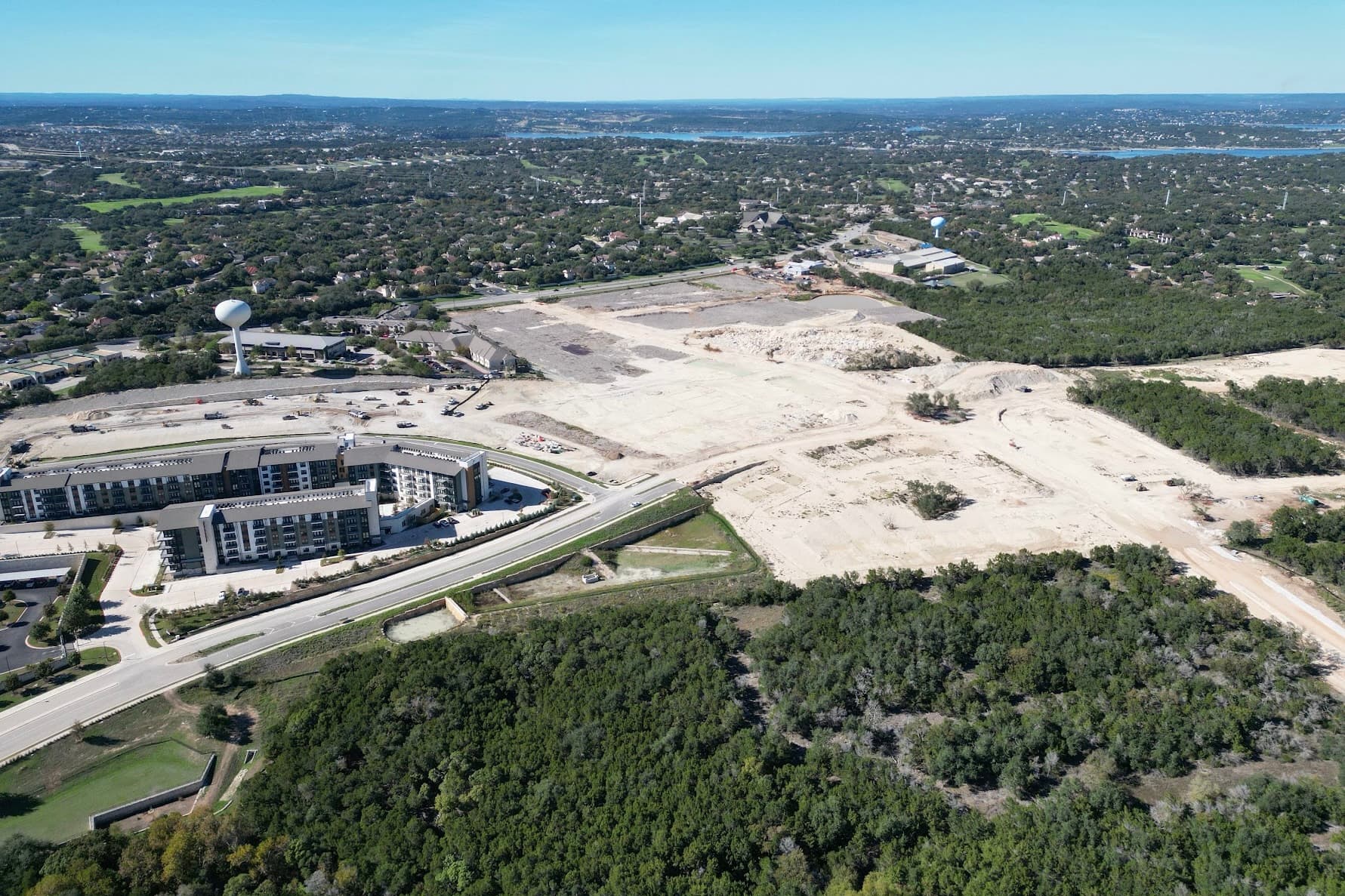
One large development in Lakeway hoping to utilize the economic incentive policy is The Square at Lakeway.
The Square at Lakeway is a planned mixed-use development intended to serve as a downtown hub for the city with restaurants, shops, residential units, Main Street and other community spaces.
Legend Communities, the development company behind Rough Hollow, is spearheading the project.
The development has been in the works since 2012, with the city granting initial approval in 2021.
Since then, rising construction costs, increased interest rates and limited capital availability have caused challenges and heightened the need for an incentive agreement with the city, Haythem Dawlett, founder and principal of Legend Communities, said.
“These factors have created feasibility challenges for large-scale mixed-use projects, particularly in suburban markets where rental growth has not kept pace with rising costs,” Dawlett said in an email.
In July, Dawlett requested a $37 million economic development incentive agreement with Lakeway.
The maximum agreement term is 25 years. Incentives would be funded exclusively from new tax revenues generated by the project without any existing city revenue used, Lakeway would retain portions of both property tax and sales tax throughout the agreement term, and the incentive payments would occur only after revenues are received by the city and all performance requirements are satisfied.
Based on the developer’s projections, an estimated $36.5 million would be paid to the developer over the 25-year term and the city would retain $39.5 million.
Going forward
As Lakeway continues approaching buildout, revitalizing existing commercial properties could become increasingly important to attracting new businesses and generating revenue for the city.
Lakeway's existing retail market remains relatively strong, with few vacant storefronts, as many locals do not want to travel into Austin for shopping, Oberg said.
Yet, with limited land available for new construction, existing commercial developments could offer opportunities for additional growth in order to continue promoting Lakeway's strong retail market, Oberg said.
Over the next five to 10 years, Lakeway expects to see more redevelopment of both residential and commercial properties as older properties are replaced with newer construction.
"I think we are going to hit a big redevelopment push," Grundman said. "Lakeway has been around as a city since the '60s... . We're going to probably start seeing a lot of tear downs and rebuilds."
Ultimately, Lakeway city officials anticipate that redevelopment will play a larger role in the city's future as room for new construction becomes more constrained and expected developments, such as The Square, reach completion.
"Once those [developments] come through, and if they do come through, then there will be a shift in how development is handled in Lakeway and be more so redevelopment focused," Grundman said.
Although City Council has not made a decision regarding an incentive agreement for The Square, Grundman said Legend Communities has told the city that without it, the development may have to be scaled back. This may result in a lower assessed valuation for the property, he said.
Developers are in the process of building infrastructure for water, wastewater and roads, with Main Street expected to be completed in the spring of 2027.