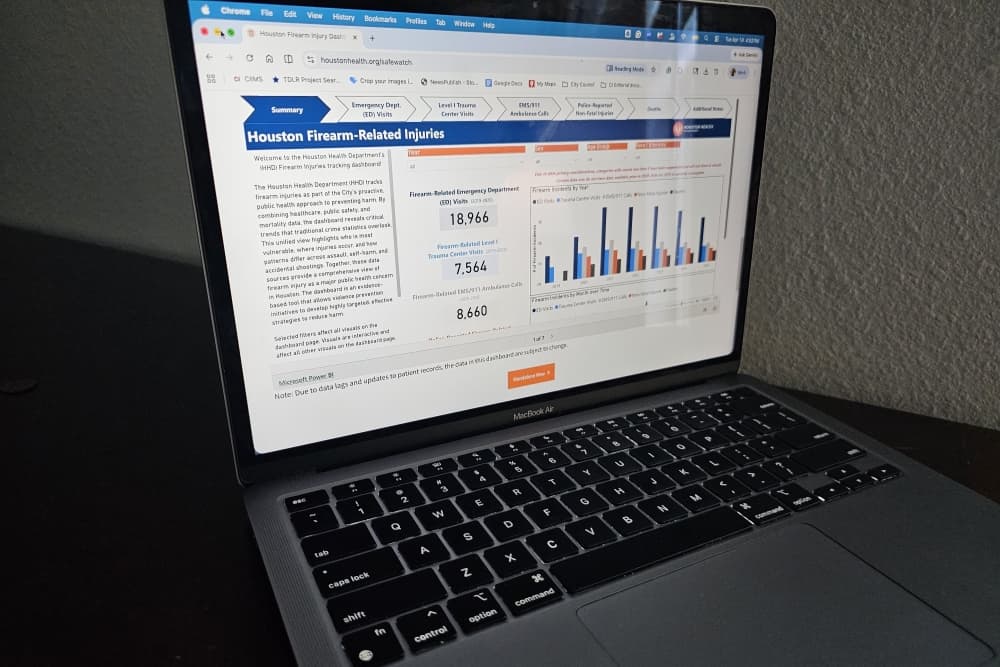
Houston, in partnership with the Houston Health Department and Texas Medical Center partners, released the first four months of data from a new firearm-injury tracking dashboard, the first of its kind in the U.S.
During the city of Houston’s April public safety committee meeting, HHD officials presented the findings of the SafeWatch dashboard.
What is it?
Using Level 1 trauma center clinical data and citywide emergency response systems, the SafeWatch dashboard breaks down firearm injuries by age, race, sex, intent, outcome, location and risk factors.
The dashboard, which launched in December 2025, also breaks down whether the incidents were fatal or not, and if they resulted in an emergency department visit or a Level 1 trauma center visit. It is updated quarterly, city officials said.
By the numbers
In 2025, there were 194 trauma center visits for unintentional incidents. Of those, nearly half were people 24 years old or younger.
Those numbers can still be prevented, District C council member Abbie Kamin said.
“That is something that each one of us can be doing something about,” she said. "We just had a pediatrician reach out because of their interest in this and getting the educational materials, gun locks and gun safes. We can’t give away enough [gun safes] when we get them.”
During the public speaking portion of the meeting, several doctors and health care professionals spoke in support of the dashboard and furthering its functions.
Dr. Caitlin Fitzgerald with the Baylor College of Medicine said that bringing together the information in the dashboard brings consistent understanding, and from a health care perspective, it helps understand patterns of firearm incidents.
“From that understanding, it can help us perform prevention efforts,” she said. “Ultimately, it helps us answer critical questions such as where is this happening, why is this happening?”
Next steps
Officials said they are next hoping to integrate Level 2 and 3 trauma center data, add enhancements for a deeper dive into the data, and have regular task force meetings with partners at the Texas Medical Center to discuss trends found in the data.