Grand Park is moving forward after 20 years of challenges and planning.
The project is expected to be done in four phases with the first phase expected to be completed in October 2027 after breaking ground in April.
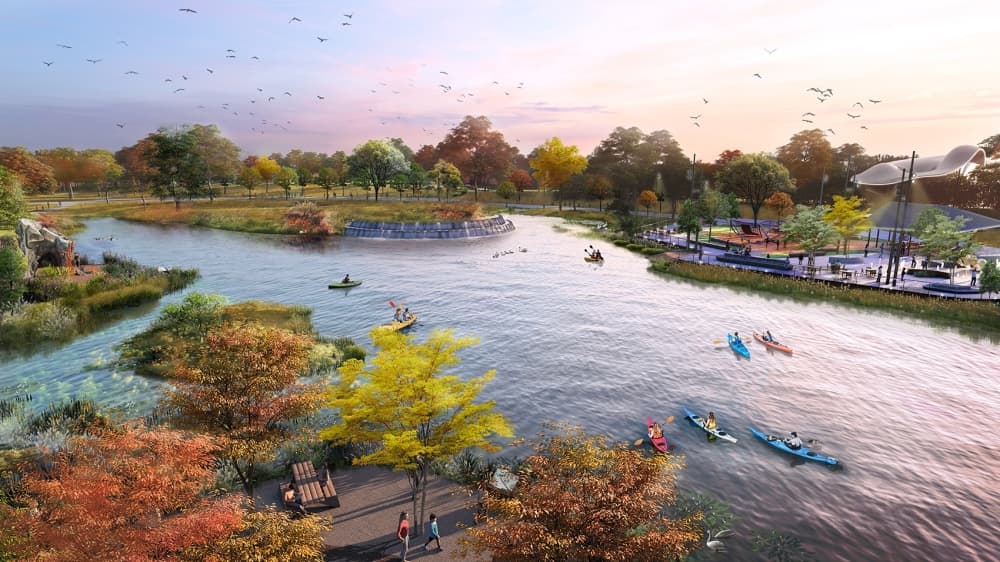
The first phase is called Civic Park and encompasses 58 acres of the over 1,000-acre park. Civic Park will include an amphitheater, shade structures and restrooms, an orchard, and Arrowhead Pond, which will cover about 3 acres. The other phases include areas called: Adventure Play, Sports Park, Nature Center, and Botanical Garden and Nature Area. Each phase brings with it a distinct personality and adventure, said Shannon Coates, assistant city manager and former director of Frisco Parks and Recreation. Coates was the director of Play Frisco when officials broke ground on the Grand Park project.
“It really is just this beginning phase of Grand Park. I would categorize [it] as an active park that embraces nature,” Coates said.
Along with the five-phased development areas of Grand Park known as Community Hub, the park also includes the Wilds, which is 314 acres of paths, walkways, canoe launches and bike trails. It also includes the Confluence, which is 140 acres of nature trails and walkways. These areas will be less developed than the Community Hub but have a focus on nature extending from Dallas North Tollway to FM 423.
Coates said the park will act as a “choose-your-own-adventure park” once fully completed because it will have something for everyone.
“The other greatest thing the city did was not hurry up and try to build the whole thing at one time because this park will truly ... be reflective of our community,” Coates said.
Breaking it down
The first phase of construction is estimated to cost $48.5 million. The funds cover construction along with design and the public art that will be included at Civic Park.
Funding comes from bond funds, specifically the 2006 bond Frisco voters approved and the Frisco Community Development Corp.
The 2006 bond included funding for fire stations, police department updates, and roads and streets.
Funding from the Community Development Corp. comes from a half of 1% of all sales tax collected in Frisco. The group was created in 1995 and is tasked with promoting and developing new business enterprises, parks and other community projects.
Zooming out
The former Exide Technologies battery recycling plant significantly impacted Grand Park by both delaying its construction due to environmental contamination and ultimately expanding the park’s footprint once the city acquired the land, officials said.
“[Exide] is its own kind of long and complicated story,” former Mayor Jeff Cheney said. “It was kind of Frisco’s dirty little secret I mean, I was on council and I didn’t even know.”
The former Exide Technologies battery recycling facility closed in 2012 in exchange for Frisco purchasing nearly 170 acres around the site as a buffer. Frisco officials later took over cleanup efforts in 2020 after Exide’s cleanup efforts stalled.
Remaining cleanup efforts primarily include cleaning up Stewart Creek, which runs through the Grand Park site. Frisco Engineering Services Director Jason Brodigan said previously that stream cleanup would take two to three years once it began.
Ahead of an April groundbreaking on Grand Park, Frisco officials approved nearly $22.4 million in additional funding for environmental cleanup at the nearby former Exide Technologies site.
Frisco City Council members approved the increase to just over $62 million. The old treatment plant on the Exide site is gone, and contaminated soil in the former North Landfill has been removed, Brodigan said in January.
The city has tried to get state funding without success, though officials will continue to work with legislators, Cheney said.
Looking ahead
The park is larger than Central Park in New York City, and Coates does not know of another park in the region that is larger, she said.
Cheney said Frisco sees about 8 million visitors annually, and he anticipates Grand Park will be a massive tourism draw that helps push that number toward 10 million. He sees the park as a generational gift to the entire region.
“As a quality-of-life project, Grand Park will be unprecedented throughout our state and really throughout the nation,” Community Development Corp. President Chad Brubaker said at the April groundbreaking.
Despite its destination status, officials intend to ensure it remains a local community park.
By slowing building, Coates said the city can be mindful of resident needs with each phase as demographics continue to shift.
“I got into this whole thing to build this park for my kids, and the reality is I’m building it for my grandkids,” Cheney said.
Quote of note
“The return on that investment, not just on the quality of life, but ensuring that we’re a sustainable city for the next 50 to 100 years, is priceless,” Cheney said.