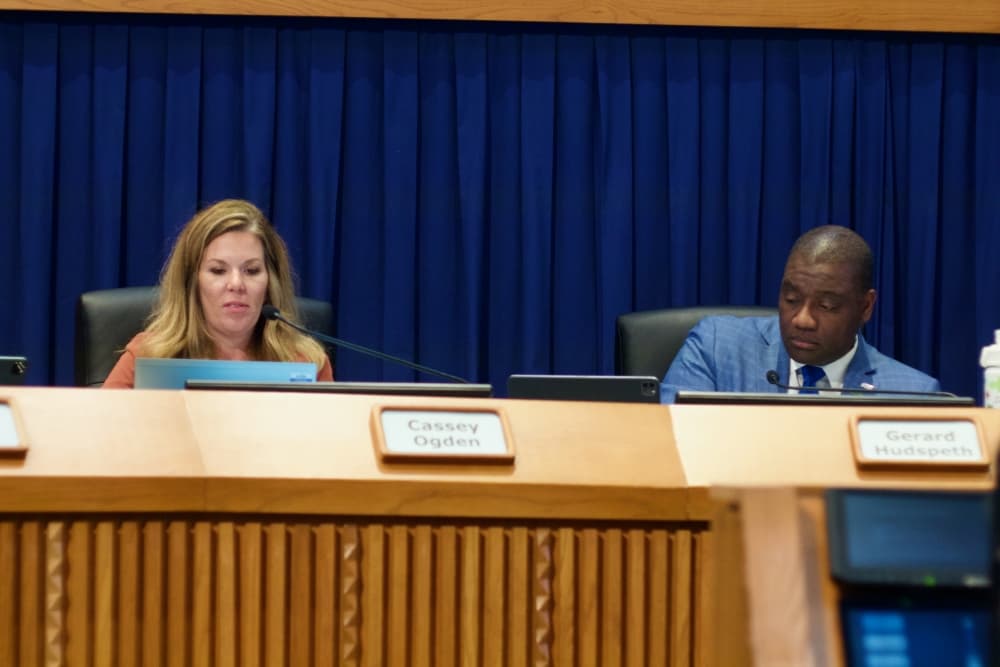
Denton City Council approved a series of changes to the city’s affordability incentive program to encourage more affordable housing construction at an April 7 council meeting.
The changes include lowering the required number of affordable units to qualify for the incentives and eliminating the right of first refusal.
The overview
The program offers nine different incentives for developers to rent or sell their units to residents earning under 80% of the area median income, according to a presentation from Housing Programs Coordinator Leia Atkinson. City documents show 80% of area median income for a single resident is $65,700 and ranges to $101,400 for a five-person household.
According to city documents, 48% of Denton households earn less than 80% of the city’s area median income based on their household size.
The incentives include:
- Reduction in required parking
- Less strict landscaping requirements
- Reduction in unit size
- Building height increase
- Reduction in lot size
- Reduction in lot depth
- Reduction in lot width
- Reduction in how much of the lot needs to be covered by the building
- Setback reduction
Atkinson said the purpose of the incentives is to lower costs for developers. Six developments have applied for incentives, including four multifamily and two single-family developments, since the program’s creation in October 2024. The presentation proposed changes to the incentive program, including:
- Eliminating the right of first refusal, which is a contract granting a specific party the option to purchase real estate before the owner can sell it to a third party
- Making incentives more accessible by lowering the number of units per development that need to be affordable in order for developers to qualify for the incentives
- Setting different income rates for rental and home ownership to reflect the different markets
- Allowing developments with fewer than 20 units to qualify for the incentives more easily
Zooming in
The program’s right of first refusal requirement forced developers interested in selling their property to offer the property to the city before approaching other potential buyers. Atkinson said the requirement created administrative barriers for city staff, developers and lenders.
“The right of first refusal has caused some pretty significant administrative barriers in practice for developers who are using this program,” Atkinson said.
Atkinson’s presentation also proposed lowering the number of low-income units in each development to qualify for the incentives. Before the changes, the number of incentives that developments qualified for was scaled to the number of affordable units, with developments qualifying for more incentives with more affordable units. Now, developments require only 15% of units to be reserved for low-income households to qualify for all incentives.
The changes also set different AMI rate requirements for rentals and homeownership in order to qualify for the incentives. Rental developments require 5% of units to be reserved for residents earning under 30% AMI and 10% of units for households earning less than 50% AMI to meet the 15% requirement.
Home ownership developments now require 15% of their units to serve households earning under 80% AMI to qualify for the incentives.
What else?
The amendments also allow developments with fewer than 20 units to qualify for incentives in line with the 15% affordable unit requirement. With nine or fewer units, one rental unit must be available for households earning 50% AMI or less, and owned developments require one unit to serve residents earning 80% AMI or less.
Looking ahead
Atkinson said city staff will continue to monitor the program’s effectiveness and bring more changes to city government if needed in the future.