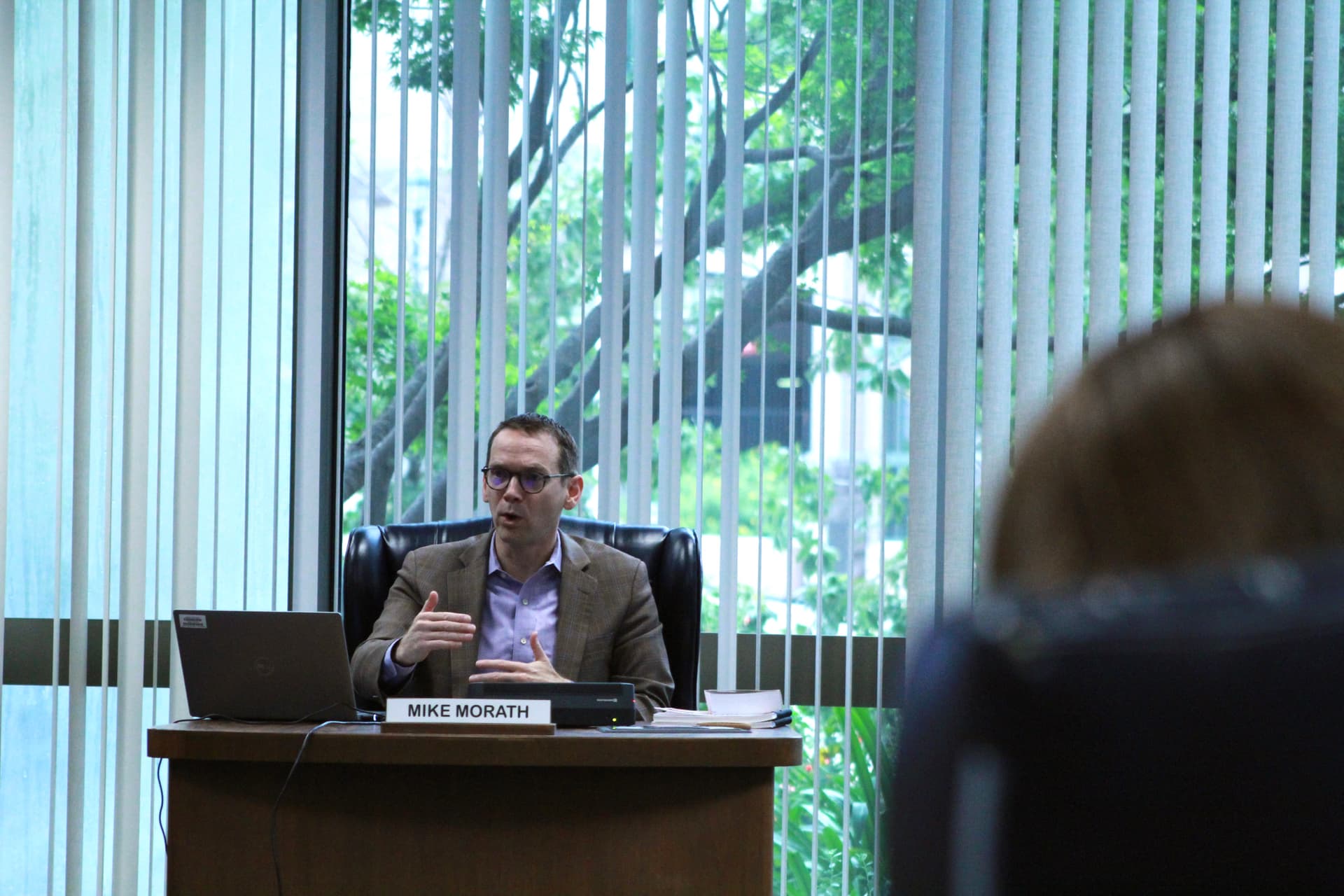
University of North Texas President Harrison Keller said in his State of the University address Nov. 12 that the university closed fiscal year 2025–26 with less than a $5 million shortfall, down from an anticipated $45 million budget deficit.
University leaders previously projected the larger deficit following a drop in international student enrollment amid federal visa hurdles, resulting in a slower hiring process, the consolidation of departments and phasing out lower-demand programs.
The gist
The $40 million, or 88.9%, reduction of the shortfall holds the year-end deficit to about 0.5% of the university's annual operating budget.
UNT officials whittled down the deficit despite a two-year loss of roughly 4,000 international students after enrollment peaked in fall 2023. The loss was primarily within the university's master’s degree programs.
“The issue wasn’t demand. We had plenty of international students who wanted to come to UNT but just had trouble securing visas,” Keller told Community Impact.
UNT also lost approximately $32 million in instruction and operations formula funding following changes enacted during the last Texas legislative session, per prior reporting.
The details
To offset revenue losses from the decline in enrollment of foreign students and lack of state funding, Keller said UNT enacted the following measures:
Hiring restrictions
Consolidating administrative and academic units
Phasing out lower-demand degree programs, minors, certificate tracks and classes
Instituting performance-based budgeting
Redirecting graduate admissions outreach toward domestic students
Launching the One Path transfer and co-enrollment program with Collin College
Expanding partnerships with countries where the school previously had little presence
Revising guidelines for promotion, tenure and faculty workload
What’s next
Keller said that the university will try to eliminate the remaining deficit in fiscal year 2026-27 by introducing new revenue sources and improving operational efficiency.
“We're not out of the woods yet,” Keller said. “We have a lot of hard work ahead.”
Guiding the university’s response to the deficit is its Look North: UNT 2030 strategic plan, which is a five-year roadmap used to meet retention, graduation and research funding benchmarks.
Upcoming priorities under the plan include:
Increasing pay for faculty and staff based on merit in December
Expanding the One Path transfer and co-enrollment model to more community colleges
Raising first-to second-year student retention rates from 77% to 90% through personalized advising
Developing new degree tracks and accelerated programs