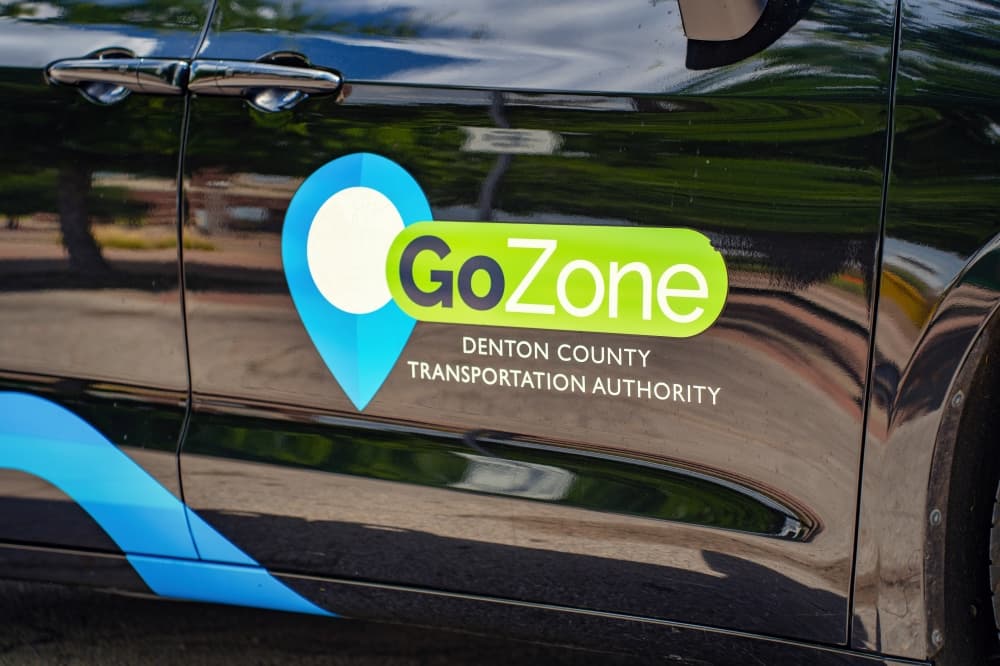
Frisco officials are moving forward with plans to roll out an on-demand microtransit service through a partnership with the Denton County Transportation Authority.
City staff presented details about the agreement to Frisco City Council members at a March 17 work session. The service could launch as early as mid-May, ahead of the 2026 FIFA World Cup.
What you need to know
Brian Moen, Frisco assistant director of transportation, said microtransit offers an on-demand, technology-based shared ride service as an alternative to traditional public transportation options.
“This is really ideal for suburban travel,” Moen said. “It’s flexible in its area and the routing, so this isn’t a fixed route system.”
Riders would be able to request trips through a mobile app or by phone, with shared vehicles that pick up and drop off passengers curb-to-curb. Moen said riders may need to walk a short distance to designated pickup points.
Moen said the microtransit service will cover roughly 21 square miles in Frisco, which accounts for about 75% of jobs in Frisco and 38% of residents.
“The city of Frisco employment base is growing [and] the population is growing, not only here, but also across the region,” Moen said. “When we look at areas like Frisco that are outside of the existing transit agencies, ... existing transportation options are limited to their vehicles.”
The service will also connect to the Dallas Area Rapid Transit bus system by offering a trip option to the Northwest Plano Park and Ride station.
How it works
The service is expected to operate from 6 a.m. to 6 p.m. using a fleet of about 20 vehicles. Fares would be cashless and based on distance, ranging from about $3 to $5 per trip, Moen said.
Frisco’s existing partnership with DCTA includes a demand-response service primarily serving seniors, residents with disabilities and individuals traveling for medical-related trips.
Anyone can use the microtransit service, but users must be within the service boundaries, Moen said.
Cost to the city
Moen said the proposed microtransit program will be a $15 million investment over three years, funded through a mix of federal and local dollars.
About $3.3 million of that total would come from Frisco, with the remainder supported through federal funding secured with assistance from the North Central Texas Council of Governments.
Moen said federal funding for the first year is already in place, while funding for the second and third years is still under review.
Fare revenue is not included in the total funding estimates and would be split between federal and local costs, Moen said.
Next steps
DCTA officials are set to consider approving an agreement with Frisco at their March 26 meeting.
Frisco City Council is expected to consider the item April 7, Moen said. If approved, service could begin in mid-May.
Editor's note: This story has been updated. The work session was March 17.