Asmbly Makerspace, a local Austin creative community, is celebrating five years of operations. The space serves as Austin’s largest nonprofit makerspace, according to Asmbly’s website, offering access to woodshop, metal shop, a ceramics studio and more.
“It's a little bit mind-boggling to me that it's only been five years because so much has just completely changed about the space,” Wilmot said. “We've gone from 8,000-square-feet to 13,333-square-feet. We were at 250 members, now we're at 575.”
How we got here
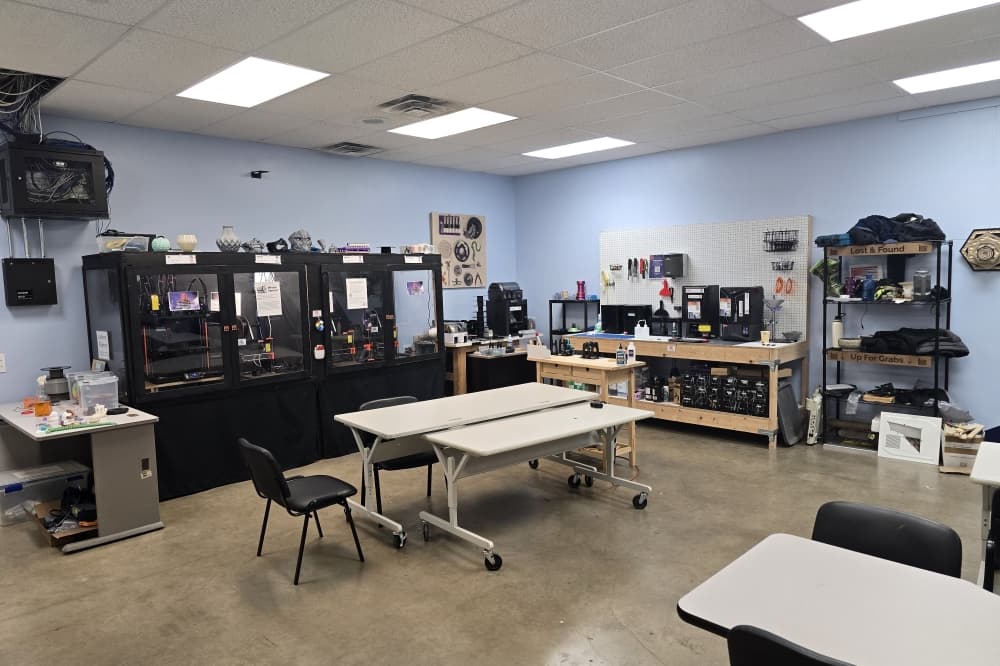
The story of Asmbly Makerspace dates back to 2009 when four individuals formed ATX Hackerspace as a community workspace. A decade later, Asmbly formed in 2019 as a local nonprofit makerspace. In April 2021, the two entities joined forces, offering members access to several workspaces including 3D printing and electronics.
What they offer
The makerspace is a membership-based organization with access to the woodshop, metal shop, lasers, textiles, 3D printing and electronics lab. Asmbly Makerspace also hosts classes and events for the community, including markets, demonstrations and showcases.
Base memberships are $95 per month and feature access to the six specialty spaces, 25 hours of booking time weekly and access to computers equipped with design software like Adobe Illustrator. The makerspace currently has about 575 members, according to Valerie Wilmot, a board member Asmbly Makerspace.
In 2025, Asmbly Makerspace expanded to include a ceramics studio which is accessible through a separate membership. The ceramics space features dedicated shelf space, pottery wheels, tools and a glazing area.
What’s new
In mid-July Asmbly Makerspace announced that the nonprofit hired its first paid Executive Director, Galen Wixson. Prior to Wixson joining the organization, Wilmot served as the inaugural volunteer Executive Director since 2021.
“Being at this five year mark and starting that with a paid Executive Director for the first time in our history, for me, is incredibly exciting because I can't even imagine how much more progress will make in five years,” Wilmot said.
In addition to new staff, the organization is also growing to include some new pieces of equipment, including a fiber laser that is crafted to cut through metals like copper, brass, steel and aluminum.
“Whenever new tools do come into the space, it's very much member driven,” Wilmot said. “Like, ‘hey, I really want to have a fiber laser.’ So, then we talk and we work through the logistics and people submit a proposal and help find the machine that works for a community space.