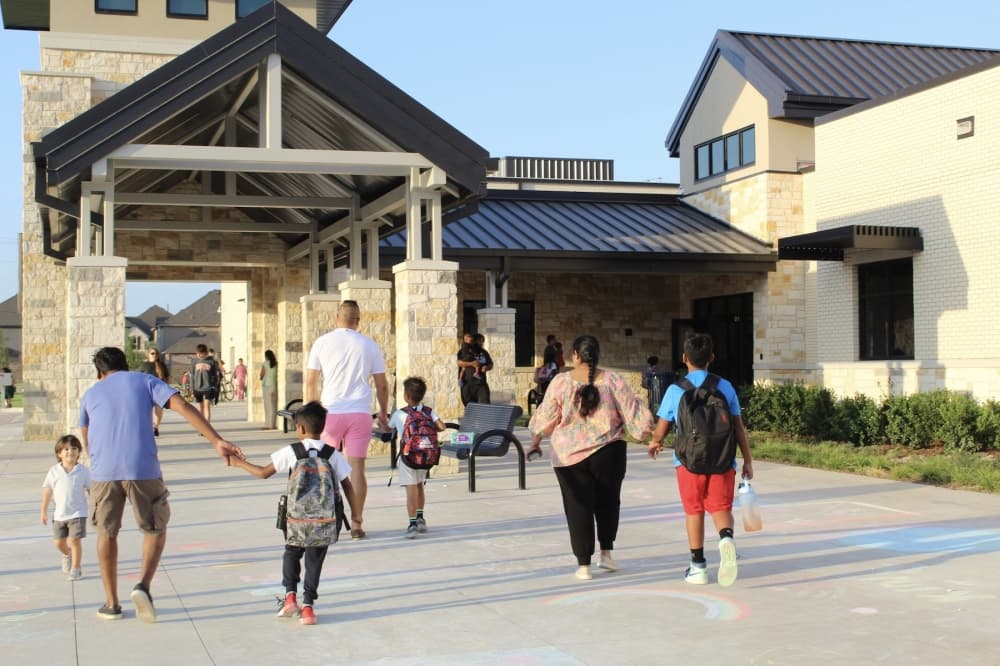
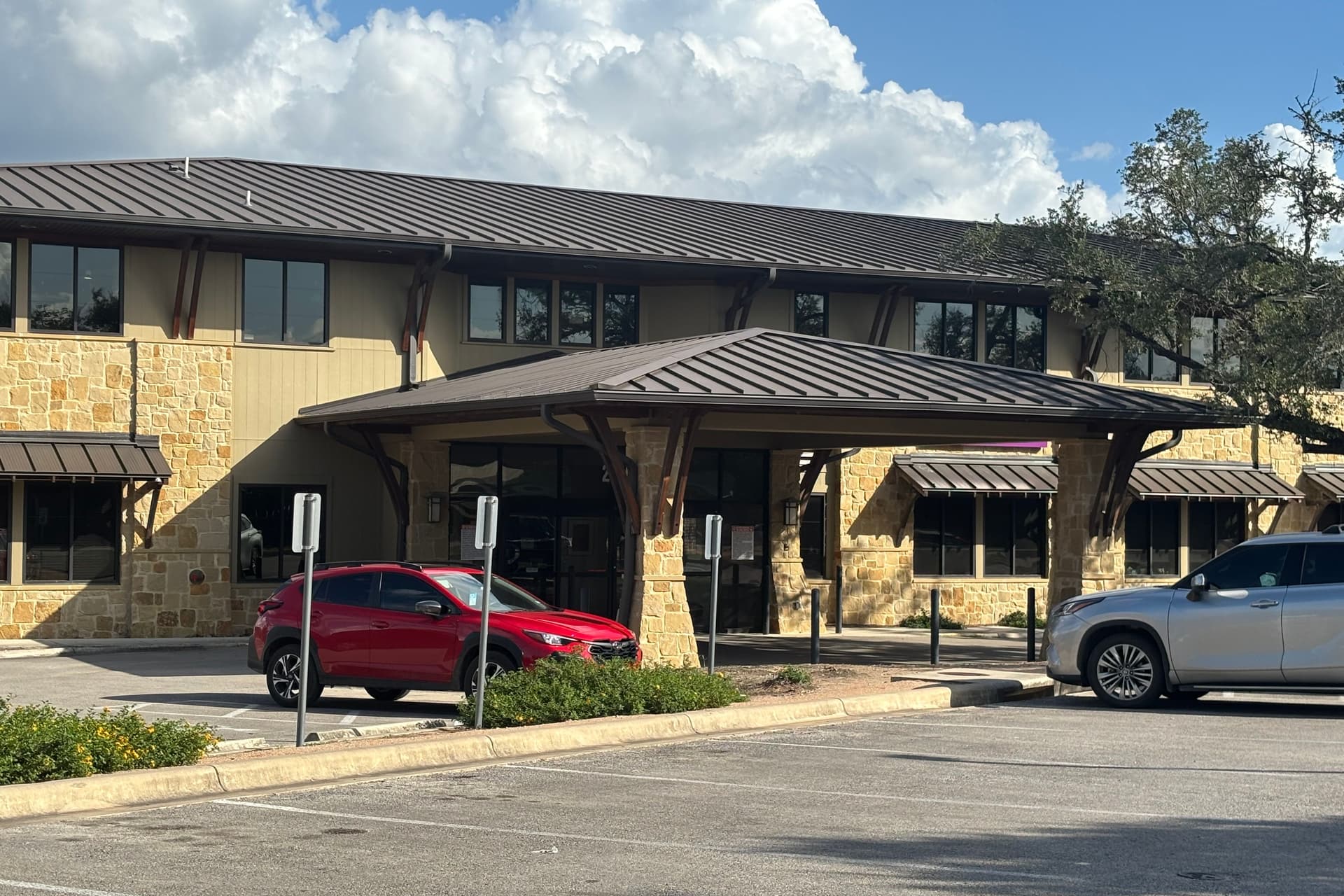
Beginning this fall, eligible Austin ISD high schoolers will catch their bus at a new “hub stop” instead of a neighborhood one. (Jessica McLaren/Community Impact)
Editor's note: This article has been updated. On Aug. 7, Austin ISD reversed its decision to move middle school students to centralized "hub stops," citing budget savings from the closure of Paredes Middle School. High school students are not affected and remain on the hub-stop model described below. Read more about the Aug. 7 reversal here.
Starting with the 2026-27 school year, Austin ISD high school students who live over two miles from their assigned campus will catch the bus at a centralized "hub stop"—such as an elementary campus, library, post office, Austin Community College campus or Capital Metro transit center—instead of a stop on their street.
Middle schoolers were also moved to hub stops when this policy was first announced, but the district reversed that decision Aug. 7 and restored neighborhood-level stops for middle school.
AISD officials said the shift is driven by rising transportation costs and is meant to make routes more efficient and sustainable long-term. AISD receives $1 in state transportation funding for every $7.22 it spends per mile, creating a funding gap officials cite as the reason for the changes.
Elementary students will not see a change to their normal bus stops, per the district.
What’s changing
The district announced June 25 that it is making two separate changes: who qualifies for transportation and where eligible students catch the bus.
Under Texas law, school districts receive state transportation funding for most students who live two miles or more from their assigned campus, with additional funding available for certain hazardous routes. AISD officials said the district is returning to that eligibility standard after offering closer-in transportation exceptions at some campuses in recent years, meaning some students may no longer qualify for bus service.
The second change requires all high school students to use centralized hub stops instead of neighborhood bus stops, according to the district's FAQ document. Middle school students were initially included in this requirement but are no longer subject to it after the district's Aug. 7 reversal.
Before reversing the hub stop model for middle school students, the district reported 254 hub stops, up from 242 when the Transportation Hub Stops Survey and Bus Stop Finder launched Aug. 3, said Executive Director of Transportation and Vehicle Services Kris Hafezizadeh, who attributed the increase to community feedback from the survey at an Aug. 6 media event.
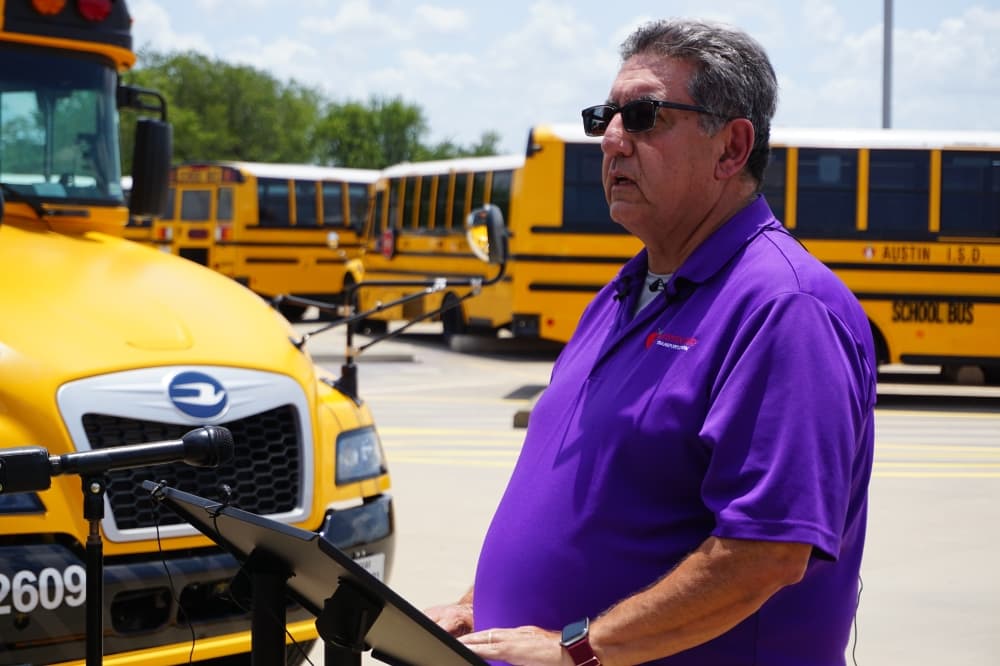
Austin ISD Transportation Director Kris Hafezizadeh said Aug. 6 the district “cannot guarantee [it] will add hubs and stops everywhere,” but that it will consider the suggestions. (Jessica McLaren/Community Impact)
Other transportation changes include eliminating district-funded late activity buses, ending districtwide transportation for Campbell Elementary and Eastside Early College High School, and returning several campuses with previous distance exceptions to the state standard.
AISD officials said buses will be capped at 45 students, and some non-eligible transfer students may need to find alternate transportation if routes reach capacity. Hafezizadeh said the changes have reduced the district’s total bus routes by 27.
What parents are saying
Rob Amoroso, whose 12-year-old was zoned for a middle school hub spot, told Community Impact the change had left him without a workable plan—a concern the district cited as informing its Aug. 7 decision to restore middle school neighborhood stops.
“My job requires my attendance,” he said, noting that walkability wasn’t a plausible alternative. “I’m not letting my 12 year old navigate intersections.”
Amoroso said he reached out to neighbors about carpooling, but the math didn't work cleanly and would have resulted in a significant increase in cars on the road.
“It’s really difficult to figure out. I honestly don’t have a plan," Amoroso said prior to the district's decision to reinstate neighborhood bus stops for middle schoolers.
Following the district's reversal, Amoroso's middle school student will return to a neighborhood stop rather than the hub location referenced above.
Thecontext
AISD initially piloted the hub model for magnet and choice-program students starting in the 2025-26 school year, citing a $110 million shortfall at the time, according to previous Community Impact reporting. This year's changes expand that model districtwide.
District staff said they first shared the hub concept with families in March, ahead of the June budget vote, then followed up after the survey and Bus Stop Finder tool launched.
The change lands amid broader strain that's reshaped much of AISD this year, including the closure of Paredes Middle School in July due to academic performance and a 2026-27 budget the district adopted in June after weighing $181 million in projected shortfalls, according to previous CommunityImpact reporting.
Digging deeper
Hafezizadeh estimated that the hub changes for both middle and high school students would have saved $5.2 million this year, part of roughly $7 million in savings across all of the district’s transportation-related cost-reduction projects. The district has not yet released updated figures since its decision to reinstate middle school neighborhood stops.
The district’s transportation budget dropped from about $33 million last year to $27.6 million this year, Hafezizadeh said Aug. 6, adding that no bus driver jobs were lost as a result of the changes.
AISD currently transports about 20,000 students each day on nearly 550 buses via more than 370 routes, according to the district transportation website. Hafezizadeh said the district will not hesitate to add bus routes if they are deemed necessary.
According to AISD’s transportation policy, students are considered under district supervision—and subject to the same disciplinary rules as on school grounds—while riding on or waiting for a bus, whether at a hub stop or elsewhere.
For Amoroso, though, distance wasn’t the core concern, safety along the way was. He said he wasn't comfortable letting his middle school child—some as young as 11 years old—cross intersections alone to reach a hub stop, regardless of how far it is.
This safety concern was among the factors district officials cited Aug. 7 when reversing course for that grade level.
When asked directly whether AISD did a formal risk assessment of routes to hub stops, Hafezizadeh said Aug. 6 that the district considered walkability and distance when placing hubs; if a location was a “long distance” or otherwise difficult to reach safely, that informed hub placement.
“Everyone is” responsible, Hafezizadeh said, when asked who ensures student safety on the way to a hub stop.
What parents should know
Transportation routes and hub assignments are available through AISD's Bus Stop Finder tool, where families can look up their specific stop. Students assigned to hub stops will travel an average of 2 to 2.5 miles from home to their pickup location, with a maximum distance of 3 miles, Hafezizadeh said.
Prior to the reversal, a student zoned to Small Middle School in Southwest Austin who lived 2.666 miles from campus—just over the eligibility line—would have been assigned to Hampton Branch Library, about a half-mile from home, for a 7:35 a.m. pickup, according to the Bus Stop Finder tool at the time. This example no longer applies to middle schoolers; the hub-distance formula now applies only to high school students, per the district.
Families can currently submit concerns through the district’s Transportation Hub Stops Survey, open through the end of August. Officials described this as a preliminary round of feedback and said additional channels for reporting safety and walkability concerns will be introduced later in the year.
“Send us comments,” Hafezizadeh said, adding that staff review survey feedback on a rolling basis and use it to inform route adjustments.
He also asked families to lean on each other during the transition, suggesting parents “take turns” driving neighborhood kids to hub stops and pointing to Movability's Schoolpool carpool program as a resource.
The district also offers a Where’s the Bus app where families can track students' buses from departure to arrival, and all K-12 students can ride Capital Metro buses for free, a program made permanent in 2018.
What's next
The 2026-27 school year starts Aug. 18. AISD said it will begin testing revised middle school routes the week of Aug. 10, with updated stops appearing in the Bus Stop Finder tool on a rolling basis and finalized by Aug. 13.
High school hub stops remain unchanged. District officials said they will continue to monitor and adjust routes in real time through September as enrollment and traffic patterns settle in.