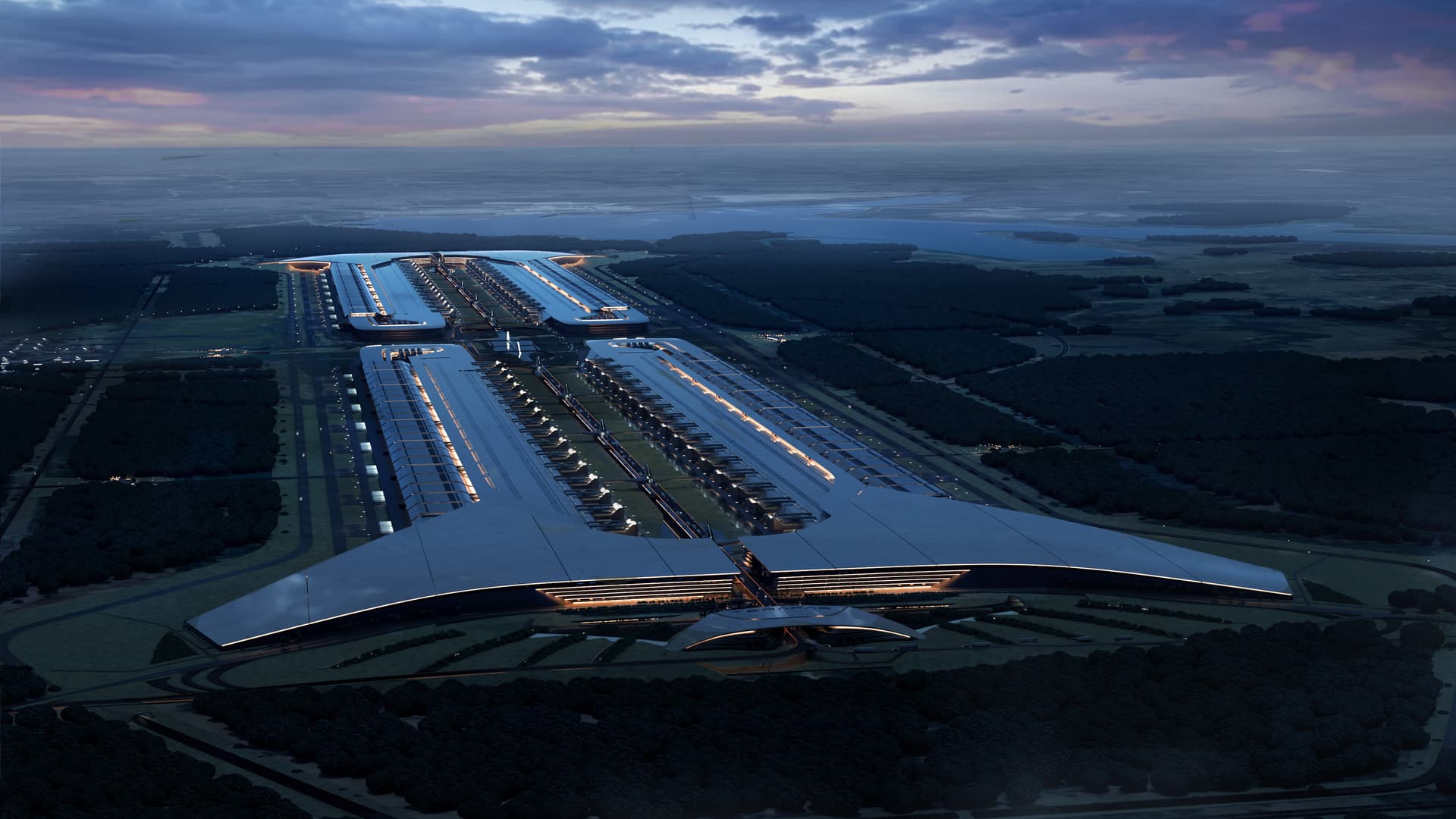
The Terafab microchip manufacturing facility could bring up to $2 billion in economic growth and impact to College Station, according to a study presented at the Sept. 10 College Station City Council meeting.
What you need to know
Terafab, a microchip manufacturing facility by SpaceX recently broke ground about 20 miles east of College Station in Grimes County. As previously reported by Community Impact, College Station entities have anticipated growth from Terafab, including College Station ISD expecting an influx of students in public schools.
According to the College Station City Blog, the project is expected to be a $100 billion investment, with the city expected to benefit from community and service engagements.
Zooming in
According to data from the Greater Brazos Partnership, several cities in Brazos and Grimes counties, including Bryan and College Station, are expected to see organic and Terafab-related growth within the next 15 years. For example, by 2037, areas such as west Bryan are expected to grow by 44%, with Terafab contributing at least 400 people to that growth.
As a case study, the Samsung manufacturing facility in Taylor was chosen for comparison. Both the city and the Greater Brazos Partnership compared the differences in infrastructure, population and the existing labor force. The presentation highlighted College Station as ready for:
Texas A&M talent and research ecosystem
Existing housing and development pipeline
Established hospitality capacity
Existing retail and service economy
Strong quality of life
Development opportunities south/east
Existing ED and partner network
Ability to recruit Terafab suppliers
Regional partnerships
Existing utility and planning framework
City Chief Development Officer Michael Ostrowski said growth outside city jurisdiction could create potential lost tax revenues, but the city will likely see growth in other sectors to make up for it.
“We are fairly well positioned for a number of reasons. We need to make sure that we can get the right people in to balance everything that we already have,” Ostrowski said.
What the council is saying
Council member David White said the presentation was outstanding, and praised what Terafab could bring to College Station for businesses and housing.
Meanwhile, Council member Bob Yancy said he has heard concerns about the potential job growth for College Station residents, along with concerns about underestimating how impactful the project will be for the area.
“Rather than have its impacts dictate to us what we’re going to be, I would rather face it head on,” Yancy said. “My assessment is that it will be the game of the century with real-world consequences that none of us can possibly anticipate.”
Mayor Pro Tem William Wright said he anticipates the city being up to the challenge, but agreed with Yancy about the unknowns.
“Who knows what this will look like in the long term? You can only plan so much because it’s unheard of,” Wright said.
The takeaway
The Terafab facility is scheduled to be completed sometime in the 2030s and is expected to be larger than 100 million square feet, according to Terafab’s website. Wright and Ostrowski said the city is actively doing everything it can to smoothly handle the anticipated growth in the near future.