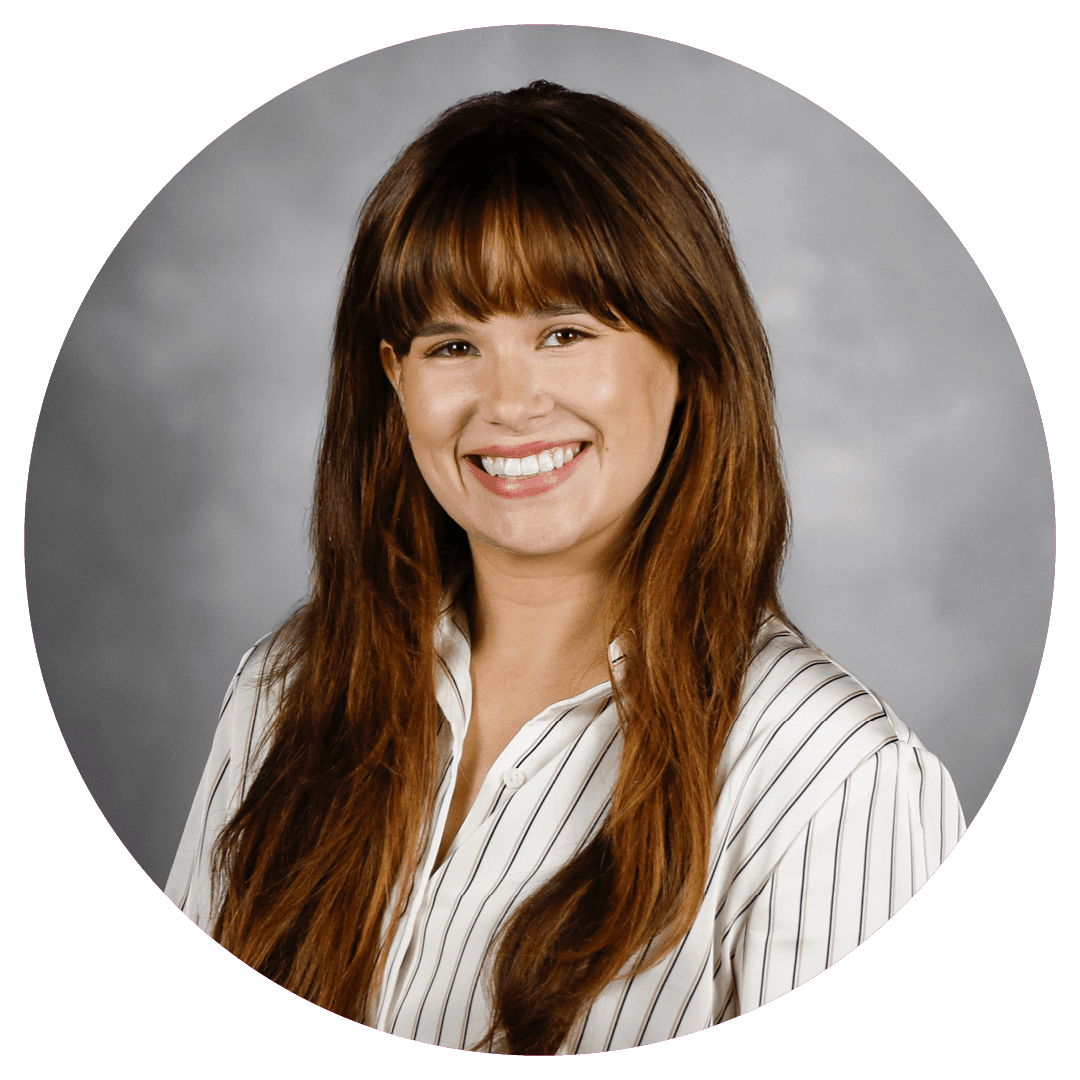
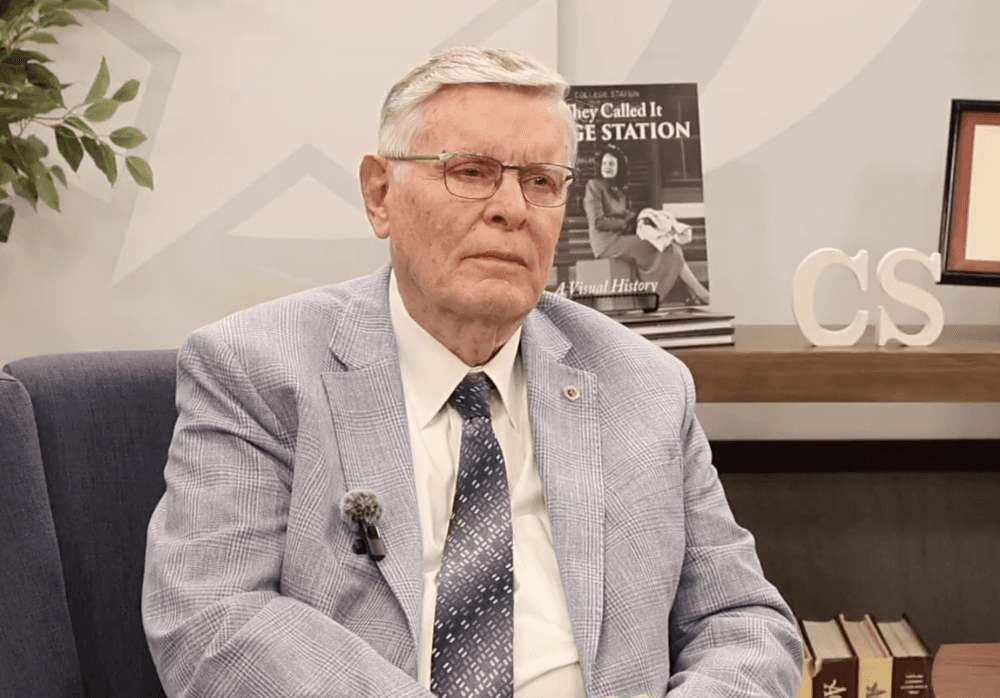
College Station Mayor John Nichols sat down with Community Impact to talk about how he came to the city of College Station, the future of development and how partnerships with Texas A&M will continue to shape the area.
This interview has been edited for length and clarity.
What was your journey to becoming the mayor of College Station?
I come from a bit of an academic background. I came to College Station about 57 years ago. I joined the faculty at Texas A&M, and I was born and raised on a farm in upstate New York, but it was a great opportunity job-wise.
I got on, caught the wave, I guess you might call it, and a lot of changes were happening in the late '60s and early '70s. That convinced me that maybe we could stay here, even though we weren't born and raised in Texas. We don't have an Aggie ring. We decided that maybe it's worth staying. So we did, and I finished my career at Texas A&M after 44 years as a department head in agricultural economics, which is my general field. And one of those years, I traveled a lot around the state and the nation and got involved in a lot of business development.
I got involved with the city pretty soon after I got here, like a lot of people do, and that got me involved in the community activity, classic civic organizations, and went through a couple of boards and opportunities with Brazos Youth Soccer. I was involved in getting that started. The Brazos Valley Symphony. I've always enjoyed that, and got involved in the organizational structure there, and then went on the arts council after that, and then took a sabbatical in 1990.
Somewhere along in there I started to serve in city government committee roles. And then the zoning commission for another six years. In both cases, I was chair of that committee. After two or three years, I got to serving the city in a lot of different ways, and when I retired from A&M, I thought it might be time to test the waters in an elected position. I got elected in 2012 to City Council, and from there, 10 years later, I was elected mayor in 2022, so I've been mayor for three years now.
I know what motivates me is just an opportunity to serve, and frankly, it's a license to be a little bit nosy if you want to know what's going on.
What kinds of new business or development is the city working hardest to attract right now?
On the business side, we're working hard and very interested in the biotechnology, health care and animal health; being the home of Texas A&M University, we have a tremendous resource base and research technology development base here. And one of the areas that we think is strong at Texas A&M that could be a launching pad for new businesses is in the area of animal health, certainly in the community at large.
With the RELLIS campus over in the city of Bryan, [there is] a tremendous emphasis on aerospace and defense contracting and those kinds of industries. We don't have a lot of that land in College Station, but we are very interested, as I spoke this morning to a group about laboratory testing, scaling up startup businesses and laboratory research, very fitting for Texas A&M as they spin off technologies. We've got several vaccines, gene therapy and now a new animal health industry; a business just bought a piece of land in our business park. So we're very interested and quite oriented, quite forceful, in trying to build that set of relationships ... Of course, we're always open to anybody that wants to bring some corporate headquarters here ... It's not just attracting new ones, but it's retaining and helping the ones that are here to grow. So we're certainly working hard at that,
I would say, on the retail side, I think the thing we get asked most about is experiential opportunities. We get a lot of retail, and if you look through Century Square, you see all of the women's clothing shops and accessory shops, restaurants, pad sites all over town ... but I think people really want to have more experiential opportunities.
We invest a lot in our parks and recreation program; that's one of our core pillars of the city, and has been for as long as the city, practically since the foundation 87 years ago ... But adding to that, other kinds of experiential activities. For example, Dave & Busters just announced ... they're moving into and redeveloping a building here. And so that's kind of an adult experiential opportunity ... Everybody's always asking about water parks and those kinds of things. Those are a lot more expensive to get going.
Everybody wants a Trader Joe's. Everybody wants a Whole Foods Market. Everybody wanted Costco. Finally, Costco came. That was great. They bought land that the city owned, which was even better. We're happy to see more of that grow. Some people consider shopping as an experience, just shopping without buying anything.
That's another function that the city provides, a landing page for any of these commercial developments that are willing to have their information shared, [such as] square footage, general condition of the building and location ... We will work with them to try to help the commercial real estate brokers advance their agenda. We work with ... a consulting firm that is always at the site selectors conferences of one kind or another, and we're quite often there as well with our economic development staff ... they're the ones that kind of help us spot some of these franchise opportunities that are looking at College Station.
With the Hwy. 6 expansion now underway, how do you see this project ultimately changing the day-to-day driving experience for residents once it's completed?
Highway infrastructure and traffic congestion are always issues. The more experiences and the more shopping opportunities you see around town, [the more] people will be traveling around town, where they said almost 80,000 students are here. Everybody who lives here year-round looks forward to that period from Dec. 15 to Jan. 15, when the roads are clear and everything gets quiet. But I think a challenge for the city is to do more with what we have.
We are blessed to have the Texas Department of Transportation roads all the way through the city. The four that are by the campus are all state highways. So we work with TxDOT to try to improve the intersections. The pedestrian safety—that's another issue. We recently installed some really interesting buffered bicycle lanes on George Bush Drive that have turned out to be really successful, I think. And then now they're talking about improving a couple of intersections along there to reduce the conflict points. I think part of the issue is, and it's really a good issue, in a way, is that there's a lot of micromobility here, with bicycles and scooters and small electronic travel devices of one kind or another. It's hard to keep up with them, because there are so many new varieties of getting around on two wheels instead of four. We have a challenge all the way around the campus of looking after and trying to improve pedestrian safety.
We're working to extend improved highways into neighborhoods where the housing developments have kind of leapfrogged ahead of us. If you drive down Rock Prairie [Road] east, for example, it’s taken us a long time to get to it, but we finally widened that out to Town Lake [Drive] to four lanes. From there to [William D. Finch Parkway], it’s going to be a three-lane road, I think two lanes and a turning lane in the middle.
It's tough. It's hard to keep up with the growth of the university ... we are the home of Texas A&M, we're very happy about that. We understand our role, but [Texas A&M] makes decisions on their own scale that we then have to figure out how to adjust to that, roads and housing.
The university has been very open to engagement and including us in the discussions. One of the major innovations we had last year was the ability to adopt where they're paying for fire service. Now we have an agreement with them that they will pay us a certain amount of money a year to underwrite the cost of our fire services. And it's really not fires, but think of all the laboratories and the safety issues there, and every one of those has got to be evaluated on new buildings, and then false alarms.
Looking ahead, what is your vision for College Station’s near future, and how are you hoping to impact that while you're in office?
I think one of the big things to recognize about College Station [is that] not only are we the home of Texas A&M University, which is the largest one-campus university in the nation and still growing. The other thing about College Station is that we are bounded in land area. We're 53 square miles, ... the river is on both sides—Brazos River on one side, Navasota on the other side—you've got creek bed ... that can't be developed. But around the south side of the city, in the '40s, '50s and '60s, you had a lot of people who didn't want to live in the city. They bought land and divided it into ranch heads, 5-10-acre properties and built homes, and they love it out there. So there is less of the 500-acre green field development opportunities than there might be in other cities.
The school district is another partner in all of this. So you've got to recognize where the school district boundaries are, and College Station ISD is very proud of its growth and development and high quality of its education, and attracts a lot of people, but they have a boundary as well. So their boundary is maybe a little bigger than the city’s, but the south end of Brazos County is in a different school district to the south, and so that tends to limit us as well.
So I'd say that strategically, the city will become more dense. So land use changes that allow for more dense development of residential properties is certainly a significant factor. I was just looking at a letter from somebody that was asking me about allowing smaller lots. We have done that. Some of our developments have got relatively small lots with accessory dwellings. We've already permitted that in most of the suburban areas, you can add ... a building in the back for auxiliary purposes. So we have done some of those things already.
Density through high rises, that's another strand of development that we'll see in the long run. I'm totally comfortable with that. I understand that we're a city, and only 132,000, but if we expect to be 250,000, but we don't change the land mass very much, you've got to grow it up.
We have underperforming properties inside the city limits that, with the right guidance ... where economic development staff comes in to direct people that if we rezone an area into a redevelopment area, it's a redevelopment zone. So if somebody comes to us with a plan. We're more than happy.
We would like to see a redevelopment of that whole area around University Drive and Texas Avenue, particularly to the east and all the way down Texas Avenue right to City Hall. There's some underperforming properties in there. Some of them have been bought up. We'd like to see a little more aggregation of some of that, but it's got to be done by the private sector. The city has bought into a little bit of real estate, but we get criticized for it, so we're careful not to get overcommitted there. But redevelopment—the city can do a lot of things to direct redevelopment. I think that's what we'll see in the next 10 or 15 years for sure.
Editor's note: This article was corrected to reflect the correct acreage amounts in Mayor Nichol's answer related to the city's near future.