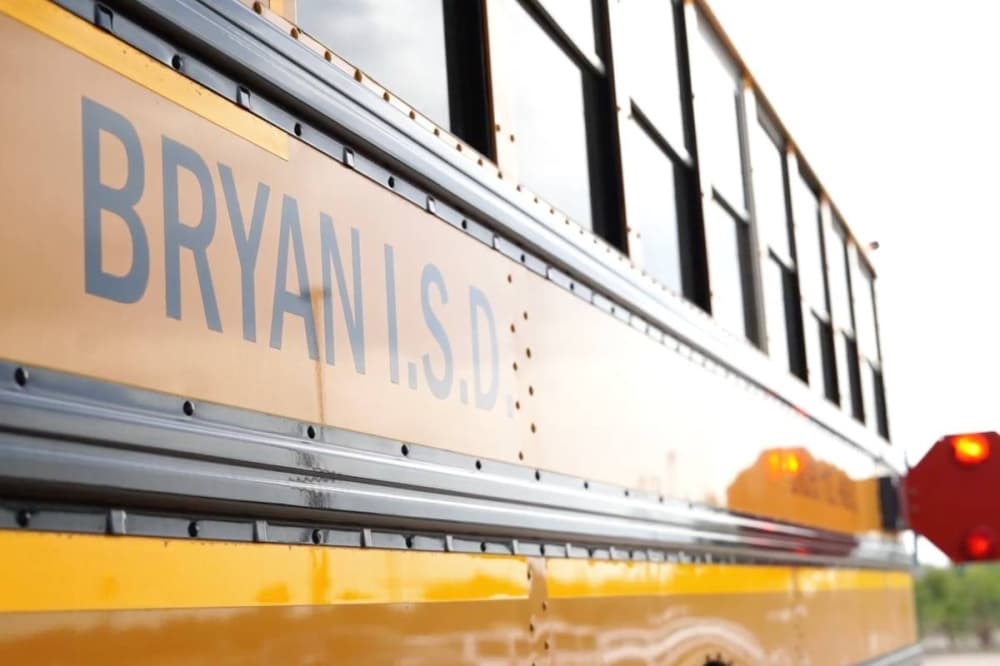
Bryan ISD officials are preparing for a statewide school bus safety requirement that will enforce major upgrades to the district’s fleet over the next few years.
What you need to know
During its April 20 meeting, Bryan ISD’s board of trustees unanimously approved required reporting related to Senate Bill 546, which was passed during Texas’ 89th Legislative session and mandates three-point seat belts on all school buses by Sept. 1, 2029.
Deputy Superintendent Brian Merrell described the requirement as an “unfunded mandate,” meaning districts must comply even though dedicated state funding has not yet been guaranteed.
Meeting highlights
Bryan ISD Director of Transportation Bryant Washington said the district is currently working with:
- 121 buses in service
- 49 buses without three-point seat belts
- 13 buses with lapbelts
- 26 without seatbelts
- 19 buses older than 15 years old
Washington told trustees the district plans a phased approach to combine bus replacement and retrofittings.
The breakdown
The transportation department estimates:
- $4.8 million to buy 39 new buses over the next three years
- $900,000 to retrofit 30 existing buses
Bryan ISD trustee Julie Harlin-Wolf clarified that these retrofittings and new purchases won’t need to be made until fall 2029, but Merrell warned that retrofitting could take up to a month per bus and may face delays since school districts across Texas are upgrading fleets at the same time.
College Station ISD approved a plan to retrofit 19 of its buses at a March 17 meeting.
Funding the project
Bryan ISD will submit its report and cost estimates to the state in hopes of receiving financial assistance.
Much of the work could be funded through the district’s 2025 bond, which includes $12.8 million for safety and security improvements, including buses and district vehicles.
What’s next
The board passed the item along to be submitted to the state. Harlin-Wolf and fellow trustees continued to discuss the day-to-day aspects of the seatbelts, such as how younger students may need help getting in and out of their seats as the new requirement is implemented.
Merrell noted that bus ridership continues to increase, making compliance with the mandate a growing priority.