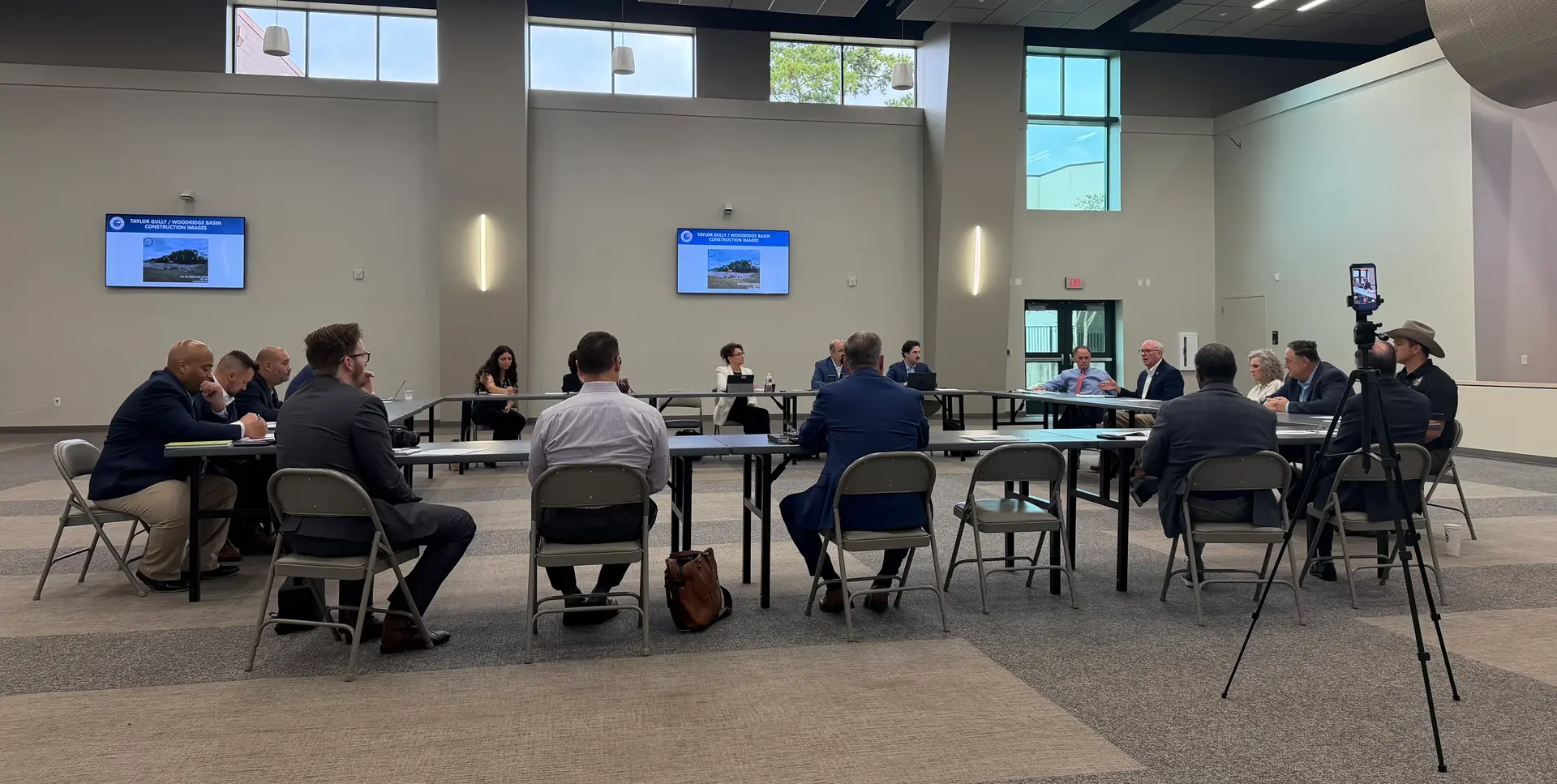
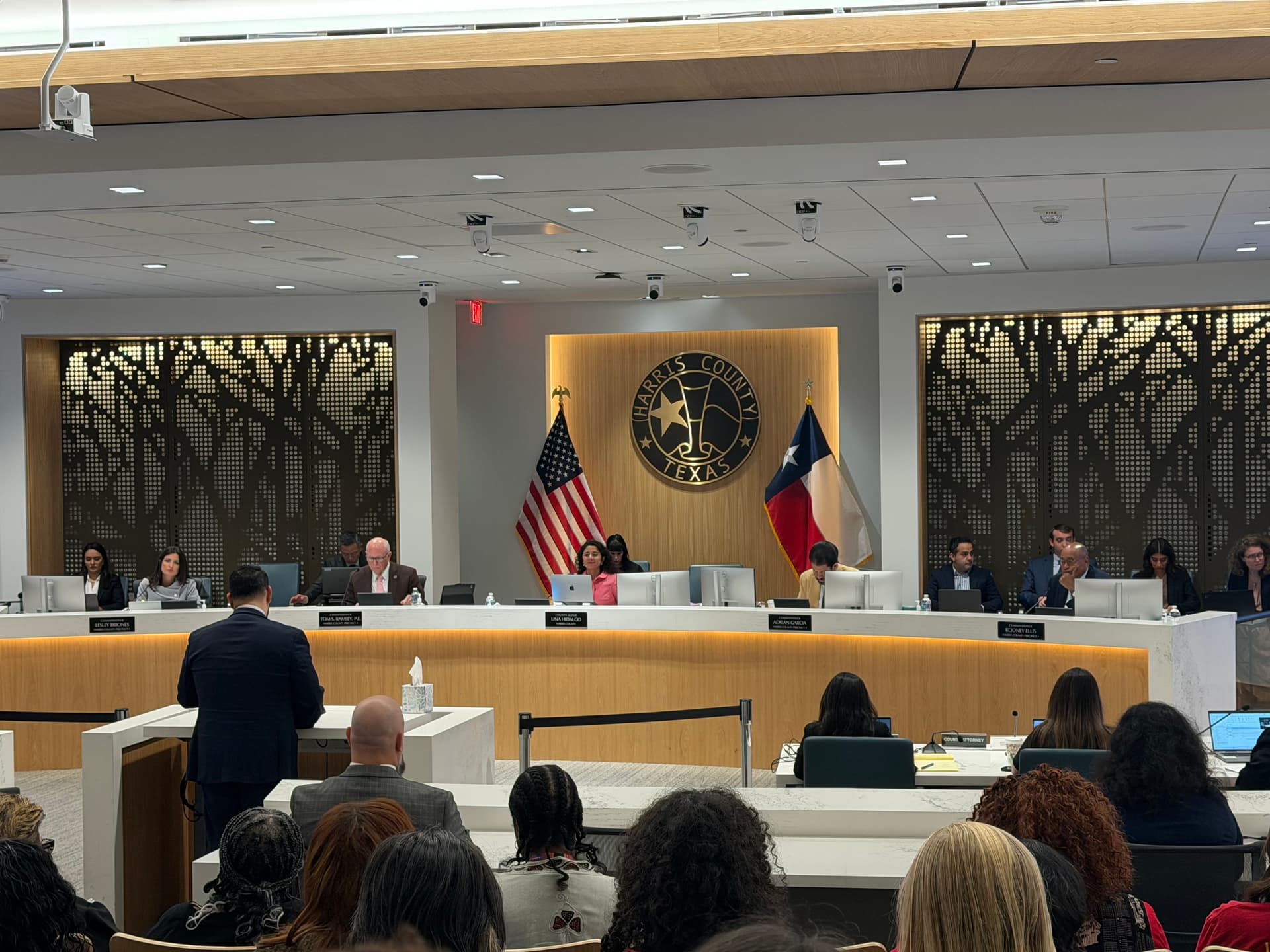
On Oct. 16, federal, state and local leaders met to discuss future collaboration on regional flood mitigation projects during a meeting closed to the public but open to the media.
At a glance
Federal Emergency Management Agency officials, as well as elected leaders from the state House, state Senate, the City of Houston, Harris County and Montgomery County were in attendance. It marked the third cross-jurisdictional meeting held to address the region’s infrastructure needs.
State Rep. Steve Toth, who hosted the meeting in northwest Harris County, said the goal was to open a dialogue among the agencies with the intention of working together to bring more resources to the region, which has experienced severe flooding.
“Most of us here don’t need to be reminded of what’s at stake,” Toth said.
Hurricane Harvey hit the region in August 2017, causing “catastrophic drainage issues” and severe flooding throughout the Houston metro area, according to the National Weather Service. The region has since worked to complete various flood mitigation projects designed to decrease flood risk during periods of heavy rainfall.
The discussion
Houston city council member Twila Carter said the group’s emphasis needs to be on mitigating flood risk before a disaster comes.
“Collaboration is key, but accountability is answerability,” Carter said. “And we’ve got to really have measurable commitments.”
Montgomery County Commissioner Rick Wheeler said funding for flood mitigation projects can be challenging because the county relies on property taxes and doesn’t have access to other revenue sources like sales taxes.
It is difficult to invest in projects while working to keep property taxes stable, Montgomery County Commissioner Matt Gray said. The Montgomery County Commissioners Court approved a slight property tax increase in September.
“We don’t have the same financial vehicles to get that engineering completed to get them shovel-ready,” Gray said.
John Garvin, the FEMA deputy division director, said that for jurisdictions to be competitive applicants for FEMA grants, predictable projects are best.
“When you talk about doing that work ahead of time—having these projects on the shelf—the competitiveness of that project will be the predictability factor,” he said.
FEMA offers grants for preemptive and after-the-fact emergency and disaster recovery projects, according to its website.
Offering input
Harris County Commissioner Tom Ramsey said the jurisdictions will be “sophisticated grantees” if FEMA awards them money.
“Harris County has probably made every mistake possible for a county dealing with flooding issues,” Ramsey said. “Because of that, we understand…what we need to be doing.”
Although the FEMA representatives did not commit to granting money to any of the jurisdictions, FEMA Division Director Roosevelt Grant said the group’s conversation is “absolutely what we want to hear.”
“We want to support you. We want to support the state,” Grant said. “But [the] bottom line is that we want to be a part of the solution.”
Toth said the group will meet again to start “drilling down on projects.”