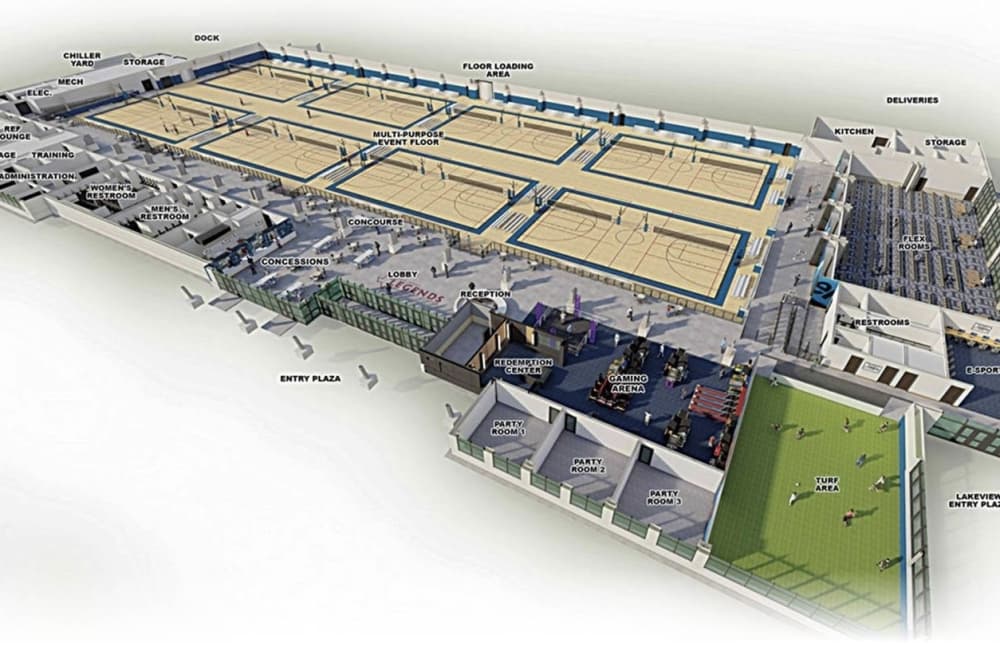
Proponents of a 90,000-120,000-square-foot mixed-use development in Kemah say the complex—which would include a sports facility with eight basketball courts, in addition to a hotel and other amenities—could have a $26 million annual economic impact for the city.
Yet, those opposed say the project could irreparably alter Kemah’s character and should be put on a future ballot for voters to decide.
What happened
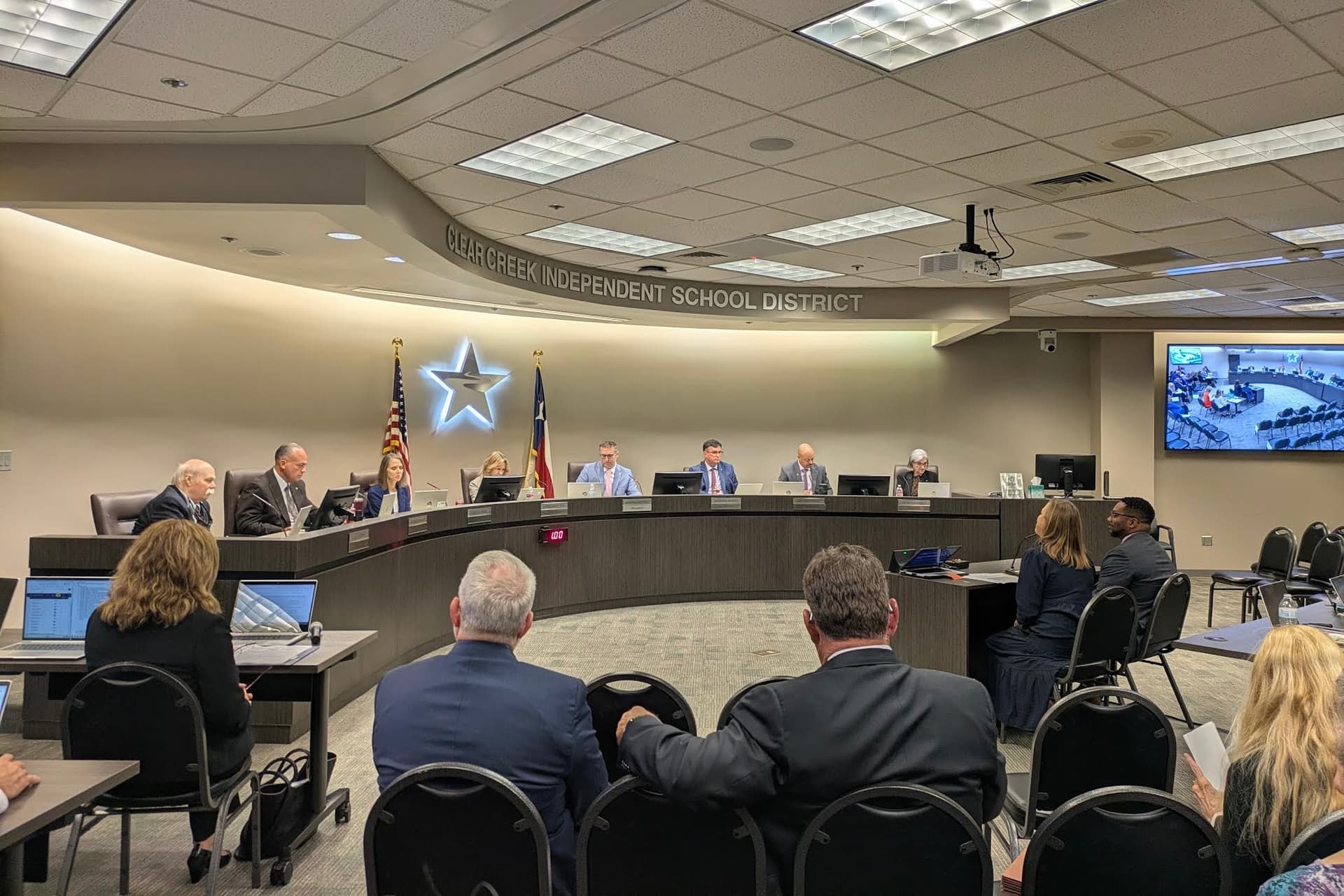
At its June 3 meeting, Kemah City Council voted 4-1 to table a discussion on whether to allow Kemah citizens to vote on the project and whether to suspend city expenditures and staff time committed to the project.
If eventually approved by Kemah City Council or voters, the facility will include eight basketball courts, which can be converted to 16 volleyball courts or 24 pickleball courts, said J.D. Wood, regional vice president of strategic development at Sports Facilities Companies.
City Manager Cesar Garcia said the development would be an economic boon for the city and could serve as an anchor to attract more businesses and hotels to build in Kemah.
Meanwhile, those opposed say the development could cause traffic congestion and financial burden, and should be left to voters.
“To sustain a facility of this scale, estimates indicate a requirement of 3,000 visitors per day,” resident Daniel Conrad said in a note submitted at City Council’s June 3 meeting. “Kemah is a community of fewer than 5,000 residents. We simply lack the municipal support mechanisms and infrastructure to maintain a structure of this type and volume.”
The cost
Collaborate Architects, the developer behind the proposal, will provide the upfront funding for the facility’s construction with the understanding that the city will reimburse them with the state's 6.25% portion of the sales tax, Garcia said.
The reimbursement will be sourced from sales tax generated within a 2,500-foot radius of the project site that, if not used by the city, will go back to the state, Garcia said.
By year three, Sports Facilities Companies foresees the sports complex as no longer needing an operational subsidy, meaning the facility would generate enough revenue to cover its own maintenance cost, Wood said.
Looking ahead
Council member Dustin Oliver, who supported the motion to move the vote, said citizen voters should have insight into a third-party financial study the city contracted for the project.
“I feel like right now if we’re saying ‘go vote,’ we’re telling them to vote on something they have zero information on,” Oliver said.
The city is expecting to have the study results by August at the earliest, Garcia said.