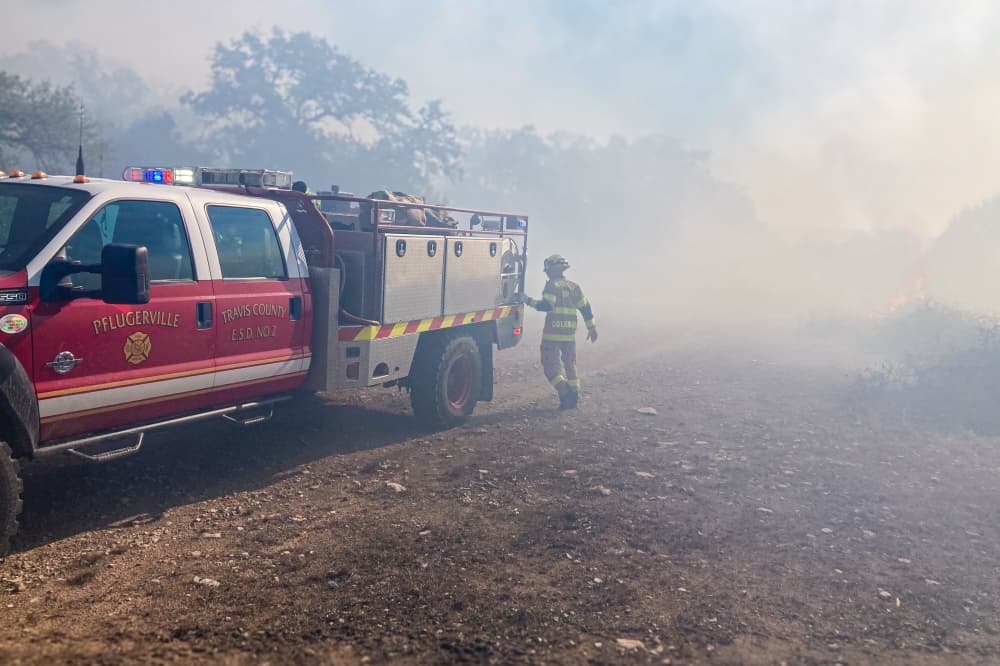
Round Rock officials have entered into an interlocal agreement with Travis County Emergency Services District No. 2 to coordinate fire response services across jurisdictions.
The Round Rock City Council approved the agreement during its March 26 meeting.
What you need to know
The agreement creates a two-way automatic aid system between the Round Rock Fire Department and ESD 2, which operates the Pflugerville Fire Department.
Under the arrangement, fire units from either agency can be dispatched automatically to structure fires and other emergencies in designated coverage areas—regardless of city boundaries. The agreement also states that:
- Calls within the shared coverage area will trigger automatic dispatch of the closest available units.
- Both agencies will follow standardized response protocols, including national incident management and fire safety standards.
- If one department cannot respond, it must notify the other immediately.
The initial response period is defined as 12 hours, after which extended assistance may be treated as mutual aid and could involve reimbursement.
Officials said the agreement formalizes coordination that allows both agencies to:
- Share personnel and equipment during emergencies
- Conduct joint training and align operational procedures
- Maintain consistent staffing and equipment standards
Each agency will retain control over its own employees and resources and will be responsible for its own liability during emergency responses.
The agreement also requires both departments to document incidents through the National Fire Incident Reporting System.
What else?
The agreement will automatically renew each year unless either party provides at least 60 days’ notice of termination. It also requires a formal review at least every five years and does not prevent either agency from entering into similar agreements with other jurisdictions.
The agreement is designed to ensure the closest available fire crews respond first, regardless of jurisdiction, which officials say can improve emergency response efficiency while maximizing existing resources.