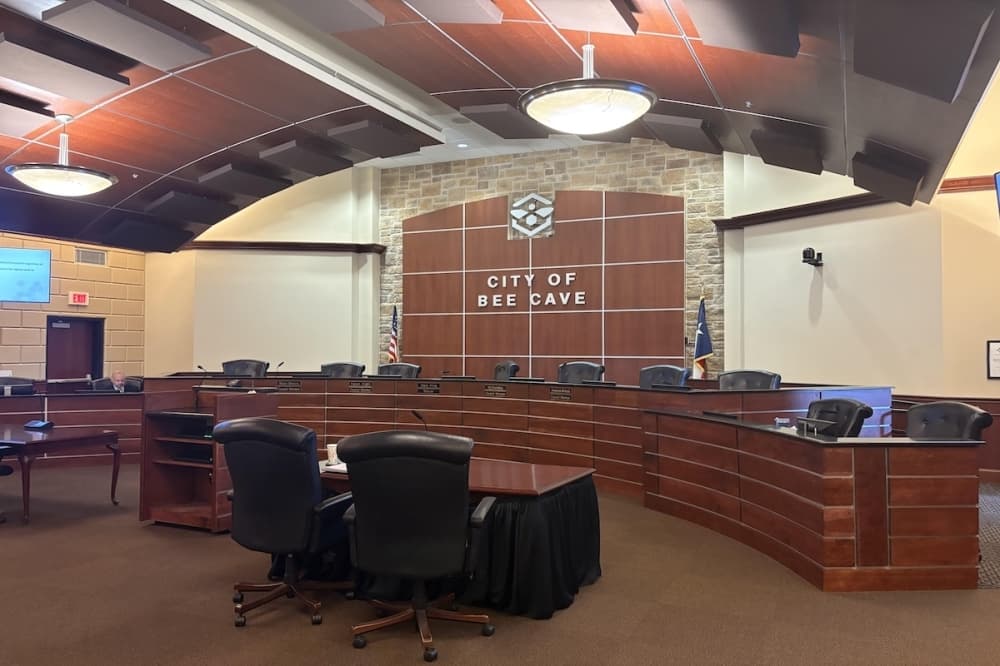
Bee Cave City Council approved amendments to the city's unified development code at a June 23 meeting in order to clarify the goals that mixed-use zones were designed to achieve, senior planner Sean Lapano said.
The background
Before the adoption of the city's unified development code in 2022, Bee Cave did not allow residential uses inside of nonresidential areas. Yet, the introduction of the UDC created three mixed-use zoning districts that allow residential buildings to be a component of the mixed-use developments.
The three zoning districts include MU-N, which is intended to accommodate "neighborhood-scale commercial uses and complementary residential uses such as stacked units above retail or commercial space on the ground floor"; MU-C, which includes accommodating "housing demand along with demand for community-serving retail and commercial uses," with ground floor retail and services as the base; and MU-TC, which functions as Bee Cave's downtown, "incorporating an intentional mixture of commercial, retail, business, residential, and civic uses," according to city documents.
“This [UDC] allowed for complementary residential uses with a focus on commercial-anchored mixed-use,” Lapano said.
As the code is currently written, there is not a clear prohibition of residential-only buildings and it does not establish a ratio between the amount of residential and commercial square footage.
The details
The key changes to the code include clarifying that single-use nonresidential buildings are permitted in mixed-use districts, prohibiting buildings of any height that contain solely residential uses in mixed-use districts and adding a ratio requiring that the gross square footage of residential uses not exceed twice the square footage of commercial uses within the same development.
The 2-1 ratio creates certainty that commercial uses remain a prominent aspect of any development in these zoning categories, per city documents.
“This amendment aims to clarify that commercial and nonresidential uses are permitted in mixed-use districts,” Lapano said.
Something to note
The amendments are intended to provide clarity in order to ensure that commercial corridors in Bee Cave remain intact, as sales tax revenue from commercial uses is a primary source of revenue for the city, per city documents.
The city of Bee Cave relies heavily on sales tax for its general fund revenues, as nearly 78% of the general fund budget from fiscal year 2026 was sales tax revenue, City Manager Julie Oakley said.